


Light for industry and engineering: Logistics

Light for industry and engineering: Logistics
Logistics is critical in modern business due to increasing demands for goods and services. Challenges include long distances, short delivery times, and the need for cool storage. Efficient lighting solutions are vital to reduce energy consumption and maintenance costs, especially in facilities without daylight, such as frozen food stores.
- LED Luminaires: Provide longevity, reliability, and efficiency, especially in low temperatures. They improve productivity and reduce errors with higher illuminance and better glare control.
- Maintenance: LED luminaires have a long service life of 50,000 hours and are virtually maintenance-free, reducing disruptions and costs.
- Energy Efficiency: Advanced LEDs and intelligent lighting management significantly cut energy consumption. Daylight and presence detection further optimize energy use.
- Lighting Quality: Adequate lighting levels and glare control are crucial for employee performance and safety. LED systems maintain high illuminance levels over time.
- Maintenance: Regular cleaning is challenging in high rooms, but designs like the CRAFT high-bay luminaire prevent dust accumulation.
- Energy Management: Corridor functions and presence detectors can significantly reduce energy consumption by ensuring lights are only on when needed.
- Lighting Design: Narrow-beam optics for high-bay storage facilities ensure efficient and uniform illumination, reducing safety risks.
Lighting systems should comply with standards like EN 12464-1 for workplace lighting, ensuring adequate illuminance levels for different areas such as storage and control stations.
Efficient lighting solutions in logistics reduce operational costs and enhance productivity and safety. Integrating advanced LED technology and intelligent lighting management systems is essential for modern logistics facilities.
The document discusses advanced lighting solutions for industrial and logistics applications, focusing on flexibility, efficiency, and adaptability to various environmental conditions. It highlights the use of LED technology and trunking systems to optimize lighting in high-ceiling environments, cold storage, and emergency situations.
- Lighting Flexibility: Emphasizes flexible lighting solutions that can be easily rearranged and adjusted through a trunking system.
- LED Technology: Optimizes light distribution without altering the appearance of luminaires, beneficial in environments with varying lighting needs.
- High-Bay and Moisture-Proof Luminaires: Products like CRAFT M Wide Beam high-bay LED luminaires and SCUBA LED moisture-proof luminaires are recommended for emergency and passageway lighting.
- Installation and Maintenance: Ease of installing luminaires on pre-wired trunking systems is advantageous in high-ceiling environments.
- Energy Efficiency: LED solutions are highlighted for their energy efficiency, especially in cold storage environments.
- Emergency Lighting: Customized emergency LED luminaires are recommended for high ceilings, ensuring reliable orientation and safety.
- EN 50171 Compliance: Compliance with EN 50171 for central and group battery systems ensures safety and reliability in emergency lighting solutions.
- Energy Savings: Provides a comparison of energy savings and cost efficiency between traditional lighting solutions and modern LED systems.
- Performance in Cold Environments: LED luminaires maintain high luminous flux even at low temperatures, ideal for cold storage applications.
LED lighting solutions offer significant advantages in flexibility, energy efficiency, and adaptability to various industrial and logistics environments. Trunking systems and advanced sensor technology enhance functionality and cost-effectiveness.
Compares different lighting systems, including HIE high bay luminaires, T16 continuous-row luminaires, and CRAFT with LUXMATE TLS DALI. Discusses energy consumption, CO2 emissions, and amortization over a 20-year service life.
A cold store logistics facility benefits from an LED solution using CRAFT narrow beam luminaires, reducing electricity costs and improving lighting efficiency.
Zumtobel's global presence spans over 70 countries, offering a centralized approach to project management for consistency and efficiency in international rollouts.
Introduces the 'NOW!' service, offering lighting solutions without upfront investment, with a fixed monthly installment covering all costs.
Zumtobel emphasizes sustainability, integrating energy-efficient technologies with high-quality lighting solutions to enhance user experience while minimizing environmental impact.
Catalog excerpts
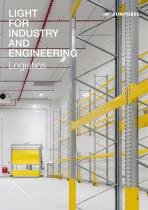
LIGHT FOR INDUSTRY AND ENGINEERING Logistics
Open the catalog to page 1
Light for industry and engineering Logistics
Open the catalog to page 2
In modern business, the importance of logistics is growing steadily. The quantity and quality of goods and services present ever new challenges for businesses. The distances are becoming greater, the delivery times shorter and increasingly more products require cool storage. Logistics halls in many cases have immense cubatures and there is also no daylight in frozen food stores. The energy requirement for the lighting is accordingly high. The most effective means for reduction of the running operating costs is an efficient lighting solution that minimises both the power consumption as well as...
Open the catalog to page 3
Cover picture: Lidl logistics centre (cold store –18 °C), Wundschuh bei Graz | AT Lighting project design: Adenbeck Gebäudetechnik, Wels | AT Electrical installation: Licht Loidl, Lafnitz | AT Lighting solution: LED high-bay luminaire CR
Open the catalog to page 4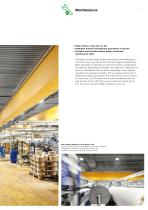
• EDs achieve a long service life L • Intelligent thermal management guarantees a long life • Compact and durable product design minimises maintenance effort Zumtobel’s product range features particularly low-maintenance units that have a long service life and meet logistics requirements. Many luminaires in high bays are difficult to access, maintenance and frequent relamping are therefore very expensive. Reducing the need for maintenance has the added advantage of less frequent disruptions of working processes. With an average service life of 50 000 hours and a guaranteed end-of-life luminous...
Open the catalog to page 7
Maintenance Long service life “Again and again, we need to exchange defective or old light sources.” Durable LED luminaires are almost maintenance-free. The replacement of faulty lamps, ballasts or complete luminaires in partly inaccessible places, costs a lot of money and takes a lot of time and staff effort. In the case of LED luminaires, regularly replacing the light sources is no longer necessary, even after 50 000 operating hours the LED will still achieve a luminous flux of at least 85 to 90 per cent of the initial level. On the other hand, a HIT lamp will fall below 60 per cent of its...
Open the catalog to page 8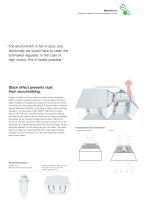
Maintenance Protection against the accumulation of dust “The environment is full of dust, and technically we would have to clean the luminaires regularly. In the case of high rooms, this is hardly possible.” Stack effect prevents dust from accumulating. A layer of dust on the luminaire surfaces has an insulating effect, possibly causing heated air to accumulate in the luminaire. Excessive temperatures reduce the luminous flux of the luminaire and may cause total failure of the luminaire. However, regular cleaning is difficult in the case of high rooms or during operation. The example of the...
Open the catalog to page 9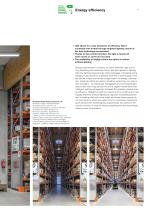
Energy efficiency L • ED allows for a new dimension of efficiency that is increased even further through targeted lighting control of the lens technology incorporated • Thanks to the corridor function, the light is turned off when rooms or zones are not used • The availability of daylight offers the option to reduce artificial lighting Gebrüder Weiss GmbH, Lauterach | AT Architects logistics: Albrecht Bereiter Architekten ZT KG, Dornbirn | AT Architects headquarters: Cucrowicz Nachbaur Architekten ZT GmbH, Bregenz | AT Electrical consultants: Ingenieurbüro Hiebeler + Mathis OG, Hörbranz | AT...
Open the catalog to page 11
Energy efficiency Low power consumption “Electricity is getting ever more expensive. How can I reduce energy costs for lighting ” ? Efficient LED technology provides for long-term reduction of energy consumption. Development of white LED Luminous flux 200 lm/W Many halls were put into operation 15 to 20 years ago and are in need of refurbishment. The technologies used are obsolete, the luminaires are not efficient and provide too little light. In logistics applications, light accounts for a very high proportion of operating costs. At least 20 per cent is accounted for by lighting. Modern LED...
Open the catalog to page 12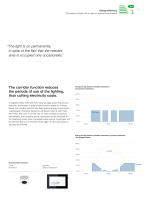
Energy efficiency Full amount of light only in case of anyone being present “The light is on permanently, in spite of the fact that the relevant area is occupied only occasionally.” The corridor function reduces the periods of use of the lighting, thus cutting electricity costs. Energy saving thanks to flexible illuminance and presence detection 100 % 80 % In logistics halls, there are very many storage areas that are permanently illuminated in spite of being used irregularly. In these areas, the corridor function can help reduce energy consumption substantially. Presence detectors will detect...
Open the catalog to page 13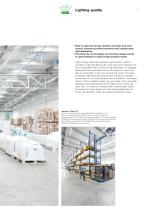
Lighting quality B • oth for high-bay storage facilities and large-area ware houses, Zumtobel provides luminaires with sophisticated light distribution • Innovative lens technologies and luminaire design provide for glare limitation in spite of high luminance levels Light strongly influences employees’ performance, making it possibe to cope effortlessly with visual tasks and is therefore the l first consideration when it comes to lighting design. An adequate lighting level and good glare control are required in order to be able to concentrate on the work at hand and remain motivated. In addition,...
Open the catalog to page 15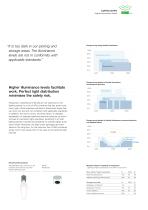
Lighting quality Higher illuminance levels “It is too dark in our picking and storage areas. The illuminance levels are not in conformity with applicable standards.” Higher illuminance levels facilitate work. Perfect light distribution minimises the safety risk. Frequently, maintenance intervals are not observed or the lighting system is a mix of HID luminaires that has grown over many years. Both situations will lead to illuminance levels that are much too low and not compliant with applicable standards. In addition, the use of rooms, and their layout, is changed repeatedly, for example additional...
Open the catalog to page 16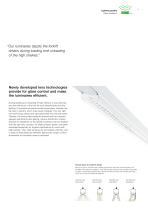
Lighting quality Glare limitation “Our luminaires dazzle the forklift drivers during loading and unloading of the high shelves.” Newly developed lens technologies provide for glare control and make the luminaires efficient. During loading and unloading of high shelves, it may well happen that the driver of the fork lift truck directly looks into the lighting. If excessive luminance levels cause glare, shelves may be hard to identify, which may cause mistakes. The new splitlens technology directs the light specifically into the side areas. Thereby, the central light pressure reduces and the luminaire...
Open the catalog to page 17All ZUMTOBEL catalogs and technical brochures
 SUPERSYSTEM II
52 Pages
 ZUMTOBEL SERVICES
44 Pages
 ARCOS
ARCOS28 Pages
 LIGHT FOR CLEANROOMS
6 Pages
 LIGHT FOR DATA CENTRES
6 Pages
 CLEAN II industry
12 Pages
 CLEAN II supreme
16 Pages
 EMERGENCY PORTFOLIO
88 Pages
 TUBILUX
6 Pages
 LINELIGHT
6 Pages
 LIGHT FIELDS III
28 Pages
 CRAFT
CRAFT48 Pages
 LINETIK
18 Pages
 LITECOM
62 Pages
 MICROS
16 Pages
 MIREL evolution
32 Pages
 ONDARIA
16 Pages
 PANOS
PANOS42 Pages
 PERLUCE
28 Pages
 VAERO
VAERO20 Pages
 TECTON
64 Pages
 CARDAN evolution
16 Pages
 The Lighting Handbook
244 Pages
 Light for Hotels and Wellness
52 Pages
 ECOOS II
24 Pages
 DIAMO
DIAMO20 Pages
 ONLITE
276 Pages
 AMPHIBIA
26 Pages
 CLARIS evolution
16 Pages
 RESCLITE PRO
26 Pages
 The Light.
40 Pages
 Light for Health and Care
80 Pages
 Light for Art and Culture
70 Pages
 TRINOS
38 Pages
 SUPERSYSTEM outdoor
22 Pages
 SLOTLIGHT infinity
46 Pages
 SCONFINE
24 Pages
 PASO II
70 Pages




Archived catalogs
 MELLOW LIGHT
32 Pages
 MICROTOOLS
24 Pages
 LINCOR
24 Pages
 LINARIA
18 Pages
 LEDOS
LEDOS24 Pages
 KAVA
KAVA12 Pages
 IYON
IYON40 Pages
 INTRO
INTRO52 Pages
 DISCUS
32 Pages
 CAELA
CAELA38 Pages
 LIGHT FIELDS
40 Pages
 FACTOR
18 Pages
 SUPERSYSTEM_2020
80 Pages
 Light and façades
150 Pages
 HELISSA
20 Pages
 SUPERSYSTEM
72 Pages
 CAPA
CAPA32 Pages
 ECOOS
ECOOS18 Pages
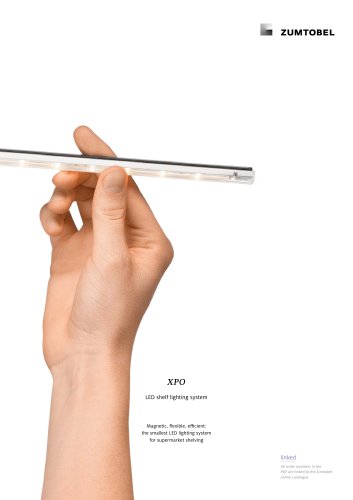 XPO
XPO16 Pages
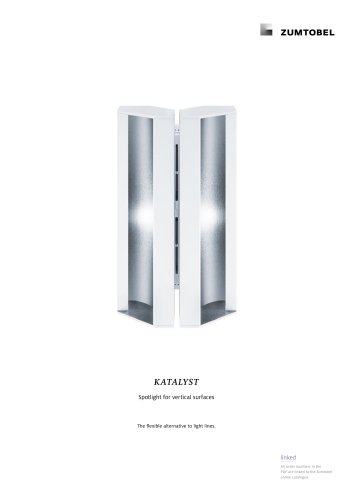 KATALYST
11 Pages
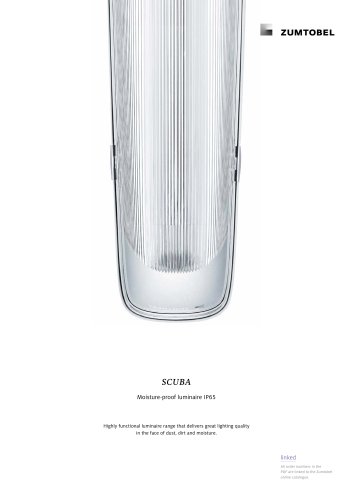 SCUBA
SCUBA36 Pages
 NIGHTSIGHT
30 Pages
 CREDOS
11 Pages
 CHIARO
24 Pages
 AXON
AXON9 Pages
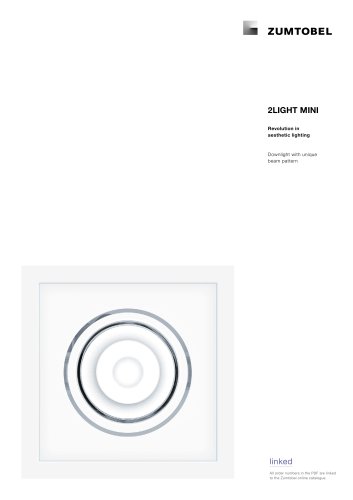 2LIGHT Mini
12 Pages
 AERO II
22 Pages
 SEQUENCE
36 Pages
 Light for Hotel and Wellness
52 Pages
 Light for care
24 Pages
