
- Catalogs
- Zimmer + Rohde GmbH
- Fabric information

Fabric information

Fabric information
Catalog excerpts
Ajour A collective term for all textiles pierced with a fine hole pattern. All over A description for a small patterned material design which is repeated over the whole fabric, such as a floral pattern or dots. Appliqué An intricate adornment with embroidered fabric, leather, pearls, sequins or tiny mirrors. Atlas Another name for satin. Batik Batik is an intricate material dyeing technique with a long tradition in India and Java. The part of the pattern which is not to be dyed is covered with wax, which is then later removed. In plangi batik, or tie-dye processes, these areas are tied with string. Every piece is completely unique. Batiste A fine, light fabric in a plain weave, mostly made of cotton or a linen mixture. Burnout A transparent material upon which a pattern is created by chemical etching – or ‘burning out’ part of the fibres. Bouclé A fabric with a strong-structured and almost curly surface, made of special bouclé yarn with lots of tiny loops. An elegant covering material made in wool mixtures.
Open the catalog to page 1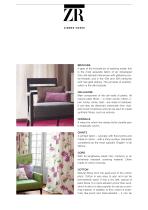
Brocade A gem of the intricate art of weaving made, this is the most exquisite fabric of all. Developed from silk damask interwoven with glistening metal threads, and in the 15th and 16th centuries with real gold plating. The pinnacle of sophistication is the silk brocade. Cellulose Main component of the cell walls of plants. All natural plant fibres – in other words cotton, linen, hemp, ramie, bast – are made of cellulose. It can also be dissolved chemically from chipped wood or bamboo and can be spun to create synthetic fibres, such as viscose. Chenille A velour for which the velvety-fluffy...
Open the catalog to page 2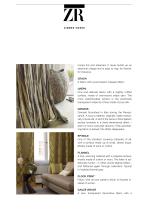
ironed hot and steamed. It never builds up an electrical charge and is easy to nap, for flannel, for instance. Crash A fabric with a permanent creased effect. Crêpe Fine and delicate fabric with a slightly ruffled surface, made of overwound crêpe yarn. The more sophisticated version is the practically transparent crêpe de Chine made of pure silk. Damask Damask flourished in Italy during the Renaissance. A luxury material, originally made exclusively of pure silk, in which the twine or floral pattern arches forwards in a three-dimensional effect – even on mono-coloured versions. If the upholstering...
Open the catalog to page 3
stitch-like ajour appearance. When woven, the warp threads are twisted around each other using a special technique. Herringbone Twill weave fabric with a zigzag pattern reminiscent of a fish skeleton. Typical in black and white Horsehair From horse’s tail hair (as weft), an expensive but extremely sturdy covering material is made. Houndstooth Classic fabric in a two-colour twill weave, the pattern which is reminiscent of birds’ footprints. Typically in black and white. Ikat An elaborate dyeing technique where the warp threads are dyed according to the pattern before being woven. It is typical...
Open the catalog to page 4
colour. This discovery by Joseph-Marie Jacquard in 1805 signalled a veritable revolution which enabled the simpler production of largeformat patterns. Linen A natural fibre made from the stalks of the flax plant. It boasts a long list of positive characteristics: linen is practically non-electrostatic, extremely absorbent and resistant to alkalis, and can therefore be washed often. It is an excellent heat conductor, and therefore has a cooling effect in warm weather. Linen does not fluff and is highly tear-resistant. A typical characteristic is its dry, slightly napped feel, and its tendency...
Open the catalog to page 5
Organza A delicate, semi-transparent silk fabric in plain weave with a certain stiffness. Paisley Classic fabric pattern of pear-shaped motifs with a curved tip. Pattern repeat The pattern repeat refers to the distance between pattern repetitions in centimetres. Pile velvet A collective term for velvet fabrics with a pattern in which velvet parts are raised against a smooth background. Piqué A two-ply fabric with a relief-like surface structure with a back-stitch appearance. Waffle piqué obtains its waffle pattern through a special weaving process. A typical fabric for dish and hand towels. Plain...
Open the catalog to page 6
plays similar properties, for the production of faux fur and strong upholstering materials. Polyamide A synthetic fibre. There is one variant which displays a close similarity to silk. It is intense in colour, resistant to discolouration and creaseproof but pleatable. The other variant can be created to resemble angora, cashmere, alpaca or cotton. Polyester Polyester is a chemical fibre which is capable of adopting many properties. In general, polyester is particularly resistant to light and weather, whilst offering highly elastic and crease-proof characteristics. It is therefore a popular material...
Open the catalog to page 7
are visible on the surface, and in weft atlas, only the weft threads can be seen. They form an extremely smooth, shiny surface whilst the underside has a matt appearance. Scherli Fabric with tiny, fringe-like and raised weft threads arranged in a pattern. Seersucker Plain-woven fabric with a striped pattern which forms crêpe-like waves. Shot fabric Fine fabric in a plain weave created with various yarn colours in the warp and weft. This causes a ‘changing’, slightly shimmering effect depending on how the light falls. Silk Natural fibre from the cocoons of the mulberry silkworm. Alongside its...
Open the catalog to page 8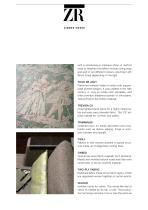
with a simultaneous intensive shine. A method used to heighten this effect involves using warp and weft in two different colours, resulting in different tones depending on the light. Toile de Jouy Patterned material made of cotton with copperplate printed designs. It was created in the 18th century in Jouy-en-Josas near Versailles, and often portrays shepherd scenes or chinoiserie. Typical French decorative material. Trevira CS Copyrighted brand name for a highly inflammable and easy-care polyester fabric. The ‘CS’ addition stands for ‘comfort and safety’. Trimmings Collective term for textile...
Open the catalog to page 9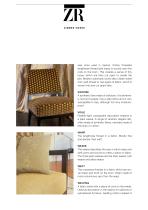
was once used in Venice: thickly threaded lengthwise thread (pile warp) is wound over thin rods on the loom. This creates a series of tiny loops, which are then cut open to create the pile. Modern automatic looms also create velvet from weft thread or two layers of fabric, which is woven first and cut apart later. Viscose A synthetic fibre made of cellulose. It is extremely soft and supple, has a silky shine and is very susceptible to dye, although not very moistureproof. Voile Feather-light, transparent decorative material in a plain weave. A range of variants: elegant silk, often made of synthetic...
Open the catalog to page 10All Zimmer + Rohde GmbH catalogs and technical brochures
 RELAX 1200352
1 Page
 HOME 1200382
1 Page
 CLUB 1200244
1 Page
 CIRCLE 1200401
1 Page
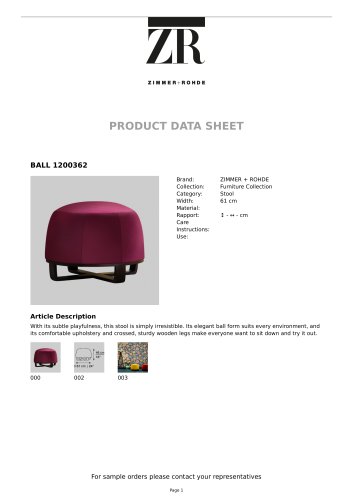 BALL 1200362
1 Page
 ZIMMER + ROHDE
23 Pages
 TRAVERS NEW YORK
11 Pages
 HODSOLL MCKENZIE LONDON
18 Pages
 ardecora Milano
13 Pages
 CIRCUS
13 Pages


- Chair
- Lounge chair
- Industrial wallpaper
- Modern chair
- Indoor seat
- Home chair
- Patterned wallpaper
- Contemporary lounge chair
- Contemporary wallpaper
- Textile armchair
- Industrial upholstery fabric
- Armchair with armrests
- Washable wallpaper
- Upholstered chair
- Contemporary textile
- Printed wallpaper
- Fabric chair
- Chair with armrests
- Non-woven wallpaper