
- Catalogs
- Verzelloni
- DECALOG

DECALOG

DECALOG
Ergonomic Reclining Chair Design Specifications
This document outlines the design considerations and ergonomic parameters for reclining chairs intended for relaxation and managerial use.
1. Chair Positions and Usage
- The reclining chair is designed to accommodate individual measurements for optimal comfort.
- The relaxation position is not suitable for activities such as reading, watching television, or conversation.
- Relaxing chairs may benefit from a height-adjustable footrest.
- Backrests reclining more than 30° past vertical require an additional headrest for support.
2. Ergonomic Parameters and Dimensions
- Lumbar support depth ranges between 6-8 cm to 15-20 cm to maintain lordosis.
- Seat length maximum is approximately 508 mm, with a typical seat length around 406 mm.
- Reclining angles vary by chair type:
- Relaxing chairs: reclining beyond 30° past vertical.
- Operative chairs: reclining between 90° and 115° to support alertness and work requiring attention.
- Armrests and leg space are designed to facilitate ease of getting up, with armrests aiding movement and leg space accommodating thigh clearance.
- Footrests are recommended for shorter users, especially when table height is fixed.
3. Materials and Quality Considerations
- Material selection balances quality and price, with attention to warranty and upkeep.
- High-density padding is specified, with ischium thickness at 50 mm for comfort.
- Leather upholstery is mentioned as a material option.
4. Design and Functional Recommendations
- Chair design targets include ergonomics, ecology, upholstery, and finishing quality.
- Adjustable models are recommended to accommodate a range of user heights and preferences.
- Design must consider the plane of movement and reference planes of the seat for optimal posture support.
5. Additional Notes
- Relaxation positions have not been fully accounted for in anthropometric data, with a noted gender distribution of 99% men and 1% women in the data set.
- Table thickness and height parameters are considered in relation to chair design to ensure compatibility.
Summary: The document provides detailed ergonomic and design guidelines for reclining chairs, emphasizing individualized fit, appropriate reclining angles, lumbar support, and material quality to ensure comfort and functionality for relaxation and work-related seating.
Catalog excerpts
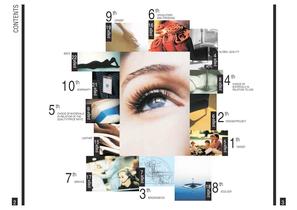
For lounge, relaxati For all ad Reclining chair designed to measure for each individual. This position is not suitable for reading, watching television or conversation. Max 11.5 292 Min 7 178 Lumbar Armrest Reclining 10 254 7 5 Variation Relaxing chair. It may be useful to have a height-adjustable footrest. A backrest reclining over 30° past the vertical requires a headrest. Backrest reference planes. Relaxing chair for managerial or daily use and for travelling. 3 2 Variant Vertical LEATHER 9th 3th 19 page 21 page 9 page 15 page 17 page 7 page E WARRANTY UPKEEP Lordosis/ lumbar depth 6-8 15-20...
Open the catalog to page 2All Verzelloni catalogs and technical brochures
 General catalogue 14
178 Pages
Archived catalogs
 NEWS 10
16 Pages
 APERIODIC 10
27 Pages
 NEWS 07/08
26 Pages
 NEWS 09
10 Pages
 General Catalogue
107 Pages
 New07
New0710 Pages