
- Catalogs
- Ventive Limited
- The Effects of Thermal Conditions and Indoor Air Quality on Health, Comfort and Cognitive Performance of Students

The Effects of Thermal Conditions and Indoor Air Quality on Health, Comfort and Cognitive Performance of Students
The Effects of Thermal Conditions and Indoor Air Quality on Health, Comfort and Cognitive Performance of Students
This document examines the effects of thermal conditions and indoor air quality (IAQ) on students' health, comfort, and cognitive performance. Conducted by University College London (UCL) and the Institute of Education (IoE), it was commissioned by Built Offsite.
Regulatory Framework and Empirical Evidence
The report critiques current guidelines on indoor pollutants and thermal conditions in schools, noting their inadequacy in addressing specific pollutants beyond CO2 levels. It reviews standards like ISO 7730, ASHRAE Standard 55, and EN 15251, which focus on preventing overheating and maintaining appropriate temperatures.
Methodology
A systematic review of literature was conducted, focusing on temperature, ventilation rates, and CO2 levels' effects on student performance and health. The review included studies on children aged 6-16, considering health outcomes, academic performance, and perceived IAQ.
Findings
- Lower classroom temperatures (20°C to 25°C) enhance student performance by 2% to 4% per degree reduction.
- Increased ventilation rates (from 5 L/s-p to 15 L/s-p) correlate with a 7% improvement in academic performance.
- High indoor CO2 levels are linked to increased absenteeism and impaired performance.
- Traffic-related pollutants contribute to absenteeism and asthma, requiring separate consideration from CO2 levels.
Recommendations
- Maintain classroom temperatures between 20°C to 22°C in winter and 22°C to 24°C in summer.
- Limit indoor CO2 concentrations to an average of 1000 ppm during teaching hours.
- Screen construction and cleaning materials for VOC content to avoid IAQ issues.
- Consider school location relative to outdoor pollution sources and implement urban greening programs.
Conclusion
The report suggests that maintaining lower CO2 levels than current guidelines could enhance academic performance and health. Further research is needed to confirm these findings and address potential confounding factors.
Studies indicate that reducing classroom temperature can enhance cognitive performance, with a 2-4% improvement in speed for every 1°C reduction. A linear regression model predicts an 11% improvement when temperatures drop from 25°C to 20°C.
Health and Temperature
Lower temperatures may improve health and reduce symptoms like breathlessness and Sick Building Syndrome (SBS) among students.
Ventilation, CO2 Levels, and Performance
Higher ventilation rates improve performance in tasks requiring mathematical skills and complex cognitive abilities. An increase in ventilation from 5 L/s-p to 15 L/s-p could enhance performance by 7%.
Higher CO2 levels are linked to increased absenteeism due to illness. Improved ventilation reduced illness-related absences by 1-1.5% per 1 L/s-p increase in ventilation rates.
School Exposure and Health
Exposure to pollutants like NO2, NO, and CO is associated with higher asthma prevalence and wheeze in children. Traffic-related pollutants near schools increase asthma incidence.
Pollutants and Cognitive Performance
No significant effect of reduced particle concentrations on schoolwork performance was found, despite lower PM levels achieved through air cleaners.
Future research should adopt an integrated approach to investigate multiple environmental factors affecting learning and health outcomes. Schools should maintain indoor temperatures between 20-22°C in winter and 22-24°C in summer to improve cognitive performance and reduce SBS symptoms. Stakeholders should consider traffic-related pollutants when selecting school locations and introduce traffic-free zones around schools.
The review highlights the importance of maintaining optimal IAQ and thermal conditions in schools to enhance cognitive performance and health. Future guidelines should focus on establishing evidence-based standards for classroom temperatures and CO2 levels.
Catalog excerpts
The Effects of Thermal Conditions and Indoor Air Quality on Health, Comfort and Cognitive Performance of Students
Open the catalog to page 1
The Effects of Thermal Conditions and Indoor Air Quality on Health, Comfort and Cognitive Performance of Students Authors: Lia Chatzidiakou, Dejan Mumovic, Julie Dockrell Published by: The Bartlett, UCL Faculty of the Built Environment UCL Institute for Environmental Design and Engineering London, October 2014
Open the catalog to page 3
Published by: The Bartlett, UCL Faculty of the Built Environment, London, October 2014 Copyright ©Built Offsite ISBN 978-0-9930137-3-7
Open the catalog to page 4
About the authors UCL is ranked fourth in the world’s top ten universities by the QS World University Rankings (2012). More than 4,000 academic and research staff at UCL are dedicated to research and teaching of the highest standards. Nobel prizes have been awarded to 21 former academics and graduates. In the last 2008 Research Assessment Exercise (RAE), UCL was rated the best research university in London, and third in the UK overall, for the number of its submissions which were considered of ‘world-leading quality’. UCL is one of the most successful UK universities at attracting funding, with...
Open the catalog to page 5
Built Offsite preface Built Offsite Ltd is an education construction specialist operating across the UK and is very aware of its responsibility to create optimum learning environments for the benefit of the students making use of these new school facilities. Since its inception Built Offsite has been committed to reducing the energy demand and environmental impact in its design and specification of the school buildings it constructs. As a result of this continued development focus on sustainability the Company routinely provides schools that can achieve a peak heating demands of less than 10...
Open the catalog to page 6
Executive summary The present review evaluates the strength and consistency of current evidence indicating that there is an association between indoor pollutants and thermal conditions in schools on students’ performance. Moreover, the report examines evidence that air pollution and thermal conditions may have acute and adverse effects on students’ health which can indirectly affect performance, through impaired attendance and discomfort. Current guidelines ensuring adequate IAQ in UK school classrooms have been framed around CO2 levels, and do not consider specific pollutants, as there is no...
Open the catalog to page 7
Based on the available evidence, engineering recommendations for healthy, comfortable school environments conducive to knowledge have been proposed: 1. Schools should not allow temperatures to drift above the recommended range of 20 to 22 C in the winter season and 22 to 24 C in the summer. While current guidelines allow temperatures in the range of 25 C to 32 C, evidence suggests that temperatures in this range may impact on cognitive performance and comfort of the students. 2. Overall evidence suggests limiting average indoor CO2 concentrations in all teaching and learning spaces to an average...
Open the catalog to page 8
Built Offsite preface iii Nomenclature viii 2 Regulatory framework and empirical evidence on indoor levels in school settings 2 4 The effect of temperature on health, cognitive performance and comfort 9 5 The effect of ventilation rates and CO2 levels on health, cognitive performance and perceived IAQ 13 6 The effect of school exposure on health and perceived IAQ 16
Open the catalog to page 9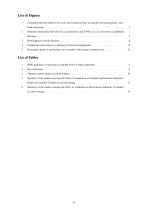
Correlation between indoor CO2 levels and ventilation rates in naturally and mechanically ventilated classrooms . . . . . . . . . . . . . . . . . . . . . . . . . . . . . . . . . . . . . . . . . . . . Moderate relationship between CO2 concentrations and TVOCs in 132 classrooms in published literature . . . . . . . . . . . . . . . . . . . . . . . . . . . . . . . . . . . . . . . . . . . . . . . . Flow diagram of study selection . . . . . . . . . . . . . . . . . . . . . . . . . . . . . . . . . . . Normalised performance as a function of classroom temperature . . . . . . . . . . . . . . . . . . Percentage...
Open the catalog to page 10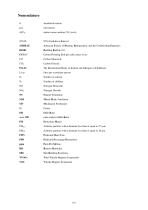
standard deviation indoor minus outdoor CO2 levels American Society of Heating, Refrigeration, and Air-Conditioning Engineers Colony Forming Unit per cubic meter of air Carbon Monoxide Carbon Dioxide The International Study of Asthma and Allergies in Childhood litres per second per person Nitrogen Monoxide Nitrogen Dioxide Natural Ventilation Mixed-Mode Ventilation Mechanical Ventilation Odds Ratio meta-analytic Odds Ratio Particulate Matter Airborne particles with a diameter less than or equal to 2.5 µm Airborne particles with a diameter less than or equal to 10 µm Predicted Mean Vote Predicted...
Open the catalog to page 11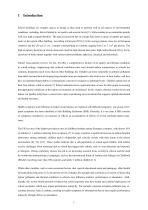
School buildings are complex spaces to design as they need to perform well in all aspects of environmental conditions, including, but not limited to, air quality and acoustic levels [1], while needing to accommodate periods with very high occupant densities. The typical classroom has on average four times as many occupants per square metre as the typical office building. According to Eurostat (2011) [2], the average primary class size in European countries and the US was 21 (s : 2) pupils corresponding to a density ranging from 2 to 3.1 m2 per person. The high occupancy densities in school classrooms...
Open the catalog to page 12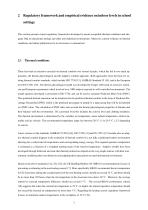
Regulatory framework and empirical evidence on indoor levels in school settings This section presents current regulatory frameworks developed to ensure acceptable thermal conditions and adequate IAQ in educational settings and other non-industrial environments. Moreover, current evidence on thermal conditions and indoor pollution levels in classrooms is summarised. Thermal conditions There has been an extensive research on thermal comfort over several decades, which has led to two main approaches, the thermo-physiological and the adaptive comfort approach. Both approaches form the basis for existing...
Open the catalog to page 13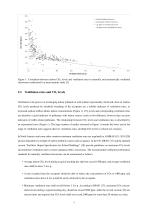
Figure 1: Correlation between indoor CO2 levels and ventilation rates in naturally and mechanically ventilated classrooms synthesised in a meta-analytic study [3] Ventilation rates and CO2 levels Ventilation is the process of exchanging indoor polluted air with outdoor (presumably) fresh and clean air. Indoor CO2 levels produced by metabolic breathing of the occupants are a reliable indicator of ventilation rates, as increased outdoor airflow dilutes indoor concentrations (Figure 1). CO2 levels and corresponding ventilation rates are therefore a good indicator of pollutants with indoor sources...
Open the catalog to page 14All Ventive Limited catalogs and technical brochures
 OPERATION & MAINTENANCE
7 Pages
 Window Installation
2 Pages
 Acoustic design of schools
43 Pages
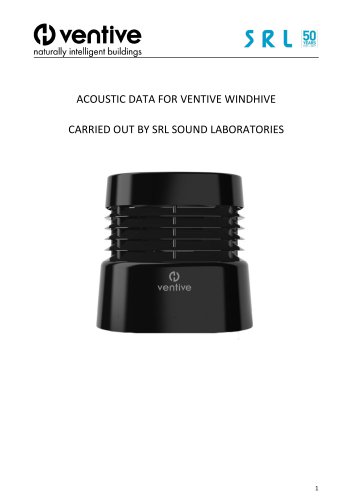 ACOUSTIC
7 Pages
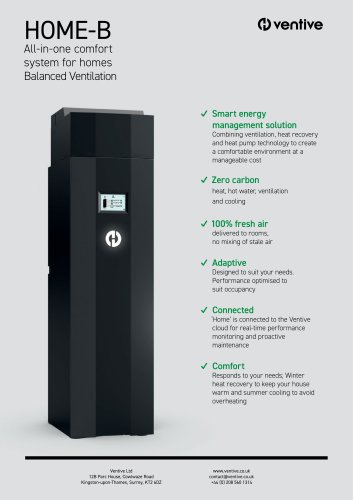 Home-B
2 Pages
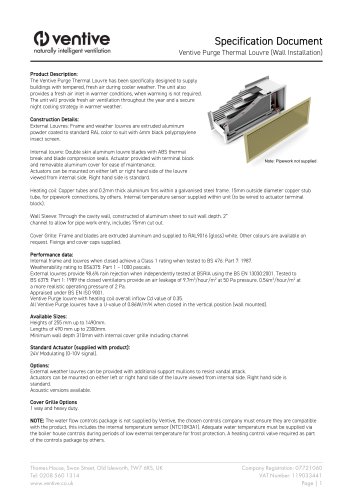 Purge Thermal Louvre
2 Pages
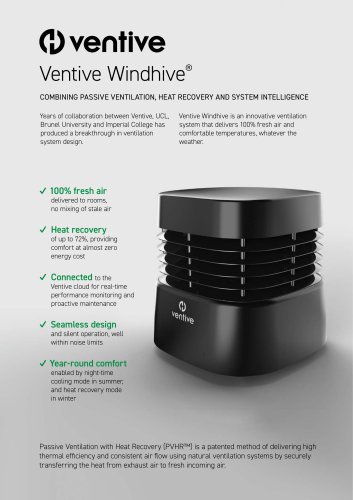 Windhive®
2 Pages
- Industrial heat pump
- Residential heat pump
- Mechanical ventilation unit
- Smart heat pump
- Monobloc heat pump
- Reversible heat pump
- Hot water heat pump
- Dual-flow mechanical ventilation unit
- Industrial air exhaust
- Ventilation system
- Residential ventilation system
- Centrifugal roof extractor
- Decentralized ventilation system
- Home ventilation system
- Exhaust air heat pump
- Commercial roof extractor
- Bathroom ventilation system