
- Catalogs
- Tenax UK Ltd
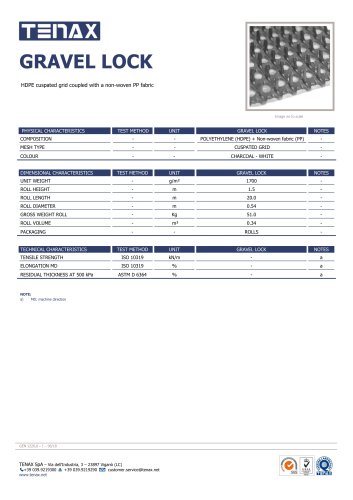
- GRAVEL LOCK


GRAVEL LOCK
GRAVEL LOCK
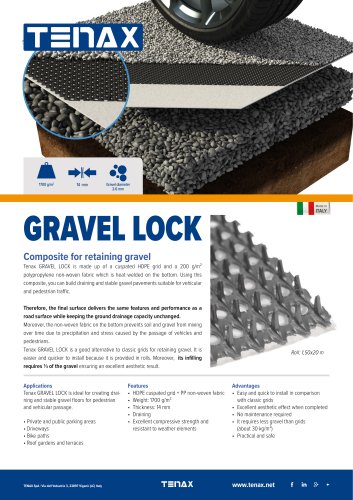
- HDPE cuspated grid combined with PP non-woven fabric.
- Weight: 1700 g/m², Thickness: 14 mm.
- Draining capability with excellent compressive strength and weather resistance.
- Easy and quick installation compared to classic grids.
- Requires less gravel (about 30 kg/m²) for infilling.
- No maintenance required and provides an excellent aesthetic finish.
- Private and public parking areas.
- Driveways and bike paths.
- Roof gardens and terraces.
- Create a compact and draining subgrade using crushed stone or gravel.
- Compact and level the bottom surface.
- Lay the GRAVEL LOCK roll and secure with flat-head nails if necessary.
- Fill the mesh with 2/6 mm gravel and compact manually using a vibrating plate or hard-bristle brush.
- For footways, create a subgrade about 10 cm high.
- For car parks and roads, create a subgrade at least 15 cm high.
Catalog excerpts
GRAVEL LOCK TAL TALY ITALY ITALY Composite for retaining gravel Tenax GRAVEL LOCK is made up of a cuspated HDPE grid and a 200 g/m² polypropylene non-woven fabric which is heat welded on the bottom. Using this composite, you can build draining and stable gravel pavements suitable for vehicular and pedestrian traffic. Therefore, the final surface delivers the same features and performance as a road surface while keeping the ground drainage capacity unchanged. Moreover, the non-woven fabric on the bottom prevents soil and gravel from mixing over time due to precipitation and stress caused by the passage of vehicles and pedestrians. Tenax GRAVEL LOCK is a good alternative to classic grids for retaining gravel. It is easier and quicker to install because it is provided in rolls. Moreover, its infilling requires ⅓ of the gravel ensuring an excellent aesthetic result. Applications Tenax GRAVEL LOCK is ideal for creating draining and stable gravel floors for pedestrian and vehicular passage. • Private and public parking areas • Driveways • Bike paths • Roof gardens and terraces TENAX SpA | Via dell’Industria 3, 23897 Viganò (LC) Italy Features • HDPE cuspated grid + PP non-woven fabric • Weight: 1700 g/m² • Thickness: 14 mm • Draining • Excellent compressive strength and resistant to weather elements Advantages • Easy and quick to install in comparison with classic grids • Excellent aesthetic effect when completed • No maintenance required • It requires less gravel than grids (about 30 kg/m²) •
Open the catalog to page 1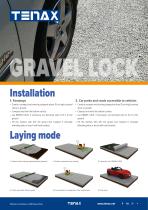
GRAVEL LOCK Installation 1. Footways • Create a compact and draining subgrade about 10 cm high (crushed stone or gravel) • Compact and level the bottom surface • Lay GRAVEL LOCK, if necessary, use flat-head nails to fix it to the ground • Fill the meshes with 2/6 mm gravel and compact it manually (vibrating plate or brush with hard bristles) Laying mode 2. Car parks and roads accessible to vehicles • Create a compact and draining subgrade at least 15 cm high (crushed stone or gravel) • Compact and level the bottom surface • Lay GRAVEL LOCK, if necessary, use flat-head nails to fix it to the ground...
Open the catalog to page 2All Tenax UK Ltd catalogs and technical brochures
 Agriculture & breeding
32 Pages
 Constructions
72 Pages
 TENAX FL
1 Page
 TENAX D-MIX
1 Page
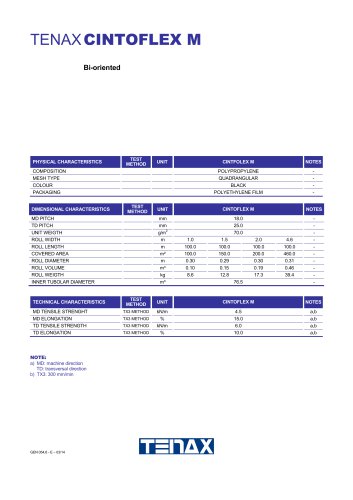 TENAX CINTOFLEX M
2 Pages
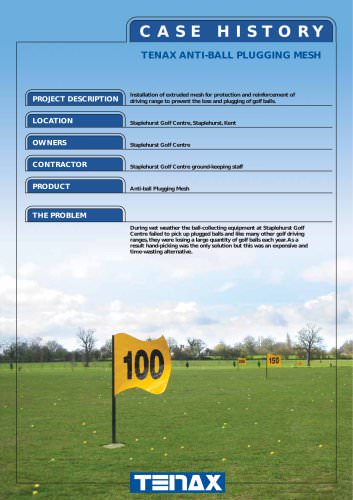 TR-Flex?
2 Pages
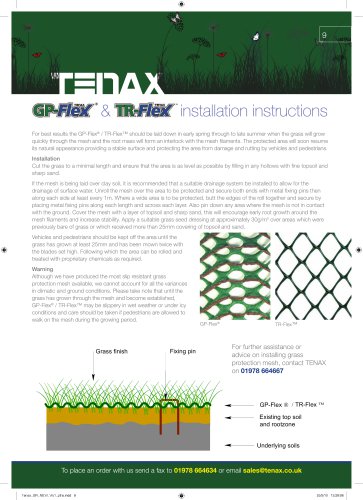 GP-Flex®
1 Page
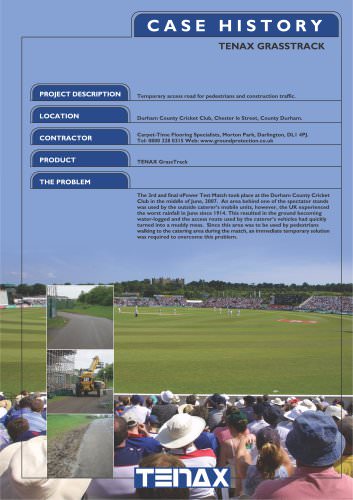 GrassTrack®
2 Pages
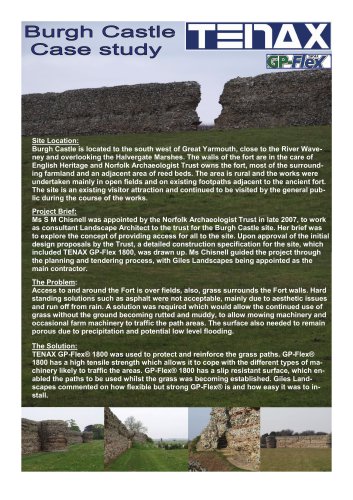 GP-Flex®
2 Pages
- Industrial planter
- Exterior planter
- Contemporary flower box
- Industrial metal mesh
- Fencing
- Metal fence
- Contemporary fence
- Rectangular planter
- Decorative metal mesh
- Building metal mesh
- Industrial barrier
- Commercial fence
- Metal barrier
- Silver-colored metal mesh
- Public space barrier
- Sustainable fence
- Plastic planter
- Modular fence
- Fixed barrier
- Wooden flower box