
- Catalogs
- Stauf Klebstoffwerk GmbH
- STAUF XP 20

STAUF XP 20

STAUF XP 20
Catalog excerpts
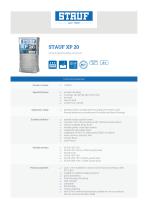
STAUF XP 20 Cement-based levelling compound Technical Datasheet Product number Special features excellent levelling coverings can be laid after short time low-dust easy to sand surface low in pores Application range levelling of floor screeds before bonding with STAUF wood flooring adhesives and adhesives for textile and elastic floorings Suitable subfloors sanded mastic asphalt screed concrete C 25 / 30 according to DIN 1045 (non-skid surface) calcium sulphate (flow) floors wooden planks, wood fibre boards magnesite and plaster floors chipboards (P4 to P7), OSB boards (OSB/2 to OSB/4) stone, ceramic, terrazzo, tiles cement floors cavity floors Suitable primers STAUF VDP 130 STAUF VPU 155 S + STAUF quartz sand STAUF D 54 STAUF VDP 160 STAUF VEP 195 + STAUF quartz sand STAUF WEP 180 + STAUF quartz sand Product properties up to 1 mm suitable for castors swivel chairs according to DIN EN 12529 suitable on subfloor heating systems good absorbency ductile during processing high strength pumpable self-levelling tension reducing with STAUF reinforcing fibres also suitable for use on surfaces that ar
Open the catalog to page 1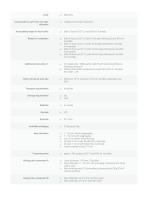
Consumption in g/m2 per mm layer thickness Accessibility/ready for foot traffic Ready for installation ✓ after 2 hours at 20 °C, max 65% rel. humidity ✓ after 6 hours at 20 °C, (with 3 mm layer thickness) max 65% rel. humidity ✓ after 12 hours at 20 °C, (with 5 mm layer thickness) max 65% rel. humidity ✓ after 24 hours at 20 °C, (with 10 mm layer thickness) max 65% rel. humidity ✓ after 48 hours at 20 °C, (with 20 mm layer thickness) max 65% rel. humidity Additional instructions 1 Room climate at work site Transport requirements Storage requirements Shelf-life Giscode Emicode Available packaging...
Open the catalog to page 2
EXAMINATION OF SUBFLOOR Before laying the covering, check the substrate in accordance with DIN 18356 and DIN 18365. The subfloor shall be resistant to pressure and tension, free of cracks, must have sufficient surface strength, be permanently dry, level, clean and free of from contaminants that may prevent adhesion, sinter layers etc. In addition, porosity and grip of surface need to be checked. Also check moisture content and absorption of subfloors as well as temperature, air humidity and subfloor temperature. SUBFLOOR PREPARATION It must be ensured that the subfloor is ready for installation...
Open the catalog to page 3All Stauf Klebstoffwerk GmbH catalogs and technical brochures
 STAUF S PRESS
3 Pages
 STAUF PUK 446
3 Pages
 STAUF SPU 555
3 Pages
 STAUF SPU 570
3 Pages
 STAUF PUK 410
3 Pages
 STAUF SPU 510 2024
4 Pages
 STAUF COMFORT PAD
2 Pages
 STAUF POLYESTER FELT
2 Pages
 STAUF SGH 50
3 Pages
 STAUF TURBO FIX
3 Pages
 STAUF REINFORCING FIBRES
1 Page
 STAUF PU
3 Pages
 STAUF GS STAND
3 Pages
 STAUF XP 10
3 Pages
 STAUF VEP 195
4 Pages
 STAUF VPU 155 S
3 Pages
 STAUF D 54
3 Pages
 STAUF WEP 180
4 Pages
 STAUF SMP 950
2 Pages
 STAUF M2A 910
2 Pages
 STAUF SPU 510
2 Pages

Archived catalogs
 STAUF M2A 910 2024
3 Pages
- Industrial insulation
- Thermal-acoustic insulation
- Indoor primer
- Sealant
- Concrete mortar
- Cement mortar
- Concrete primer
- Masonry mortar
- Glue
- Admixture
- Plant-based insulation
- Powder mortar
- Elastic sealant
- Wood primer
- Smoothing mortar
- Water-based primer
- Floor insulation
- Concrete admixture
- Concrete sealant
- Flooring screed mortar