


- Company
- Products
- Catalogs
- News & Trends
- Exhibitions
REFRIGERATOR OF ART

REFRIGERATOR OF ART
- Chivalric Epics: Many refrigerators feature scenes from chivalric epics, such as the busts of Ruggiero and Guido di Santa Croce, and figures like Orlando and Rinaldo, surrounded by traditional Sicilian motifs.
- Madness of Orlando: Inspired by the theme of Orlando's madness due to unrequited love, these refrigerators depict scenes of restraint and recovery, surrounded by Sicilian cart decorations.
- Giuseppe Garibaldi: The decorations highlight Giuseppe Garibaldi, known as the 'hero of two worlds,' with motifs like 'fintu ‘ntagghiu' and star patterns featuring Garibaldi and his wife Anita.
- Cavalleria Rusticana: Inspired by the opera based on Giovanni Verga's novella, these refrigerators feature episodes from the opera and the puppets of Villa Palagonia.
- Jerusalem Delivered: Scenes from Torquato Tasso's epic poem are depicted, with geometric and polychrome elements typical of Sicilian cart art.
- Saint Geneviève: The story of Saint Geneviève is illustrated, with vibrant geometric patterns and traditional Sicilian symbols like the trinacria.
- Jousting of the Paladins: Medieval jousting scenes inspired by Orlando's exploits are featured, with bold colors and traditional motifs.
- Paladins of France: Scenes from 'Orlando Furioso' are depicted, with vibrant colors and traditional Sicilian cart decorations.
- Michele Ducato: A third-generation artist from Palermo, specializing in the decoration and restoration of Sicilian carts.
- Gianfranco Fiore: An artist who studied in Palermo and opened a studio in Partinico, focusing on restoring and decorating Sicilian carts.
- Epic Conquests: Inspired by Torquato Tasso's "Jerusalem Delivered," featuring chivalric scenes and geometric motifs.
- The First and the Last: Combines traditional Sicilian cart motifs with chivalric scenes, emphasizing the dignity of decorative friezes.
- Homage to the Sicilian Cart: Depicts classic chivalric themes and the symbol of the trinacria, with anthropomorphized celestial bodies.
- Sicilian Nature: Highlights Sicily's vibrant flora and the character of its inhabitants, featuring Saint George slaying the dragon.
- Surrender to Delight: Celebrates the vibrant colors of Sicilian cart painting, with medallions depicting chivalric and mythological scenes.
- Jousting Paladins: Inspired by Carolingian paladins, featuring scenes of tournaments and duels.
- Sicilian Spectacle: Draws from the Opera dei Pupi, depicting epic battles between French paladins and Saracens.
- Fierce Battles: Combines Sicilian cart painting with medieval bestiary creatures, featuring knights battling mythical beasts.
- Saint George the Knight: Features Saint George slaying the dragon, with allegorical figures and traditional Sicilian decorations.
- Cavalleria Rusticana: Pays homage to Sicilian cart painting, featuring the Archangel Michael and scenes from "Cavalleria Rusticana."
- Gianfranco Fiore: Known for his enamel and oil works, Fiore's designs are deeply rooted in Sicilian tradition.
- Alessandro Forte: A painter from Biancavilla, Forte specializes in portraits and sacred scenes, collaborating with Flavia Pittalà on Sicilian cart decorations.
The document describes a series of refrigerators designed for countries with an electrical connection of 120v/60Hz. Each refrigerator is adorned with unique artwork inspired by Sicilian culture and history.
Artwork Themes:
- Angelica: Features scenes from the Carolingian cycle, depicting Angelica with knights Orlando and Rinaldo.
- Alexander the Great: Illustrates battle scenes from Alexander's historic defeat of Persian king Darius.
- Sunny Sicily: Depicts traditional Sicilian life and trades, including maritime activities and agriculture.
- The Three-Pointed Island: Inspired by Sicily's triangular shape and its cities, featuring scenes like tuna fishing and Greek battles.
- Citrons of Sicily: Focuses on the citron harvest in Sicily, with scenes of farmers working by moonlight.
- The Fishing Expedition: Highlights traditional Sicilian line fishing, with scenes of fishermen and marine life.
- The Moors: Inspired by Moorish heads of Caltagirone, featuring Saracen warriors and Sicilian vegetation.
- Orlando, Rinaldo, and Oliviero: Inspired by the Opera dei Pupi, blending Carolingian characters with Sicilian folklore.
- Taratatà: Celebrates Sicilian music and dance traditions, with scenes of dancers and musical instruments.
- Sweet Sicilia: Pays homage to Sicilian pastries, depicting traditional confections and seasonal fruits.
Artists:
- Alessandro Forte: Known for enamel and oil artworks.
- Michelangelo Lacagnina: A versatile artist with a deep connection to Sicilian culture, working with various materials and techniques.
Materials and Dimensions:
Most artworks are created using enamel and oil or acrylic, with dimensions typically around 60 x 146 x 66 cm.
Conclusion:
The document highlights the cultural richness and artistic diversity of Sicily through the medium of refrigerator decorations, each piece serving as a tribute to the island's history, traditions, and natural beauty.
The document describes a series of refrigerators decorated with themes inspired by Sicilian cart painting and chivalric epics. Each refrigerator features unique artistic designs that incorporate traditional motifs, historical episodes, and vibrant colors.
Decorative Themes:
- French Paladins: Inspired by the exploits of French paladins, particularly Orlando, with scenes from his life framed by traditional motifs and medallions.
- Saracen Conquest of Sicily: Features battle scenes and portraits of generals from the 9th-century Saracen conquest, with a central episode of Gradasso capturing magic armor.
- Sicilian Landscapes: Depicts everyday life and landscapes, including farmers and natural wonders like the Catanese coast's sea stacks.
- Chivalric Epics: Includes scenes of Orlando and Rinaldo, with vibrant geometric motifs and medallions of French court heroes.
- Paladins and Saracens: Features battles and duels between paladins and Saracens, with detailed knight portraits and geometric patterns.
- Angelica's Liberation: Illustrates the liberation of Angelica, with Sicilian symbols and landscapes, framed by colorful motifs.
- Chivalric Duels: Depicts duels between characters like Rinaldo and Ruggiero, with traditional cart painting elements.
Artists and Techniques:
- Sebastiano Patania: Known for enamel works depicting historical and epic themes.
- Flavia Pittalà: Specializes in religious-themed paintings and Sicilian cart decoration.
- Tommaso Provenzano: Focuses on figurative painting, mosaics, and restoration, with a passion for Sicilian cart art.
- Salvatore Sapienza: A decorator of Sicilian carts, known for his craftsmanship and dedication to traditional art forms.
Materials and Dimensions:
The refrigerators are crafted using enamel and oil, with dimensions typically around 60 x 151 x 68.2 cm.
Conclusion:
The document highlights the rich cultural heritage and artistic traditions of Sicily, as expressed through the decorative art of refrigerators inspired by the iconic Sicilian cart painting style.
- Chivalric Scenes: Features battles and duels inspired by the paladins of France, with geometric patterns and traditional Sicilian motifs like "cartocci" and "catinelle."
- Bella Sicilia: Highlights the fertility of Sicilian soil with depictions of local produce and a view of Mt. Etna, symbolizing nature's power.
- Epic: Depicts historical and legendary battles, with vibrant "cartocci" motifs and scenes of heroism.
- Paparuni: Inspired by the exploits of French paladins, featuring Charlemagne and knights, with stylized rosettes and ribbon motifs.
- Visule: Celebrates Sicilian cart painting with epic themes and traditional ceramic-inspired designs.
- Norman: Illustrates epic scenes from Sicilian history, including battles and the return of peace, with lively motifs.
- Blind Love: Focuses on romantic and heroic tales, with colorful friezes and horse motifs.
Alice Valenti, born in Catania in 1975, is an artist who has dedicated her career to preserving and reinterpreting the traditional art of Sicilian cart painting. She trained under Maestro Domenico di Mauro in Aci Sant’Antonio, becoming one of the few female artists to inherit this complex decorative art.
Artistic Journey
Alice's work is deeply rooted in Sicilian folklore and traditional themes, which she interprets through her unique artistic lens. Her creations include painted furniture, paintings, and everyday objects, often infused with irony and nostalgia. She collaborates in various fields such as interior design, fashion, and theatre.
Artworks and Themes
- Epic Scene with Orlando and Angelica: This piece features motifs inspired by Palermo cart decorations, with a central scene depicting Orlando and Angelica on a battlefield.
- Epic Scenes of Orlando, Rodomonte, and St. George: Inspired by eastern Sicilian cart motifs, this work includes arabesque decorations and apotropaic masks, with scenes of duels and St. George slaying a dragon.
- The Legend of Colapesce: This artwork narrates the legend of Colapesce, with side panels depicting Scylla and Charybdis.
- Ciccio: An homage to the Sicilian cart, featuring a donkey as the central figure, with decorated wheels and citrus fruits.
- Sicilian Cassata: Celebrates Sicily's fertility and richness, with traditional costumes and variations of the Sicilian cassata dessert.
- Trinacria: A tribute to Sicilian ceramics and Greek vase painting, featuring episodes from Ulysses' adventures.
- Heroes of Sicily: Inspired by eastern Sicilian cart painting, depicting French paladins and Saint George.
- Tony Mellone: Honors Sicilian street food culture, featuring a real-life vendor and motifs related to traditional food wrapping.
Conclusion
Alice Valenti's work is a vibrant celebration of Sicilian culture, blending traditional motifs with contemporary interpretations. Her art preserves the heritage of Sicilian cart painting while making it accessible and relevant to modern audiences.
Catalog excerpts

Dolce&Gabbana e Smeg, collaborano nuovamente nella realizzazione di un’edizione speciale del frigorifero FAB28, rendendolo un’opera d’arte. Due aziende appartenenti ad ambiti creativi diversi, ma unite da forti valori e tradizioni che uniscono le dimensioni del made in Italy: le origini, intese sia come appartenenza al territorio che come dimensione famigliare e la contaminazione tra epoche, discipline, sensibilità e diversi approcci creativi. Nasce così uno speciale frigorifero FAB28 Smeg con un’inconfondibile anima Dolce&Gabbana data dalle immagini dipinte su ciascun esemplare dalle mani di...
Open the catalog to page 2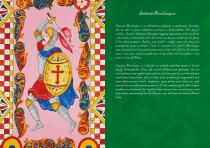
Antonio Bevilacqua Ceramica Bevilacqua è un laboratorio artigiano a conduzione familiare che ha sede in pieno entroterra siciliano, a Caltanissetta. Dal 1997 gli artisti, e fratelli, Antonio e Giuseppe traggono ispirazione dalle maioliche e dai decori tradizionali della loro terra, ma danno a tutto ciò che fanno il loro tocco personale. Anfore, vasi, piatti e orologi, sono solo alcuni dei meravigliosi pezzi realizzati. Tutte le creazioni dei fratelli Bevilacqua sono dominate dal colore giallo acceso come il sole della Sicilia, blu intenso come il suo mare, verde smeraldo come le sue colline dell’...
Open the catalog to page 3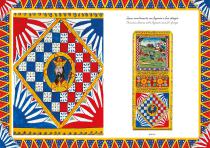
Scene cavalleresche con Argante e San Giorgio Chivalric Scenes with Argante and St. George
Open the catalog to page 4
Scene cavalleresche con Argante e San Giorgio Chivalric Scenes with Argante and St. George Antonio Bevilacqua Smalto / Enamel, 60 x 151 x 68.2 cm Questo frigorifero, ispirato ai motivi decorativi del carretto siciliano e ai temi cavallereschi, presenta sulla parte frontale la scena dell’entrata in battaglia a cavallo di Argante. Altri episodi epici compaiono sui lati, insieme alla raffigurazione di San Giorgio, protettore dei cavalieri e dei carrettieri, intento a uccidere il drago.mLe tinte del giallo, del rosso vivo e del verde brillante, evocative della Sicilia, dominano tutte le superfici,...
Open the catalog to page 5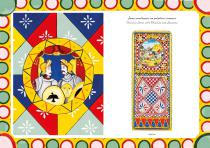
Scena cavalleresca con paladini e saraceni Chivalric Scene with Paladins and Saracens
Open the catalog to page 6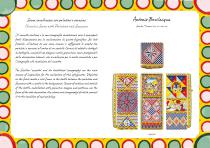
Scena cavalleresca con paladini e saraceni Chivalric Scene with Paladins and Saracens Antonio Bevilacqua Smalto / Enamel, 60 x 151 x 68.2 cm Il carretto siciliano e la sua iconografia tradizionale sono le principali fonti d’ispirazione per la realizzazione di questo frigorifero. Sul lato frontale, all’interno di una ricca cornice, è raffigurato lo scontro tra paladini e saraceni all’ombra di un castello. Cammei di soldati e dettagli di battaglia, arricchiti da disegni e motivi geometrici, sono i protagonisti della decorazione laterale, che si riallaccia per le scelte cromatiche e per l’iconografia...
Open the catalog to page 7
Scena cavalleresca con Carlo Magno Chivalric Scene with Charlemagne
Open the catalog to page 8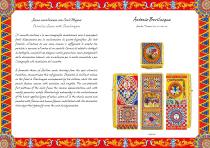
Scena cavalleresca con Carlo Magno Chivalric Scene with Charlemagne Antonio Bevilacqua Smalto / Enamel, 60 x 151 x 68.2 cm Il carretto siciliano e la sua iconografia tradizionale sono le principali fonti d’ispirazione per la realizzazione di questo frigorifero. Sul lato frontale, all’interno di una ricca cornice, è raffigurato lo scontro tra paladini e saraceni all’ombra di un castello. Cammei di soldati e dettagli di battaglia, arricchiti da disegni e motivi geometrici, sono i protagonisti della decorazione laterale, che si riallaccia per le scelte cromatiche e per l’iconografia alla tradizione...
Open the catalog to page 9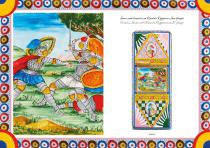
Scene cavalleresche con Rinaldo, Ruggiero e San Giorgio Chivalric Scenes with Rinaldo, Ruggiero and St. George
Open the catalog to page 10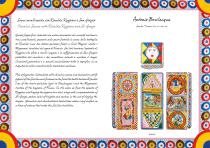
Scene cavalleresche con Rinaldo, Ruggiero e San Giorgio Chivalric Scenes with Rinaldo, Ruggiero and St. George Antonio Bevilacqua Smalto / Enamel, 60 x 151 x 68.2 cm Questo frigorifero, istoriato con motivi decorativi del carretto siciliano e temi cavallereschi, presenta sulla parte frontale la scena della battaglia di Rinaldo (uno dei dodici paladini fedeli a Carlo Magno) contro i Magonzesi, traditori del regno di Francia. Sui lati troviamo l’episodio di Ruggiero che sfida a duello i pagani e la raffigurazione di San Giorgio, protettore dei cavalieri e dei carrettieri, intento a uccidere il...
Open the catalog to page 11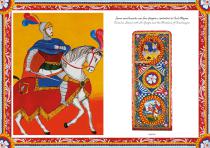
Scene cavalleresche con San Giorgio e i paladini di Carlo Magno Chivalric Scenes with St. George and the Paladins of Charlemagne
Open the catalog to page 12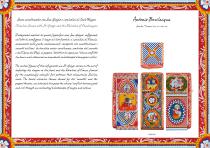
Scene cavalleresche con San Giorgio e i paladini di Carlo Magno Chivalric Scenes with St. George and the Paladins of Charlemagne Antonio Bevilacqua Smalto / Enamel, 60 x 151 x 68.2 cm Protagonisti assoluti di questo frigorifero sono San Giorgio, raffigurato nell’atto di sconfiggere il drago sul lato frontale, e i paladini di Francia, incorniciati dalle greche sontuosamente variopinte che caratterizzano i carretti siciliani. La tematica eroico-cavalleresca, condivisa dal carretto e dall’Opera dei Pupi, si propone l’obiettivo di esprimere l’eterno conflitto tra bene e male attraverso un incantevole...
Open the catalog to page 13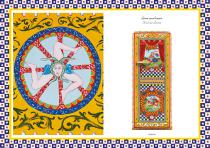
Scena cavalleresca Chivalric Scenes
Open the catalog to page 14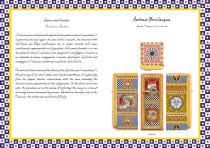
Scena cavalleresca Chivalric Scenes Antonio Bevilacqua Smalto / Enamel, 60 x 151 x 68.2 cm I colori accesi e brillanti delle sponde del carretto siciliano (“masciddari”), le geometrie dei suoi raggi e dei suoi motivi a scacchi, che derivano tutti dall’Opera dei Pupi, confluiscono con la stessa vivacità nelle scene cavalleresche rappresentate sul frigorifero. Sulla parte frontale e su uno dei pannelli laterali i paladini sono impegnati a sconfiggere il nemico in un tripudio di piume ondeggianti e corazze sfavillanti. Sull’altro lato campeggia la Trinacria, simbolo per eccellenza della Sicilia....
Open the catalog to page 15
Scene cavalleresche con i paladini di Carlo Magno e Antea di Babilonia Chivalric Scenes with the Paladins of Charlemagne and Anthea of Babylon
Open the catalog to page 16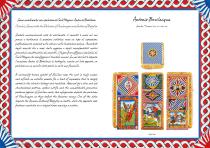
Scene cavalleresche con i paladini di Carlo Magno e Antea di Babilonia Chivalric Scenes with the Paladins of Charlemagne and Anthea of Babylon Antonio Bevilacqua Smalto / Enamel, 60 x 151 x 68.2 cm Simbolo universalmente noto di sicilianità, il carretto è unico nel suo genere e testimonia la passione artistica verso un tipo di espressione profondamente radicato nella storia e nella tradizione isolana. Arricchito dagli scacchi blu e rossi, dalle raggiere e dagli inconfondibili motivi geometrici caratteristici dei carretti, il frigorifero raffigura i paladini di Carlo Magno che sconfiggono il terribile...
Open the catalog to page 17All SMEG catalogs and technical brochures
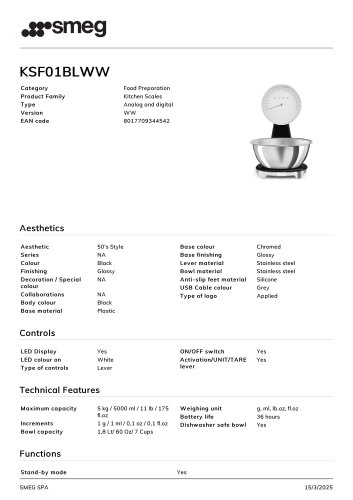 KSF01BLWW
4 Pages
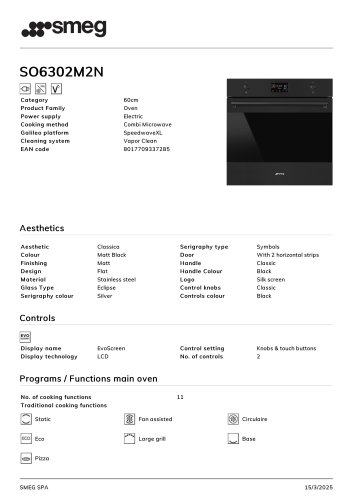 SO6302M2N
7 Pages
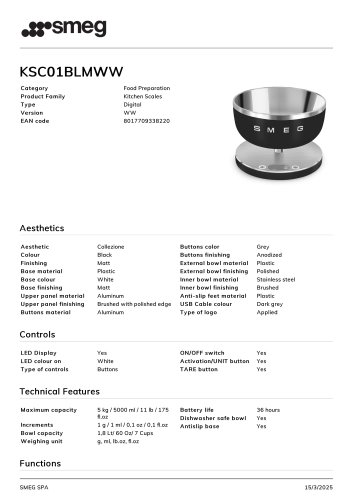 KSC01BLMWW
4 Pages
 KPF94MB
5 Pages
 SFP9302TN
8 Pages
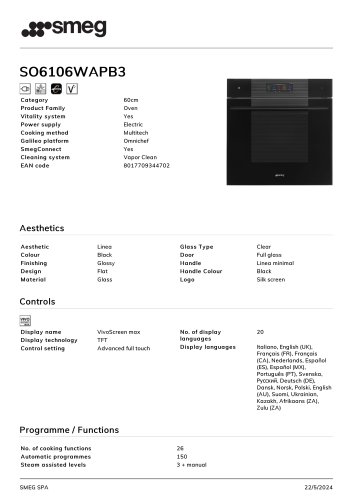 SO6106WAPB3
11 Pages
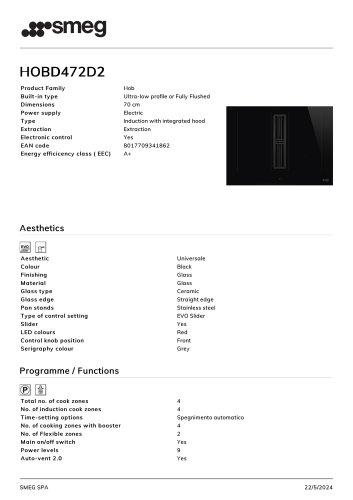 HOBD472D2
7 Pages
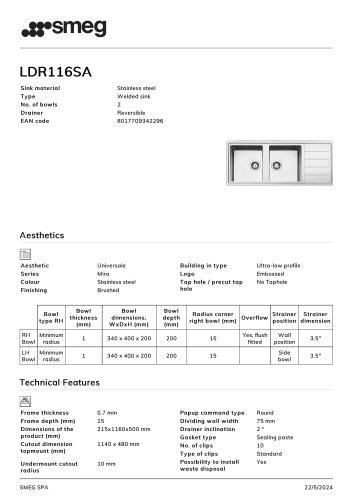 LDR116SA
4 Pages
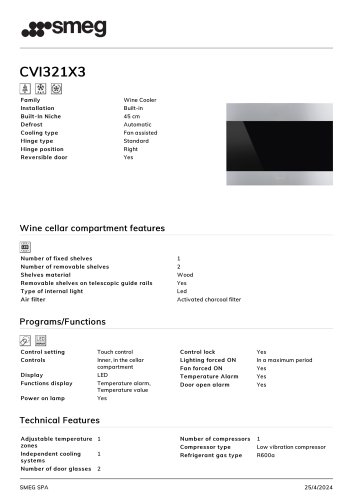 CVI321X3
3 Pages
 SI1M7733B
3 Pages
 SI7844B
3 Pages
 SI1F7845B
3 Pages
 SI1F7955B
3 Pages
 SIH7933B
3 Pages
 SI7633B
3 Pages
 SI1M7643B
3 Pages
 SI2M7643FX
3 Pages
 SI1M7743B
3 Pages
 SI2M7953D
5 Pages
 SI7643B
3 Pages
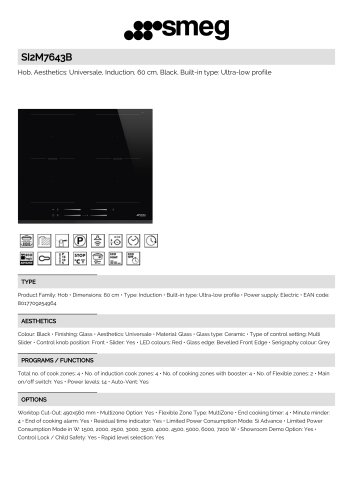 SI2M7643B
3 Pages
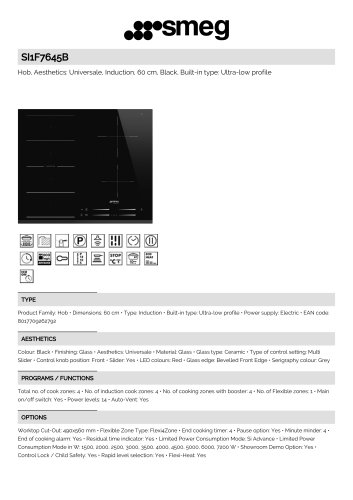 SI1F7645B
3 Pages
 SIM3963D
4 Pages
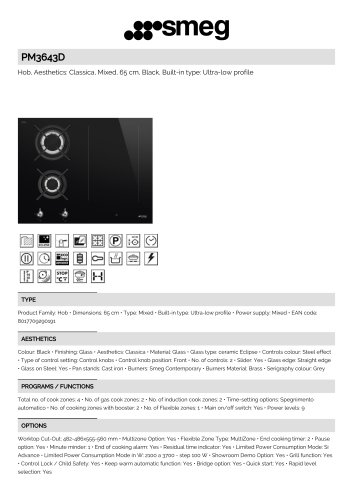 PM3643D
4 Pages
 SIM3843D
4 Pages
 SIM3643D
4 Pages
 SIM3323D
4 Pages
 PM3953D
4 Pages
 PM3743D
4 Pages
 HMF01PKEU
2 Pages
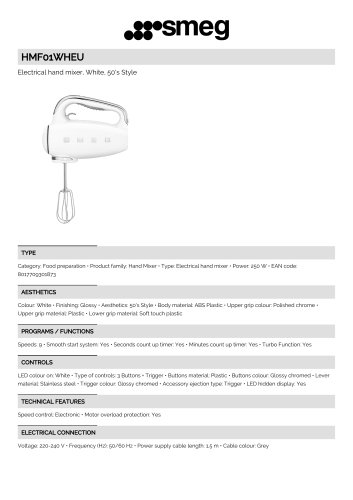 HMF01WHEU
2 Pages
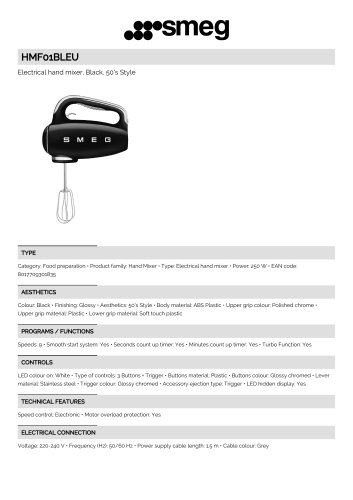 HMF01BLEU
2 Pages
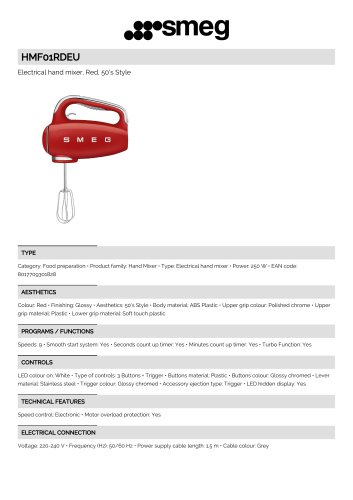 HMF01RDEU
2 Pages
 HMF01CREU
2 Pages
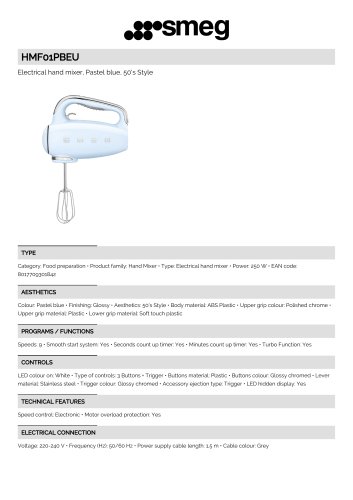 HMF01PBEU
2 Pages
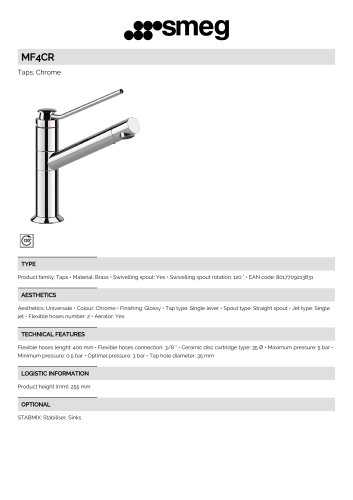 MF4CR
MF4CR2 Pages
 MDQ5-CR
2 Pages
 LPD116D
2 Pages
 CMS4604NR
2 Pages
 FAB5RPK3
2 Pages
 SMF13WHEU
2 Pages
 SMF03BLEU
2 Pages
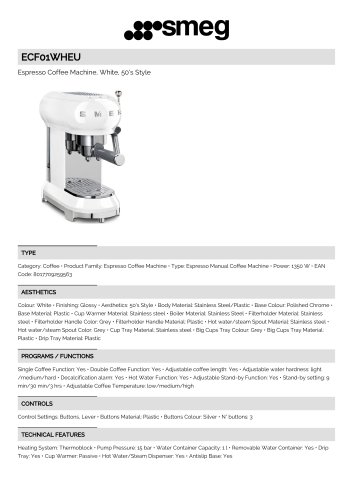 ECF01WHEU
2 Pages
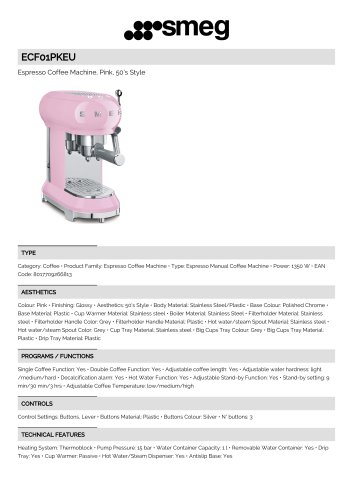 ECF01PKEU
2 Pages
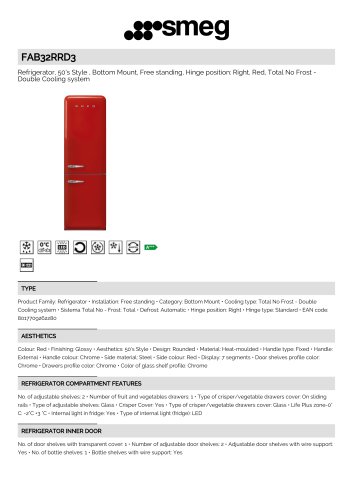 FAB32RRD3
3 Pages
 ECF01PGEU
2 Pages
 CMS4104S
2 Pages
 CVI618LWNR2
2 Pages
 PXL675L
4 Pages
 ECF01RDEU
2 Pages
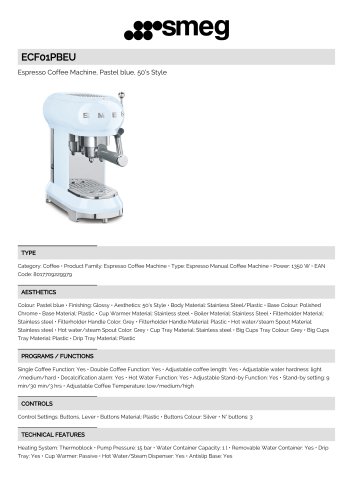 ECF01PBEU
2 Pages
 FAB50RCR
3 Pages
 CJF01BLEU
1 Page
 CJF01CREU
1 Page
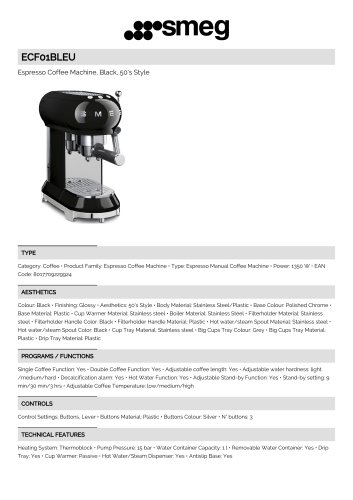 ECF01BLEU
2 Pages
 SJF01CREU
2 Pages
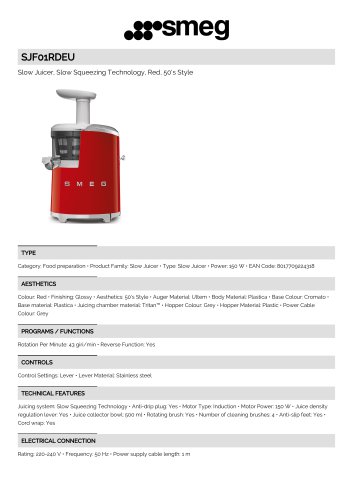 SJF01RDEU
2 Pages
 SJF01BLEU
2 Pages
 TR4110RW1
4 Pages
 CMS4303X
2 Pages
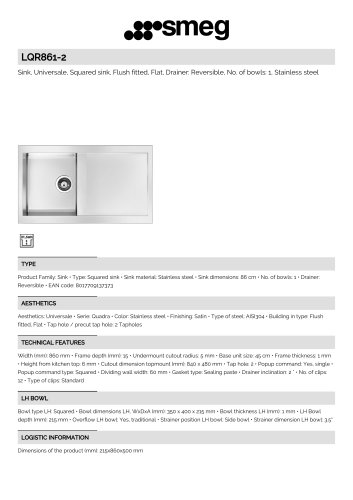 LQR861-2
2 Pages
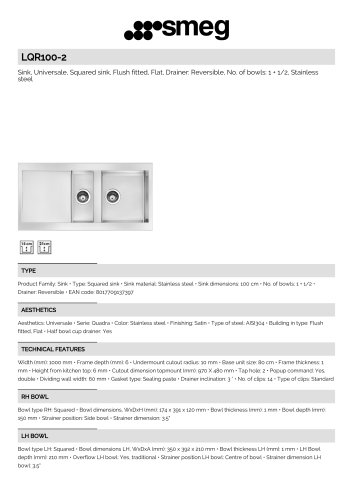 LQR100-2
2 Pages
 LQR116-2
2 Pages
 LQVB862-1
2 Pages
 LQVS862-1
2 Pages
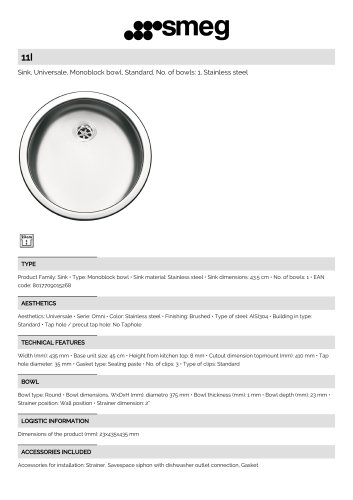 11I
11I2 Pages
 STC75
STC753 Pages
 SMEG500R
2 Pages
 SMEG500V
2 Pages
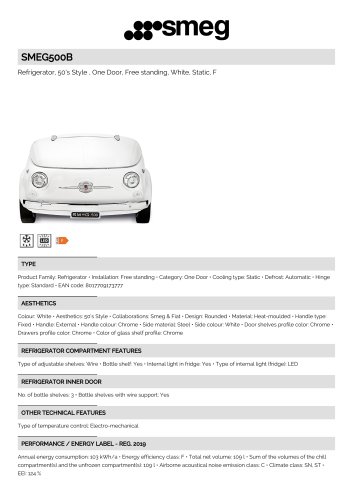 SMEG500B
2 Pages
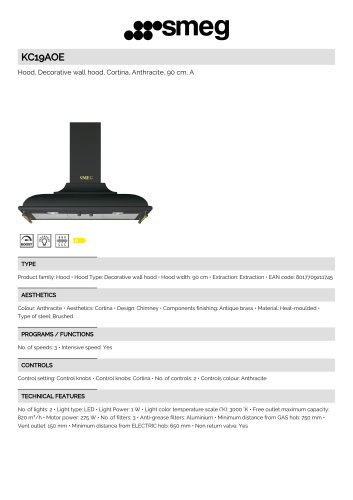 KC19AOE
3 Pages
 TR90BL9
3 Pages
 TR4110RO
4 Pages
 TR4110AZ
4 Pages
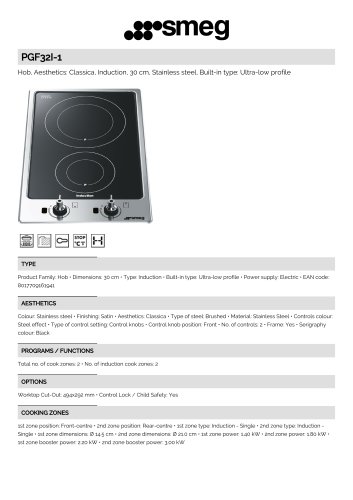 PGF32I-1
2 Pages
 PX1402
2 Pages
 PTV64ES
2 Pages
 P64ES
P64ES4 Pages
 P106ES
2 Pages
 KLF03SSEU
2 Pages
 KLF03PKEU
2 Pages
 KLF03PGEU
2 Pages
 KLF03BLEU
2 Pages
 KLF03CREU
2 Pages
 ECF01CREU
2 Pages
 VITALITY SYSTEM
28 Pages
 INDUCTION HOBS INTUITIVE SLIDER
28 Pages
 50'S RETRO FRIDGES CATALOGUE
19 Pages
 DIVINA CUCINA
15 Pages
 SICILY IS MY LOVE
25 Pages
 MAIN CATALOGUE
844 Pages
 PORTOFINO
40 Pages
 WINE COOLER COLLECTION
36 Pages
 LUXURY COOL
16 Pages
 DOLCE STIL NOVO
18 Pages
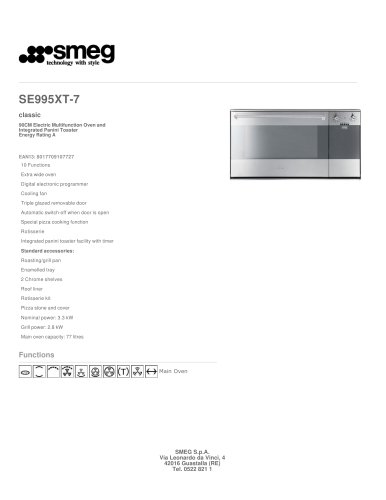 SE995XT-7
4 Pages
 SI3842B
2 Pages
 PGF32I
2 Pages
 SC45M2
3 Pages
 SC166PZ-8
3 Pages
 SC115A-1
5 Pages
 F610AN
4 Pages
 F65-7
F65-73 Pages
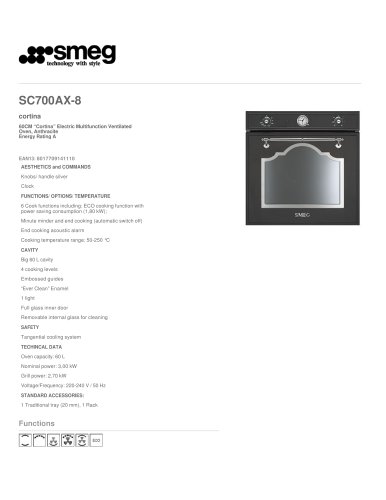 SC700AX-8
4 Pages
 SC106SG-8
3 Pages
 SFT105B
4 Pages
 SC166-8
3 Pages
 small domestic appliances
28 Pages
 SI644DO
3 Pages
 SRV563X-3
2 Pages
 SEH530X1
2 Pages
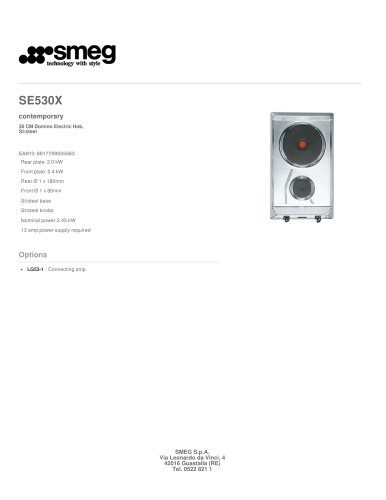 SE530X
2 Pages
 P64 Piano Design Aesthetic
2 Pages
 SE435NE-1
2 Pages
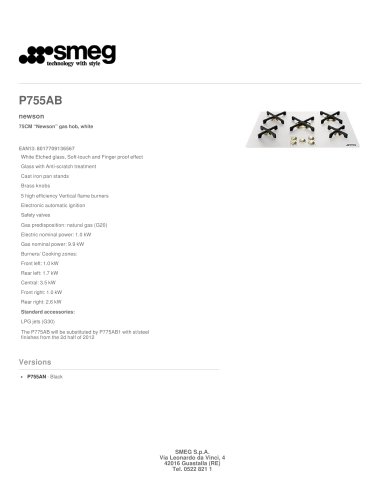 P755AB Newson Aesthetic
2 Pages
 FME20TC3
3 Pages
 FME24B-2
3 Pages
 SC420GN-8
3 Pages
 SE900GXClassic Aesthetic
3 Pages
 SC45MNE2
3 Pages
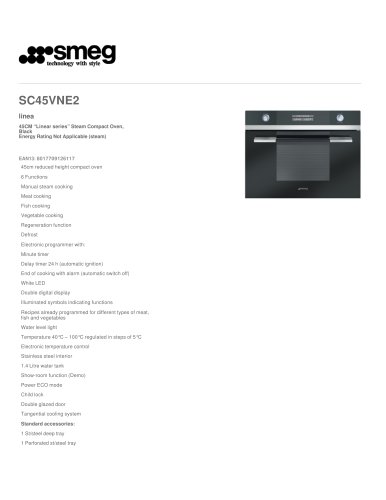 SC45VNE2 Linea Aesthetic
4 Pages
 SCP112PZ8
5 Pages
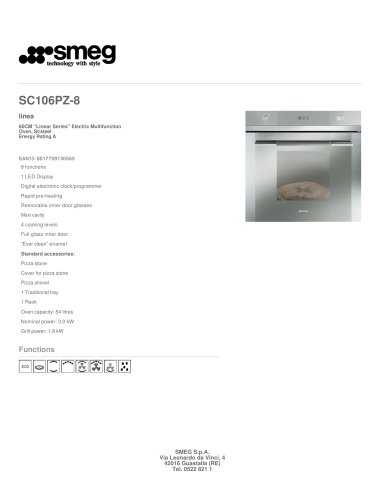 SC106PZ-8
3 Pages
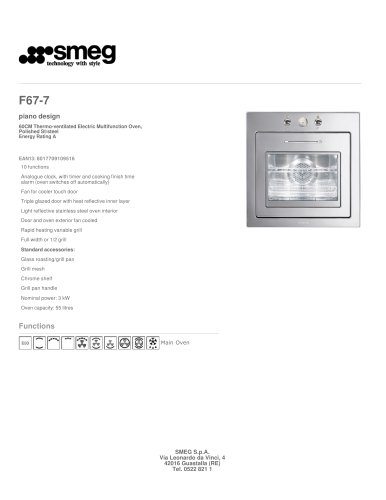 F67-7
F67-74 Pages
Archived catalogs
 SF140
SF1405 Pages
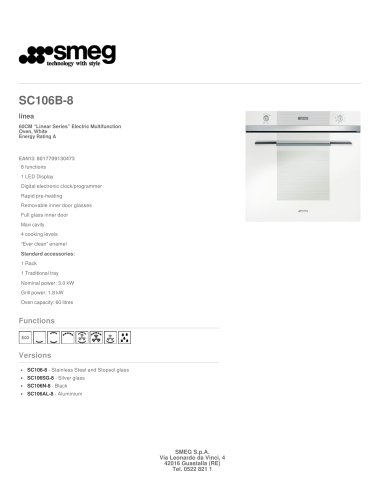 SC106B-8
3 Pages
 SC521X-8
3 Pages
 SC425X-8
3 Pages
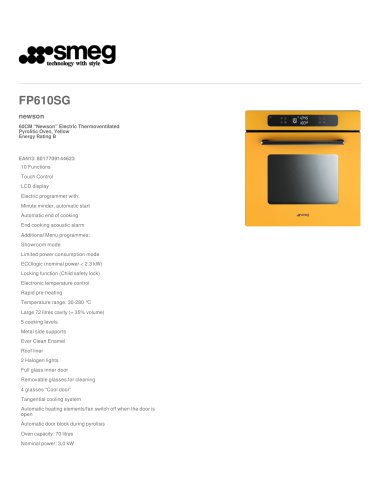 FP610SG
4 Pages
 General Catalogue 2015
231 Pages
 INDEPENDENT FAB
7 Pages
 SMEG 500
7 Pages
 SMEG 50'S STYLE
14 Pages
 INTERNATIONAL 2012 - 2013
314 Pages
- Industrial tap
- Mixer faucet
- Indoor mixer tap
- Metal mixer tap
- Contemporary single-handle mixer tap
- 1-hole single-handle faucet
- Countertop single-handle mixer tap
- Lever mixer tap
- Brass mixer faucet
- Oven
- Silver-colored mixer tap
- Electric oven
- Extractor hood
- Cold water tap
- Range hood with built-in lighting
- Cold water mixer tap
- Industrial hob
- Industrial sink
- Industrial coffee machine
- Industrial range cooker