
- Catalogs
- SIEMENS GAMESA
- Turbine Load Control


Turbine Load Control

Turbine Load Control
Overview: Siemens Turbine Load Control 2.0 (TLC®) is an advanced system designed to optimize wind turbine performance by actively managing turbine loading based on real-time wind conditions. This system aims to maximize annual energy production while maintaining grid stability.
Specifications: The TLC® system allows for the use of larger rotor diameters, which can increase energy production without exceeding load limits. It dynamically adjusts control settings to keep turbines operational under varying wind conditions, reducing the need for shutdowns.
Procedures: Traditional sector management systems often shut down turbines during strong winds from specific directions, leading to energy production losses and grid instability. In contrast, TLC® modifies turbine operations to handle these conditions without shutting down, thus maintaining energy output.
Benefits: Key advantages of TLC® include improved annual energy production (AEP) by minimizing shutdowns, enhanced grid stability, and the ability to remain load-neutral even during high wind conditions.
Recommendations: For projects aiming to maximize energy output and maintain grid stability, integrating TLC® with Siemens wind turbines is recommended. This approach allows for larger rotor applications and reduces the negative impacts of traditional sector management.
Contact Information: For further details, Siemens AG provides contact options through phone, fax, and email, with additional information available via local Siemens sales representatives.
Catalog excerpts
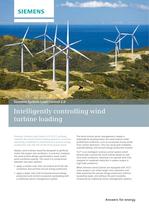
Siemens Turbine Load Control 2.0 Intelligently controlling wind turbine loading Siemens Turbine Load Control 2.0 (TLC®) actively controls the wind turbine loading based on real-time operating conditions to maximize the annual energy production over the life of the wind power plant. Ideally, wind turbines would be designed to perfectly match the project site conditions. In practice, however, the wind turbine design specifications rarely match wind conditions exactly. The result is a compromise between two basic options: • apply a smaller rotor that can endure all of the site conditions and sacrifice annual energy production • apply a larger rotor with increased annual energy production and control occasional overloading with a traditional sector management system The wind turbine sector management creates a downside by shutting down the wind turbine under predefined conditions, such as occasional strong winds from certain directions. This can cause grid instability, unpredictability, and annual energy production erosion. TLC® is an intelligent turbine control system which dynamically controls the wind turbine based on realtime wind conditions, allowing it to operate with only marginal or moderate reduction in power output in high load conditions. When Siemens wind turbines are equipped with TLC®, some projects can utilize larger rotor diameters and help maximize the annual energy production without exceeding loads, and without the grid instability introduced by traditional sector management systems. Answers for energy.
Open the catalog to page 1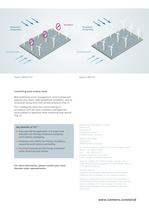
strong wind Prevailing wind strong wind Prevailing wind Figure 1: Without TLCS Figure 2: With TLCS Controlling wind turbine loads With traditional sector management, wind turbines will typically shut down under predefined conditions, such as occasional strong wind from certain directions (Fig. 1). TLC® intelligently alters the control settings in accordance with the wind conditions and keeps the wind turbines in operation while remaining load-neutral Improved AEP by application of a larger rotor diameter and limiting shutdowns caused by wind turbine overloading Increased grid stability by limiting...
Open the catalog to page 2All SIEMENS GAMESA catalogs and technical brochures
 SG 14-222 DD
3 Pages
 SG 3.4-132
4 Pages
Archived catalogs
 SG 8.0-167 DD
2 Pages
 SG 11.0-200 DD
3 Pages
 SWT-DD-130
2 Pages
 SWT-DD-120
2 Pages
 Siemens Gamesa 5.X
4 Pages
 SG 2.9-129
4 Pages
 SG 5.0-132
4 Pages
 SG 2.6-114
4 Pages
 SG 2.2-122
4 Pages
 SG 2.1-114
4 Pages
 SWT-3.3-130
4 Pages
 SWT-2.3-120
4 Pages
 SWT-6.0-154
16 Pages
 SWT-7.0-154
4 Pages
 D6 Platform
8 Pages
 SWT-6.0
16 Pages
 SICAM General
232 Pages
 SWT-2.3-93
8 Pages
 SWT-2.3-101
8 Pages
 SWT-3.0
8 Pages
 SWT-2.3-113
8 Pages
 Bolted Steel Shell Toweer
2 Pages
 High Wind Ride Through
2 Pages
 integralBlades®
2 Pages
 Lightning Protection System
2 Pages
 SWT-3.6-120
10 Pages
 SWT-2.3-108
8 Pages
 SWT-2.3-82
8 Pages
 SWT-3.6-107
8 Pages


