

Acoustix fx

Acoustix fx
Noise affects well-being in various environments. Polyflor's acoustic vinyl floorcoverings enhance acoustic properties while maintaining aesthetics, performance, hygiene, and durability. Effective noise reduction involves planning and additional measures like acoustic ceiling and wall panels.
Sound is generated by vibrations and transmitted through sound waves. Impact sound, such as footsteps, can be reduced with proper planning and installation of acoustic floorcoverings. Walking noise is also a consideration.
Impact sound insulation is measured by the sound level downstairs when a tapping machine operates upstairs. Polyflor's products exceed UK Building Regulations, offering a minimum reduction of 18dB, with some achieving 19dB.
Acoustic flooring is beneficial in commercial and residential buildings, especially in education and healthcare sectors, where noise can disrupt learning and recovery.
Acoustic flooring is crucial in schools to prevent noise disruption. Building Bulletin 93 provides a framework for acoustic design in schools, ensuring compliance with regulations.
Acoustic flooring contributes to a calm environment in healthcare settings, improving patient satisfaction and reducing stress. Regulations like HTM 08-01 address acoustic performance in healthcare facilities.
Acoustic flooring in multi-dwelling properties reduces noise-related stress and discomfort. Polyflor's products meet residential market demands with designs offering durability and easy maintenance.
Acoustix Gallery fx offers aesthetic flooring solutions with impact sound reduction of at least 19dB, suitable for residential and commercial interiors. It features a polyurethane reinforcement for easy maintenance and cost savings.
The Acoustix Forest fx and Polysafe Wood fx Acoustix collections are highlighted for their realistic wood designs and durability. Both collections feature a closed-cell foam backing for sound reduction and a polyurethane reinforcement for easy maintenance. The products are 100% recyclable and meet UK Building Regulation requirements.
These flooring solutions are suitable for various environments, including educational institutions, healthcare facilities, retail spaces, and residential areas. They are particularly beneficial in areas where noise reduction and slip resistance are critical, such as corridors, classrooms, bathrooms, and kitchens.
The document includes technical specifications such as acoustic impact sound reduction, wear layer thickness, slip resistance, and thermal resistance. The products are designed to inhibit the growth of MRSA and are classified as antistatic.
Polyflor emphasizes its commitment to environmental sustainability, with all acoustic floorcoverings being recyclable. The company continually works on reducing its environmental impact through product development and production methods.
The flooring products are designed for low maintenance, with a polish-free regime that reduces environmental impact. Polyflor offers technical support and CPD training seminars to assist contractors and fitters in installation and maintenance.
The document provides contact details for Polyflor's offices worldwide, including the UK, Sweden, New Zealand, Germany, Australia, Canada, Russia, Hong Kong, Ireland, UAE, Norway, Poland, and South Africa.
Catalog excerpts
flooring collection
Open the catalog to page 1
introduction The benefits of reducing impact sound within commercial and residential interiors has been well researched and documented over recent years. Acoustics has fast become one of the primary focuses of builders, contractors and architects, as new standards are introduced to improve the overall acoustic performance of new and refurbished installations. Polyflor now offers an Acoustix collection of floorcoverings that has been specifically developed to reduce impact sound within interiors. The collection incorporates a contemporary selection of stylish mineral designs and authentic wood...
Open the catalog to page 2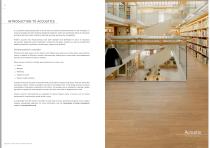
introduction to acoustics It is a growing understanding that noise can have an extremely detrimental effect in the workplace, in schools, hospitals and multi-dwelling residential properties, which can significantly affect an individuals well being and also hinder respective teaching, learning, working and recuperation. Polyflor acoustic vinyl floorcoverings have been designed and developed to assist in improving the acoustic properties within residential, commercial and public locations as well as providing the additional benefits of aesthetics, performance, hygiene and durability. General points...
Open the catalog to page 3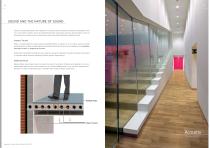
Sound and the nature of sound Sound is usually generated by the vibrations of a surface, which increases the pressure fluctuations in the air or some other medium. Sound is transmitted through sound waves and may be described in terms of sound pressure, sound energy or sound power. Noise is generally defined as unwanted sound. Impact Sound Noise is created when the sound energy transmitted either by impact or by air. Impact sound is energy produced by the collision of solid objects transmitted through the structure of a building such as footsteps, slamming of doors or dragging of furniture. Noise...
Open the catalog to page 4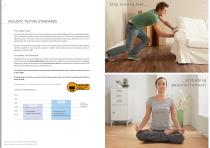
Stop moving feet... Acoustic testing standards The Impact Test The impact test measures the sound level downstairs when a standard tapping machine is operating upstairs. This is intended to replicate noise such as footsteps and the moving of furniture which travels through the separating floor. The result is shown as the weighted standardised Impact Sound Pressure Level, or L’nT,w and the lower the sound pressure level downstairs the better the insulation. Impact sound insulation is measured in terms of an absolute sound level so that a lower number indicates that the standard of impact sound...
Open the catalog to page 5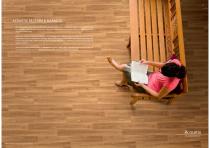
Acoustic Sectors & Markets With the growing understanding that noise can have an extremely detrimental effect on an individuals well being, a wider range of commercial and residential buildings are now being identified as benefiting from an acoustic floorcovering. Within the range of commercial buildings, the Education and Healthcare sections feature the most common areas where noise is considered a nuisance. Due to the number of high-traffic areas each can be expected to have throughout the building, both can benefit greatly from acoustic flooring to aid peaceful learning and patient recovery....
Open the catalog to page 6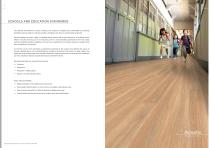
Schools and Education Standards The learning environment is forever evolving. The creation of pleasant and comfortable surroundings facilitating various patterns of group working is bringing a new focus to school design and build. School buildings are often subject to detailed design checks and on-site inspections by building control officers. Acoustic flooring can be a necessary part of a school building specification from the outset, working alongside building regulations and end user requirements to prevent expensive remedial work after completion of the project. As the floor of any room represents...
Open the catalog to page 7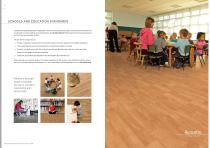
Schools and Education Standards Alongside the Building Regulations1 legislation in the UK, which specifies the impact sound reduction level that must be achieved in all new buildings and refurbishments, the Building Bulletin 93 standard was introduced specifically for the school and education market. The aim of this standard was to: Provide a regulatory framework for the acoustic design of schools in support of the building regulations Give supporting advice and recommendations for planning and design of schools Provide a comprehensive guide for architects, acousticians, building control officers,...
Open the catalog to page 8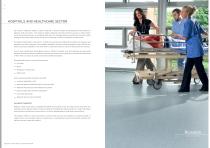
Hospitals and Healthcare Sector 21st century healthcare design is about achieving a homely, relaxed and professional environment for patients, staff and visitors. The choice of building materials and floorcoverings can have a major impact on the feel and performance of a hospital. When part of a complete design concept, floors can even aid the healing process and product choice can be key to achieving a positive contribution to patient care. Put simply, hospital floors must perform. Criteria such as hygiene, maintenance, durability, slip resistance and aesthetics are vitally important, as are...
Open the catalog to page 9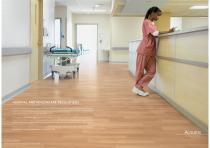
Hospital and Healthcare Regulations Acoustic regulations have been introduced in many countries to help increase the positive impact on the well being of those occupying the building and the quality of care provided. Most standards are addressing the importance of room acoustics for a variety of healthcare building types. For example in the UK, HTM 08-01 looks at the acoustic performance of healthcare facilities, addressing acoustic issues including the provision of temporary facilities, refurbishments and construction. It works through important acoustic information including impact sound insulation...
Open the catalog to page 10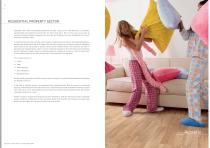
Residential Property Sector Unwanted noise within multi-dwelling properties can play a huge part in contributing to an unhealthy, uncomfortable and unwelcome environment for those living there. Many of the noise issues faced by residents including furniture scrapping across the floor and footsteps, can cause heightened stress levels, discomfort and lack of sleep. To tackle the important issue of noise, and increase the well-being of all residents, the Building Regulations1 standard was introduced in the UK to address the noise level suffered by occupants, leading to separating floors having to...
Open the catalog to page 11All Polyflor catalogs and technical brochures
 POLYSAFE™ APEX 55
11 Pages
 Expona Simplay Brochure
62 Pages
 Designatex Brochure
29 Pages
 Forest fx PUR
32 Pages
 Silentflor
21 Pages
 Bloc PUR
21 Pages
 Cambridge Parquet
53 Pages
 Polyflex Plus
4 Pages
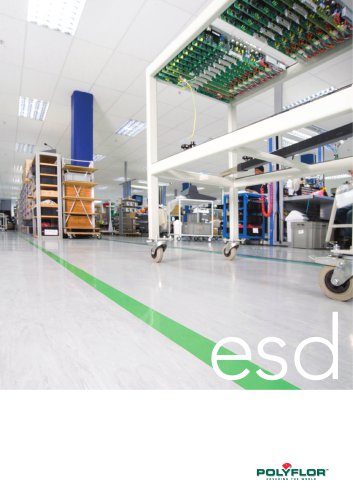 esd
esd8 Pages
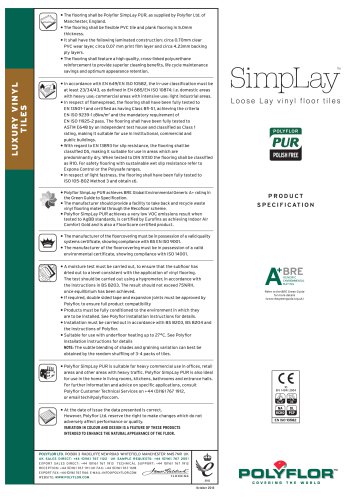 LUXUR YVINYL TILES
1 Page
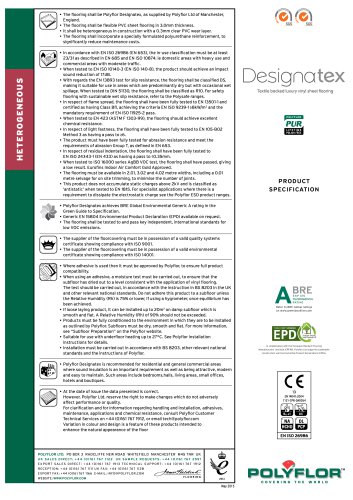 HETEROGENEOUS
1 Page
 LUXURY VINYL TILES
1 Page
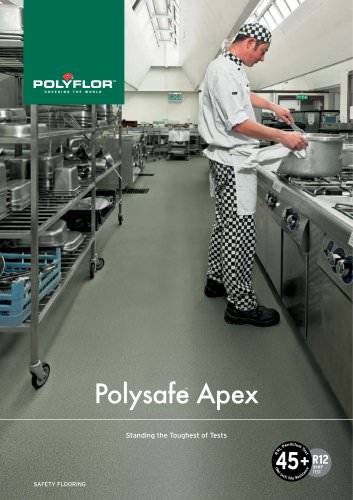 Polysafe Apex
5 Pages
 Polysafe Mosaic PUR
12 Pages
 Polysafe Verona PUR
11 Pages
 Camaro Loc PU Brochure
25 Pages
 Forest fx Presenter
9 Pages
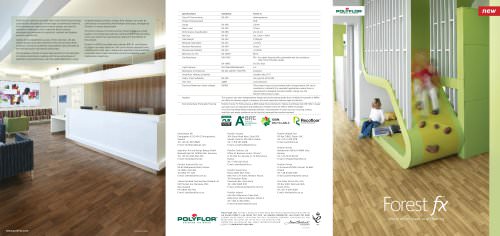 Forest fx 6pp Leaflet
2 Pages
 SimpLay leaflet
2 Pages
 UK Flooring collection
70 Pages
 Sustainability Report
32 Pages
 Healthcare
20 Pages
 Education
10 Pages
 Retail
15 Pages
 Design Service
24 Pages
 BEVEL LINE
13 Pages
 Polysafe PUR
38 Pages
 Expona Control PUR brochure
21 Pages
 Expona Commercial Wood PUR
61 Pages
 Polysafe Arena PUR
17 Pages
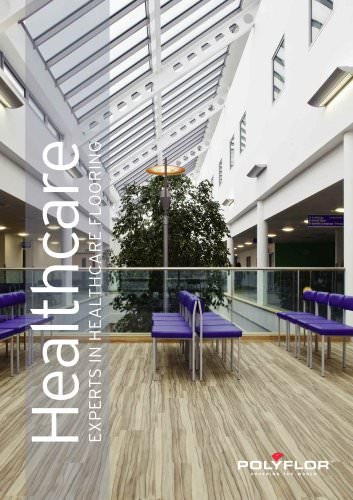 Healthcare flooring
20 Pages
 Safety:Polysafe Hydro evolve
20 Pages
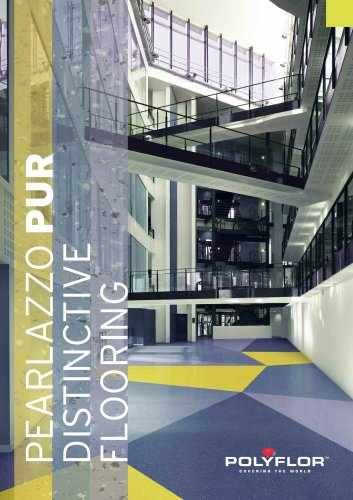 Education flooring
20 Pages
 Homogeneous:Pearlazzo PUR
20 Pages
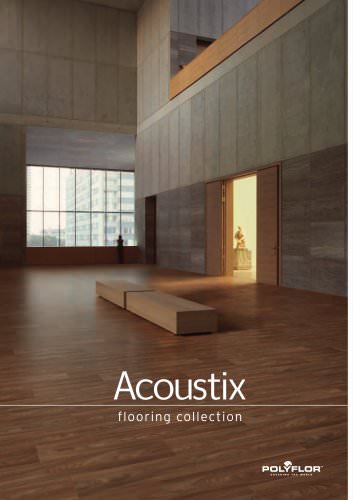 Heterogeneous:Acoustix fx
23 Pages
 Heterogeneous:Forest fx
25 Pages
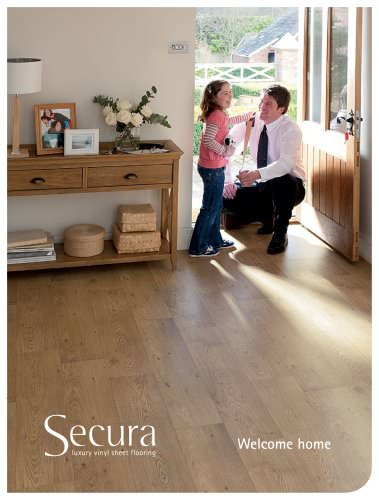 Heterogeneous:Secura
43 Pages
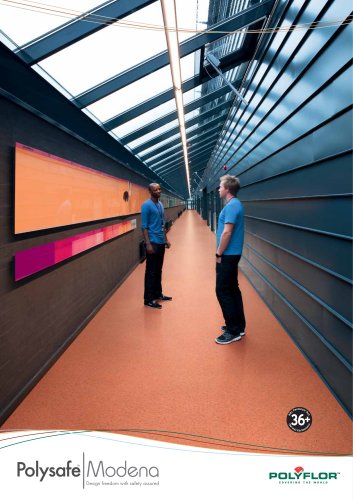 Safety:Polysafe Modena PUR
11 Pages
 KUDOS PU
20 Pages
 EXPONA®
40 Pages
 CAMARO™
104 Pages
 POLYSAFE
40 Pages
 HOMOGENEOUS PUR FLOORING
28 Pages
 COLONIA™
63 Pages

- Indoor flooring
- Tertiary flooring
- Industrial wallcovering
- Vinyl floor covering
- Commercial wall-covering
- Tile flooring
- Non-slip flooring
- Domestic use flooring
- Gray flooring
- Vinyl flooring
- Smooth flooring
- Brown flooring
- Beige flooring
- Fire-retardant wall-covering
- Textured flooring
- Wood look floor covering
- Roll flooring
- Strip flooring