
- Catalogs
- Nikolaus Bagnara S.p.A.
- PANNONIA GRUN


PANNONIA GRUN
1 / 2 PagesView full catalog
PANNONIA GRUN
Product catalog summary
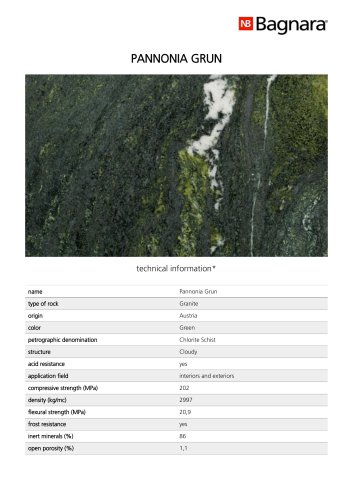
Technical Information Summary for Pannonia Grun Granite
General Information:
- Name: Pannonia Grun
- Type of Rock: Granite
- Origin: Austria
- Color: Green
- Petrographic Denomination: Chlorite Schist
- Structure: Cloudy
Physical and Chemical Properties:
- Acid Resistance: Yes
- Compressive Strength: 202 MPa
- Density: 2997 kg/m3
- Flexural Strength: 20.9 MPa
- Frost Resistance: Yes
- Inert Minerals: 86%
- Open Porosity: 1.1%
- Quartz / Crystalline Silica: 14%
- Water Absorption: 0.4%
Application:
- Suitable for both interiors and exteriors.
Note: The data provided is indicative and without guarantee. Detailed test results are available upon request.
See more
Catalog excerpts
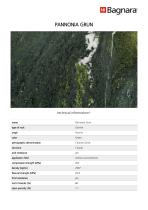
Bagnara* technical information* name petrographic denomination structure acid resistance application field compressive strength (MPa) density (kg/mc) flexural strength (MPa) frost resistance inert minerals (%) open porosity (%) Pannonia Grun Chlorite Schist
Open the catalog to page 1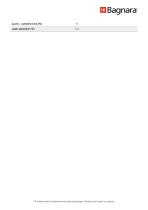
Bagnara* quartz _ crystalline silica (%) 14 The above data is indicative and without guarantee. Detailed test results on request.
Open the catalog to page 2All Nikolaus Bagnara S.p.A. catalogs and technical brochures
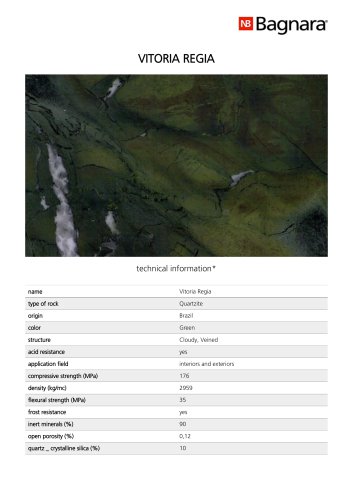 VITORIA REGIA (1)
2 Pages
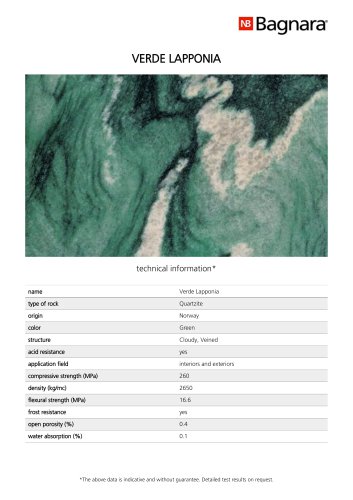 VERDE LAPPONIA (1)
1 Page
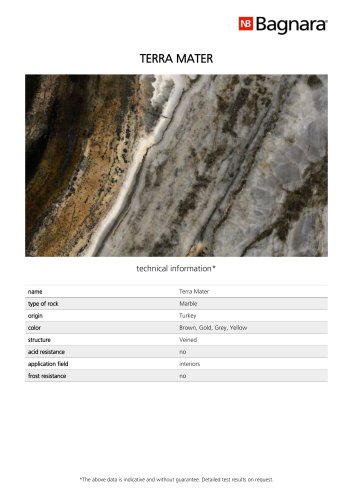 TERRA MATER
1 Page
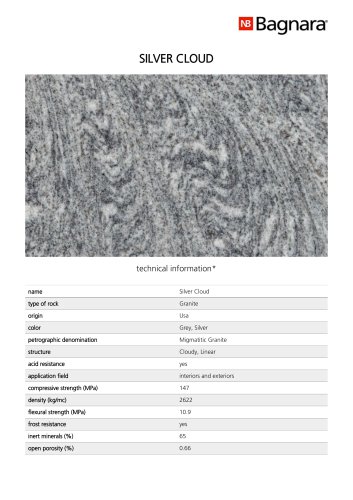 SILVER CLOUD (1)
2 Pages
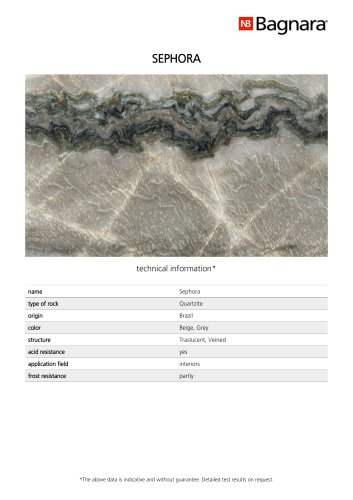 SEPHORA
1 Page
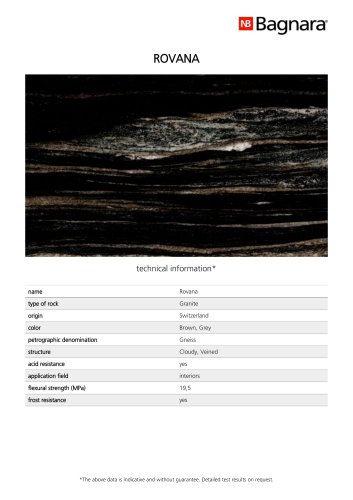 ROVANA
1 Page
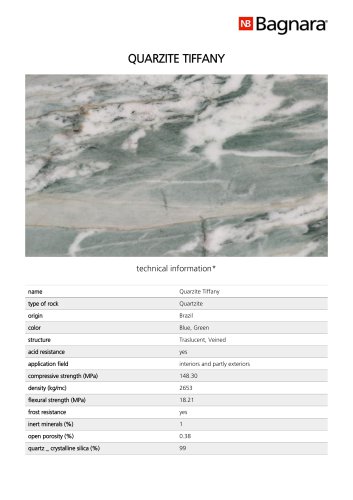 QUARZITE TIFFANY
2 Pages
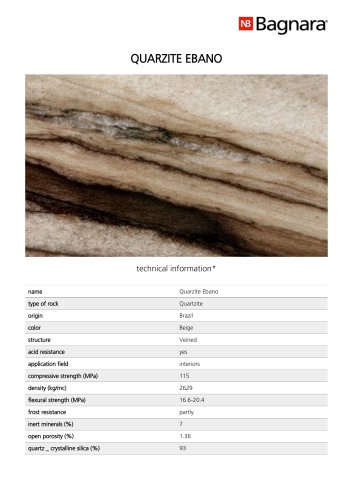 QUARZITE EBANO (1)
2 Pages
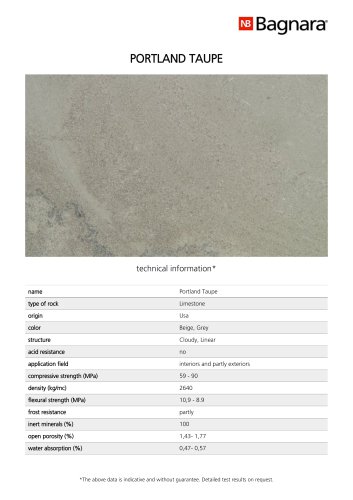 PORTLAND TAUPE (1)
1 Page
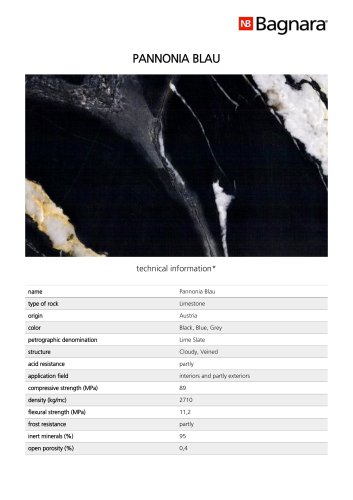 PANNONIA BLAU
2 Pages
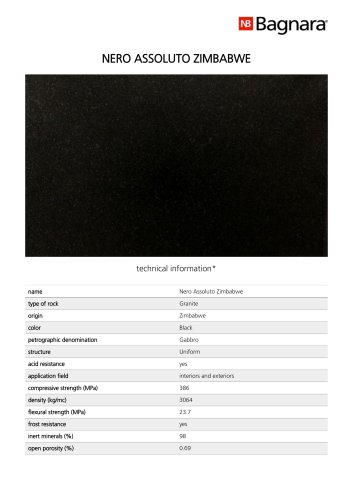 NERO ASSOLUTO ZIMBABWE
2 Pages
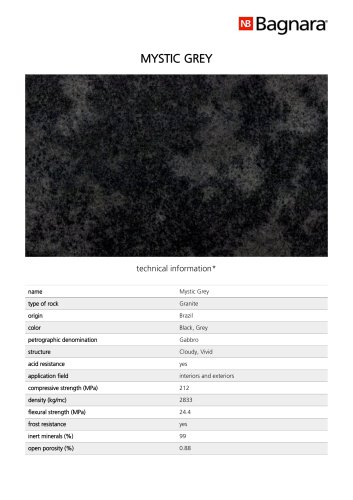 MYSTIC GREY
2 Pages
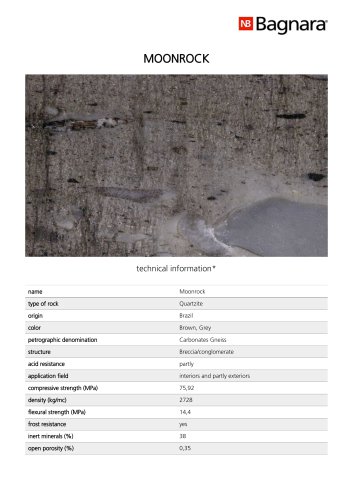 MOONROCK
2 Pages
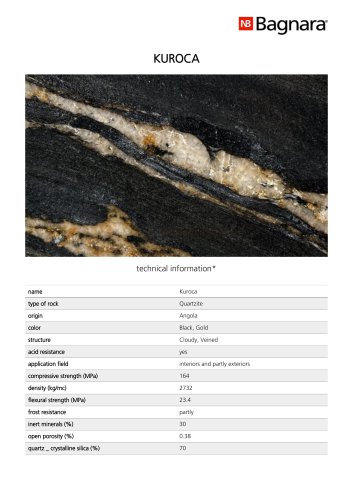 KUROCA
2 Pages
 KATUBA BLUE SODALITE
1 Page
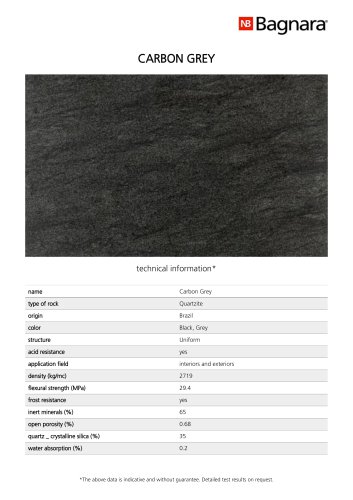 CARBON GREY
1 Page
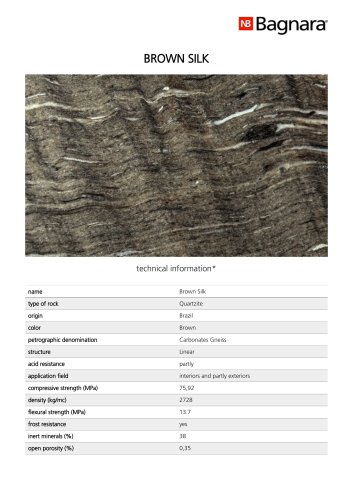 BROWN SILK
2 Pages
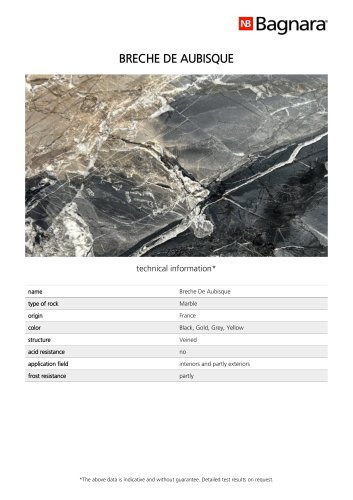 BRECHE DE AUBISQUE
1 Page
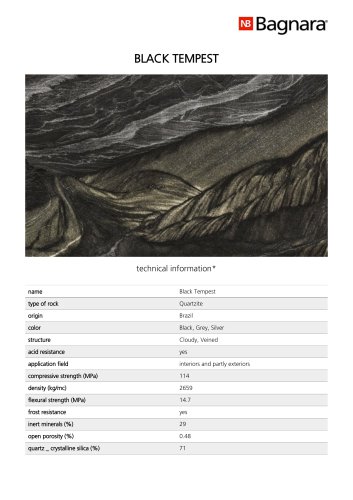 BLACK TEMPEST
2 Pages
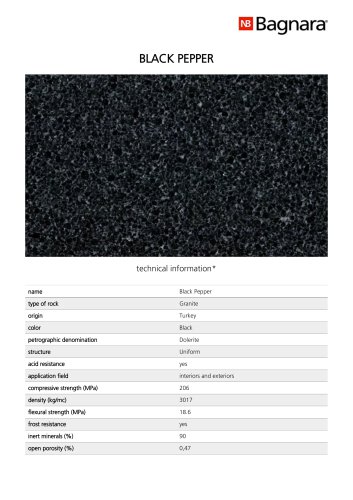 BLACK PEPPER
2 Pages
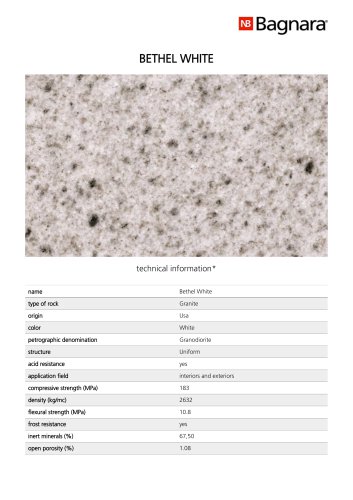 BETHEL WHITE
2 Pages
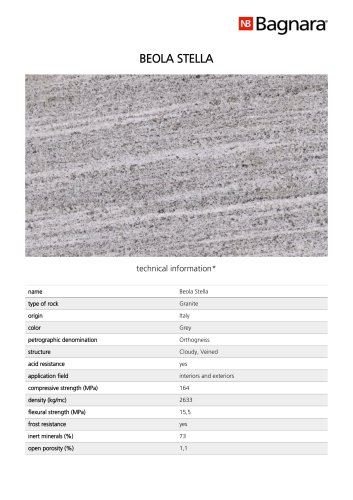 BEOLA STELLA
2 Pages
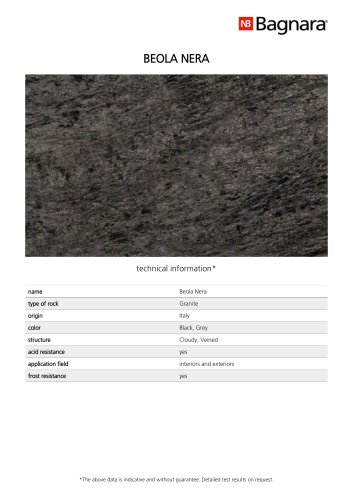 BEOLA NERA
1 Page
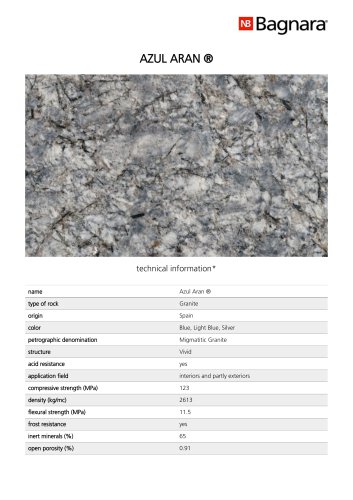 AZUL ARAN ®
2 Pages
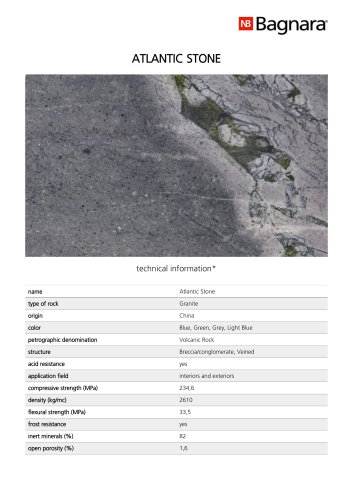 ATLANTIC STONE
2 Pages
 AMERICAN BLACK
2 Pages
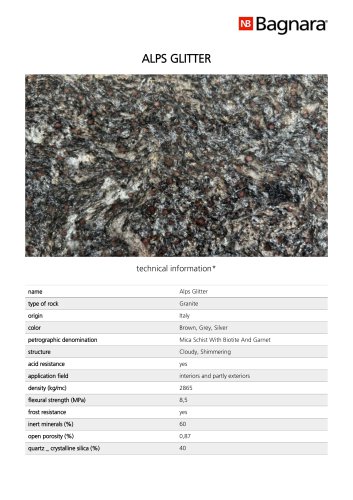 ALPS GLITTER
2 Pages
 Bagnara Selection
108 Pages
 True Stones
40 Pages
 Bagnara Kitchen Selection
76 Pages
 Bagnara Collection
92 Pages
Related Searches
- Bagnara tile
- Bagnara indoor tile
- Bagnara floor tile
- Wall tile
- Bagnara rectangular tile
- Bagnara home tile
- Bagnara contemporary tile
- Patterned tile
- Commercial tile
- Bagnara matte tile
- Bathroom tile
- Living room tile
- Gray tile
- Stone look tile
- Outdoor tile
- Kitchen tile
- High-resistance tile
- Entryway tile
- Black tile
- Bagnara stone slab
*Prices are pre-tax. They exclude delivery charges and customs duties and do not include additional charges for installation or activation options. Prices are indicative only and may vary by country, with changes to the cost of raw materials and exchange rates.
About ArchiExpo
ArchiExpo is a marketplace that offers B2B players a complete experience, from product sourcing to purchase. ArchiExpo is an entity of VirtualExpo Group.
Are you a buyer?
Are you a supplier?