


- Products
- Catalogs
- News & Trends
- Exhibitions
MAPEKER RAPID SET FLEX

MAPEKER RAPID SET FLEX
Mapeker Rapid-Set Flex is classified as a C2F cementitious adhesive according to EN 12004 standards. It is available in grey or white and its conformity is certified by the Technische Universität München laboratory in Germany.
This adhesive is suitable for interior and exterior bonding of ceramic, porcelain tiles, mosaics, and non-moisture sensitive natural stone. It is also used for spot bonding of insulating materials like expanded polystyrene, polyurethane, and gypsum board. Specific applications include rapid installations in high-traffic areas, repairs in bathrooms and kitchens, and underfloor heating installations.
Mapeker Rapid-Set Flex is a powder mix of special cements, aggregates, synthetic resins, and setting accelerators. It develops high bond strength within 3 hours, allowing quick completion of installations. It is frost-proof and water-resistant once hardened.
For substrates subject to flexing or vibration, use a highly flexible adhesive. Anhydrite screeds should be mechanically abraded and primed. On gypsum boards, use flexible adhesives and apply Primer G on gypsum walls before using cement-based adhesives. For metal surfaces, use Keralastic.
Substrates must be stable, free of oils, grease, and loose materials. Gypsum plasters should be dry and treated with Primer G. Mix Mapeker Rapid-Set Flex with clean water to a smooth paste and apply with a notched trowel. Ensure at least 65-70% coverage for interior walls and 100% for floors and exterior areas.
Grouting can be done 2-3 hours after application using MAPEI products. For chemical resistance, use Kerapoxy. Tools and surfaces can be cleaned with water.
Consumption varies based on tile size and application, ranging from 0.5 kg/m² for spot bonding to 5 kg/m² for large tiles.
Mapeker Rapid-Set Flex has a mixing ratio of 100 parts powder to 23-25 parts water, with a pot life of 20 minutes and open time of 10 minutes. It is resistant to damp, ageing, solvents, and oils, but not to acids and alkalis.
Available in 20 and 10 kg bags, it should be stored in a dry place for up to 12 months.
Contains cement and can cause irritant reactions. Use protective gear and refer to the Material Safety Data Sheet for detailed safety information.
Catalog excerpts

Cement-based rapidsetting adhesive for interior and exterior floor and wall installations of ceramic and porcelain tiles and non-moisture sensitive natural stone CLASSIFICATION IN COMPLIANCE WITH EN 12004 Mapeker Rapid-Set Flex is an improved (2), fast setting (F) cementitious (C) adhesive classified as C2F. Available in grey or white. Conformity of Mapeker Rapid-Set Flex is declared in ITT certificates n° 25050215/Gi (TUM) issued by the Technische Universität München laboratory (Germany). WHERE TO USE Interior and exterior bonding of ceramic and porcelain tiles and mosaics and natural stone materials that are not sensitive to moisture. Use Mapeker Rapid-Set Flex white for the installation of light coloured natural stone. Spot bonding of insulating materials such as expanded polystyrene and polyurethane, gypsum board, glass and rock wool, wood-cement panels, formed-concrete blocks, sound-deadening panels etc. Some application examples • apid installation or renovation in areas subjected to R pedestrian traffic. • apid repair work in bathrooms, showers, kitchens, R terraces and balconies. • nstalling marble and other natural stone not sensitive I to moisture. TECHNICAL CHARACTERISTICS Mapeker Rapid-Set Flex is a powder composed of a mixture of special cements, selectively-graded aggregates, synthetic resins and setting accelerators that develop high bond strength only 3 hours after setting. For this reason floor and wall installations can be completed very quickly. Floors can be walked on after only 3 hours and are ready for general traffic after 24 hours. Mapeker Rapid-Set Flex when hardened is frost-proof and water resistant. RECOMMENDATIONS • On walls or floors subject to flexing or vibration (wooden or cement-fibre boards, gypsum boards, cement boards etc.) use a highly flexible adhesive (for example Keraquick mixed with Latex Plus). • Mechanically abrade anhydrite screeds and prime with Eco Prim T or Primer G. • On gypsum boards use flexible adhesives (for example Mapegrip D2 / Keraflex). • On gypsum walls or gypsum plasters, apply a coat of Primer G before fixing with cement-based adhesives. • On metal surfaces use Keralastic. • apid installation onto rigid plywood overlaid floors R (min. 15 mm ply). • For bonding expanded polystyrene insulating panels with a protective film use Mapegrip D2. • nderfloor Heating Installations. U • Plywood overlaid floors must use a minimum of
Open the catalog to page 1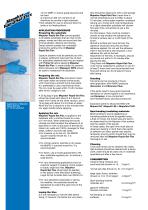
15 mm WBP or marine grade plywood and be fixed at maximum 300 mm centres in all directions to provide a rigid substrate. • ot suitable for use on plywood direct to N joists or for floating floors. APPLICATION PROCEDURE Preparing the substrate Mapeker Rapid-Set Flex can be applied to all stable substrates that are free of oils, grease, waxes and that are sound and free of loose plaster, laitance and crazing. Damp cement screeds can noticeably prolong the setting time of Mapeker Rapid-Set Flex. Gypsum plasters must be perfectly dry (min. 4 weeks), sufficiently hard and free of dust. It is absolutely...
Open the catalog to page 2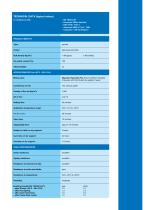
TECHNICAL DATA (typical values) In compliance with: – EN 12004 C2F – European UEAtc directive – DIN 18156 - Part 2 – American ANSI A 118.4 - 1992 – Canadian 71 GP 30 M type 2 PRODUCT IDENTITY Type: dark grey and white Bulk density (kg/m³): APPLICATION DATA (at +23°C - 50% R.H.) Mixing ratio: Mapeker Rapid-Set Flex Grey and White 100 parts of powder with 23-25 parts by weight of water very viscous paste Setting time: Application temperature range: Open time: Adjustability time: Ready for traffic on dry support: Cure time on dry support: FINAL PERFORMANCES Damp resistance: Ageing resistance: Resistance...
Open the catalog to page 3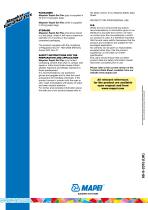
STORAGE Mapeker Rapid-Set Flex should be stored in a dry place, where it will have a maximum shelf life of 12 months in the original unopened packaging. The product complies with the conditions of Regulation (EC) N° 1907/2006 (REACH), Annex XVII, item 47 SAFETY INSTRUCTIONS FOR THE PREPARATION AND APPLICATION Mapeker Rapid-Set Flex is an irritant containing cement that when in contact with sweat or other body fluids causes irritant alkaline reactions and allergic reactions to those predisposed. It is recommended to use protective gloves and goggles and to take the usual precautions for handling...
Open the catalog to page 4All MAPEI catalogs and technical brochures
 GENERAL CATALOGUE_2024
224 Pages
 KERAQUICK S1
4 Pages
 ADESILEX P9 EXPRESS
4 Pages
 PLANITOP 100
4 Pages
 COLORITE PERFORMANCE
6 Pages
 ULTRATOP LOFT F
6 Pages
 ULTRACOLOR PLUS
6 Pages
 keracolorff
4 Pages
 ISOLASTIC
4 Pages
 KERAPOXY
6 Pages
 mapebandpe120
2 Pages
 PRIMER G
4 Pages
 KERAFLEX MAXI S1
4 Pages
 KERABOND T
4 Pages
 ADESILEX P4
4 Pages
 MAPESIL LM
4 Pages
 MAPECOAT I 600W
4 Pages
 WALLGARD BARRIER
4 Pages
 MAPE-ANTIQUE RINZAFFO
4 Pages
 MAPECURE SRA
4 Pages
 LAMPOCEM
4 Pages
 365-epojetlv-gb
4 Pages
 Thermal insulation
60 Pages
 ULTRAFLEX S2 QUICK
4 Pages
 MARBLE & STONE
4 Pages
 Protecting and decorating buildings
193 Pages
 LIGNOBOND
4 Pages
 ULTRABOND ECO S955 1K
4 Pages
 ULTRABOND P902 2K
4 Pages
 ULTRABOND P913 2K
4 Pages
 ULTRABOND P990 1K
4 Pages
 ULTRABOND S997 1K
4 Pages
 FIBERPLAN
4 Pages
 LATEX PLUS
4 Pages
 NIVORAPID
4 Pages
 TOPCEM
4 Pages
 SILWOOD
4 Pages
 MAPEPROOF ESM
4 Pages
 TRIBLOCK P
4 Pages
 ULTRACOAT HIGH TRAFFIC
4 Pages
 ULTRACOAT OIL
2 Pages
 MAPEPLAST LA
4 Pages
 MAPETHERM AR1
4 Pages
 MAPETHERM NET
2 Pages
 ELASTOCOLOR RASANTE SF
4 Pages
 ELASTOCOLOR WATERPROOF
6 Pages
 General catalogue 2017
292 Pages
 FastTrack
24 Pages
 Ultralite range
8 Pages
 Keracolor Flex
2 Pages
 Kerapoxy CQ
2 Pages
 Mapei Coloured grouts
2 Pages
 Ceramic Pocket Guide
82 Pages
 MAPELASTIC TURBO
2 Pages
 PURTOP LINE
2 Pages


Archived catalogs
 RE-CON Zero
6 Pages
 Concrete Admixtures
30 Pages
 Marble and Stone
4 Pages
 Granirapid
4 Pages
 AQUADEFENSE
2 Pages
 Keracolor GG
6 Pages
 Realtà MAPEI
84 Pages
 Realtà Mapei 48
84 Pages
 Realtà Mpaei 46
116 Pages
 Realtà Mapei 43
84 Pages
 Realtà Mapei 45
84 Pages
 Maintenance work on Roads
6 Pages
 Soundproofing Wooden Floorings
15 Pages
 Ceramic Pocket Guide
41 Pages
 MAPEFER 1K
4 Pages
 ADESILEX PA
4 Pages
 ECO PRIM GRIP
4 Pages
 KERAFLEX
4 Pages
 ELASTORAPID
4 Pages
 MAPEFLEX PU45
4 Pages
 FUGOLASTIC
4 Pages
 MAPESILENT PANEL
4 Pages
 realta mapei
84 Pages
 MAPEFLEX PU30
4 Pages
 AQUAFLEX ROOF
2 Pages
 Realata Mapei 49
84 Pages
 Realtà Mapei 47
84 Pages
 Mapei et vous 40
36 Pages
 Realtà Mapei 44
84 Pages
 Resin & Cementitious Flooring
22 Pages
 Resilient Adhesives
16 Pages
 WallGard Graffiti BARRIER
4 Pages
 ULTRATOP INDUSTRIAL
4 Pages
 ULTRABOND P980 1K
4 Pages
 MAPEPRIM SP
4 Pages
 ADESILEX P9
4 Pages
 ADESILEX P10
4 Pages
 KERAPOXY SP
4 Pages
 General Catalogue
291 Pages


