
- Catalogs
- Linzmeier Bauelemente GmbH
- The thin cellar ceiling insulation - robust and highly effective

The thin cellar ceiling insulation - robust and highly effective

The thin cellar ceiling insulation - robust and highly effective
- LINITHERM PAL KD: Features aluminum foil on both sides and edgeless joints.
- LINITHERM PAL KD white: Includes a white-coated aluminum foil visible side and grooved edge joints for H-joint profiles.
- LINITHERM PAL KD Top: Has a décor chipboard outer facing, also coated in white, with grooved edge joints.
Catalog excerpts

LINZMEIER building elements Cellar ceiling insulation system The thin cellar ceiling insulation robust and highly effective With LINITHERM PAL KD you get a warm floor in the living area and significantly reduce your energy consumption. Homogenous thermal insulation TCL 022 Thin insulation, maximum effect The right surface for every purpose Quick and easy to assemble The safe insulation… The easy way to separate the cold bridge between heated and non-heated rooms. Complete solution for all cellar ceilings. ...in perfect professional quality… With a special edge connection Integrated vapour barrier Inherently stable and pressure resistant Insulates extensively and continuously ... for PUR(e) energy saving Noticeably reduced energy consumption Insulation core made of PUR/PIR rigid foam TCL 022 Low construction height – little height loss Positive eco-balance
Open the catalog to page 1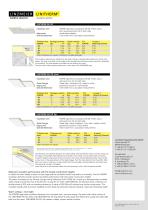
LINZMEIER building elements LINITHERM PAL KD Insulation core: Edge joints: Overall dimension: PUR/PIR rigid foam according to DIN EN 13165, class E, with natural aluminum foil on both sides round about edgeless 1200 x 600 mm (= calculation measurement) The insulation elements are attached to the cellar ceiling via double-sided attachment hooks from below. The hook is pushed into the edge of the already fixed insulation element and then dowelled to the ceiling. The next element is pushed into the sticking out hook. The joint area of the insulation elements is stuck down with LINITHERM tape. LINITHERM...
Open the catalog to page 2Archived catalogs
 LINITHERM PAL W
2 Pages
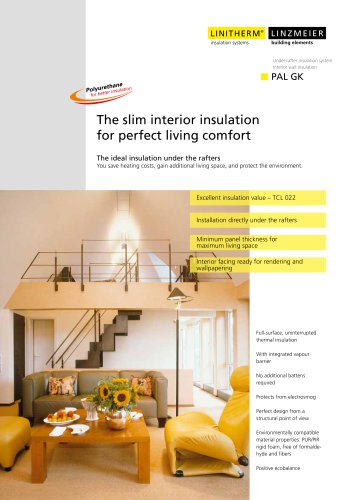 LINITHERM PAL GK
4 Pages
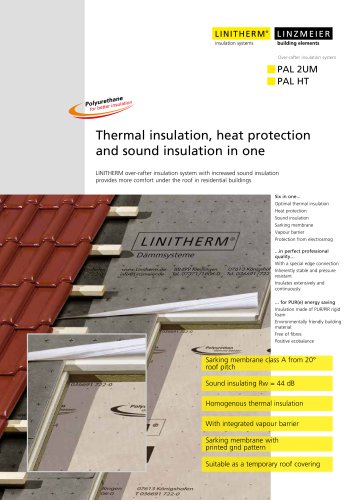 LINITHERM PAL 2UM / PAL HT
2 Pages
 LINITHERM PAL SIL T
2 Pages
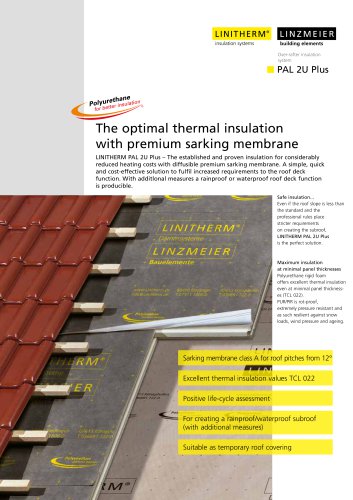 LINITHERM PAL 2U Plus
2 Pages
 LINITHERM PAL
2 Pages
 LINITHERM PAL OSB
2 Pages
 LINITHERM PAL N+F
2 Pages
 LINITHERM PAL Polymer
2 Pages
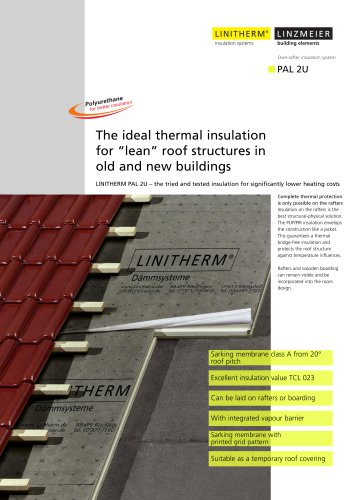 LINITHERM PAL 2U
2 Pages
 LINITHERM PGV T
2 Pages
 LINITHERM PGV Flex
2 Pages
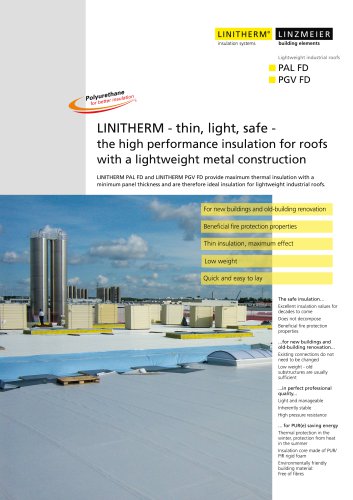 LINITHERM PAL FD
4 Pages


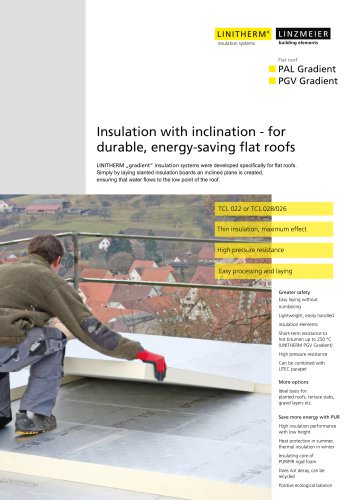


- Panel insulation
- Synthetic insulation
- Wall insulation
- High-performance insulation
- Rigid insulation panel
- Roof insulation
- Industrial acoustic insulation
- Lightweight insulation
- Flooring insulation
- Roof acoustic sandwich panel
- Interior insulation
- Facade acoustic sandwich panel
- Insulation with vapor barrier
- Exterior insulation
- Wall sandwich panel
- High-resistance sandwich panel
- Waterproof insulation