
- Catalogs
- Lime Technology
- The use of lime-based mortars in new build


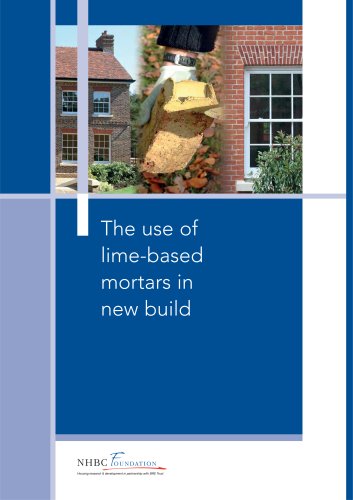
The use of lime-based mortars in new build
1 / 39 PagesView full catalog
The use of lime-based mortars in new build
Product catalog summary
Foreword
The NHBC Foundation provides best practices for the construction industry, focusing on lime-based mortars, which offer sustainability and design benefits for modern construction.
The NHBC Foundation provides best practices for the construction industry, focusing on lime-based mortars, which offer sustainability and design benefits for modern construction.
Introduction
This guide introduces lime-based mortars, emphasizing their differences from cement-based mortars, focusing on natural hydraulic limes (NHLs) and formulated limes (FLs), and linking to standards like BS EN 459-1:2001.
This guide introduces lime-based mortars, emphasizing their differences from cement-based mortars, focusing on natural hydraulic limes (NHLs) and formulated limes (FLs), and linking to standards like BS EN 459-1:2001.
Why Use Lime-Based Mortars?
Sustainability: Lime-based mortars consume less energy and produce fewer greenhouse gases than cement-based mortars. They allow for easier reuse of bricks and absorb carbon dioxide over time.
Design: These mortars offer better tolerance to movement, improved breathability, and self-healing properties, reducing the need for movement joints and enhancing durability.
Sustainability: Lime-based mortars consume less energy and produce fewer greenhouse gases than cement-based mortars. They allow for easier reuse of bricks and absorb carbon dioxide over time.
Design: These mortars offer better tolerance to movement, improved breathability, and self-healing properties, reducing the need for movement joints and enhancing durability.
When to Use Lime-Based Mortars
New Build: Suitable for masonry walls and other construction aspects.
Refurbishment: Useful in matching repair mortars and constructing extensions.
Conservation and Repair: Important for historic buildings, matching original mortar compositions.
Other Applications: Includes limecrete floors, external render, and internal plastering.
Constraints: Slower construction speed and strength gain, susceptibility to frost, and specific temperature requirements.
New Build: Suitable for masonry walls and other construction aspects.
Refurbishment: Useful in matching repair mortars and constructing extensions.
Conservation and Repair: Important for historic buildings, matching original mortar compositions.
Other Applications: Includes limecrete floors, external render, and internal plastering.
Constraints: Slower construction speed and strength gain, susceptibility to frost, and specific temperature requirements.
Background, History, and Tradition
Lime-based mortars have a 2000-year history, with local production leading to variability. The Romans used pozzolans to enhance mortar properties, and their structures, like Hadrian’s Wall, demonstrate the durability of lime mortars.
Lime-based mortars have a 2000-year history, with local production leading to variability. The Romans used pozzolans to enhance mortar properties, and their structures, like Hadrian’s Wall, demonstrate the durability of lime mortars.
Specifications and Use
The guide provides detailed specifications for using lime-based mortars, emphasizing the need for early design decisions to accommodate their unique properties.
The guide provides detailed specifications for using lime-based mortars, emphasizing the need for early design decisions to accommodate their unique properties.
Historical Background
Lime mortars were initially used to bind rubble and angular materials. The 15th and 16th centuries saw a revival in the use of additives. The Industrial Revolution demanded more sophisticated mortars for complex structures. John Smeaton's work in the 1750s identified a strong hydraulic binder using Blue Lias limestone and Italian pozzolanic earth. The 19th century saw the rise of Portland cement, leading to a decline in natural hydraulic binders.
Lime mortars were initially used to bind rubble and angular materials. The 15th and 16th centuries saw a revival in the use of additives. The Industrial Revolution demanded more sophisticated mortars for complex structures. John Smeaton's work in the 1750s identified a strong hydraulic binder using Blue Lias limestone and Italian pozzolanic earth. The 19th century saw the rise of Portland cement, leading to a decline in natural hydraulic binders.
Modern Revival and Sustainability
Recent sustainability awareness has led to a reconsideration of lime-based mortars, especially in restoration and conservation. Lime mortars are now being re-evaluated for new constructions, considering their environmental benefits and historical significance.
Recent sustainability awareness has led to a reconsideration of lime-based mortars, especially in restoration and conservation. Lime mortars are now being re-evaluated for new constructions, considering their environmental benefits and historical significance.
Types of Lime-Based Mortars
- Natural Hydraulic Limes (NHLs): Classified into NHL2, NHL3.5, and NHL5 based on compressive strength.
- Formulated Limes (FLs): Blends of controlled materials for consistent strengths.
- Hydraulic Limes (HLs): Binders consisting of lime and other materials like cement and slag.
- Air Limes (CLs): Consist mainly of calcium oxide or hydroxide, hardening only by carbonation.
- Dolomitic Limes (DLs): Similar to CLs but made from calcium magnesium carbonate rocks.
Mortar Mixing Practices
The choice of sand significantly affects mortar performance. Well-graded sharp sand is recommended. Consistent batch mix ratios and adequate mixing time are crucial. Lime-based mortars can be supplied in silos for convenience and reduced error risk.
The choice of sand significantly affects mortar performance. Well-graded sharp sand is recommended. Consistent batch mix ratios and adequate mixing time are crucial. Lime-based mortars can be supplied in silos for convenience and reduced error risk.
Specification and Use
Recent studies have provided design values for lime-based mortars, integrating them into existing standards like BS 5628-1. Lime mortars are compared to cement-based mortars, noting differences in compressive and flexural strengths.
Recent studies have provided design values for lime-based mortars, integrating them into existing standards like BS 5628-1. Lime mortars are compared to cement-based mortars, noting differences in compressive and flexural strengths.
Conclusion
Lime-based mortars offer environmental benefits and historical authenticity, making them suitable for both restoration and new construction. Understanding their properties and correct application is essential for maximizing their potential in modern building practices.
Lime-based mortars offer environmental benefits and historical authenticity, making them suitable for both restoration and new construction. Understanding their properties and correct application is essential for maximizing their potential in modern building practices.
Specifications and Procedures
The document outlines the testing procedures for mortar strength, specifying that 28-day strengths should meet or exceed half of the strength values listed in Table 1. If not, further testing at 91 days or using a different sand is recommended. Site tests involve preparing six prisms for every 150 m² of wall or per storey, with half tested at 28 days and the rest at 91 days. Mortar sampling should follow BS EN 1015-2 standards.
The document outlines the testing procedures for mortar strength, specifying that 28-day strengths should meet or exceed half of the strength values listed in Table 1. If not, further testing at 91 days or using a different sand is recommended. Site tests involve preparing six prisms for every 150 m² of wall or per storey, with half tested at 28 days and the rest at 91 days. Mortar sampling should follow BS EN 1015-2 standards.
Standards and Recommendations
References to various standards such as BS EN 459-1:2001 for building lime and BS 5628-1:2005 for masonry use are provided. The document emphasizes the importance of using lime-based mortars in new builds and provides a guide for their application, focusing on natural hydraulic limes.
References to various standards such as BS EN 459-1:2001 for building lime and BS 5628-1:2005 for masonry use are provided. The document emphasizes the importance of using lime-based mortars in new builds and provides a guide for their application, focusing on natural hydraulic limes.
References and Further Reading
A comprehensive list of references and further reading materials is included, covering topics like hydraulic lime mortar, masonry with lime-based mortars, and the structural use of unreinforced masonry. Publications from organizations like English Heritage and the NHBC Foundation are also mentioned.
A comprehensive list of references and further reading materials is included, covering topics like hydraulic lime mortar, masonry with lime-based mortars, and the structural use of unreinforced masonry. Publications from organizations like English Heritage and the NHBC Foundation are also mentioned.
Organizations and Resources
Information about organizations such as the Building Limes Forum, Scottish Lime Centre, and British Lime Association is provided, including their contact details and roles in promoting the use of lime in construction.
Information about organizations such as the Building Limes Forum, Scottish Lime Centre, and British Lime Association is provided, including their contact details and roles in promoting the use of lime in construction.
NHBC Foundation Publications
The document lists various NHBC Foundation publications related to construction practices, energy conservation, and zero carbon homes, highlighting their focus on promoting best practices and supporting the construction industry.
The document lists various NHBC Foundation publications related to construction practices, energy conservation, and zero carbon homes, highlighting their focus on promoting best practices and supporting the construction industry.
See more
All Lime Technology catalogs and technical brochures
 RENDERS & PLASTERS
6 Pages
 External Wall Insulation
2 Pages
 Individual homes
6 Pages
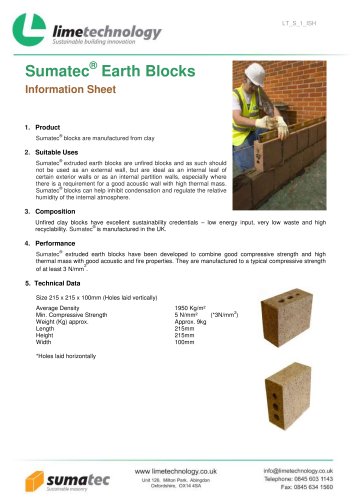 Sumatec® Earth Blocks
2 Pages
 Overview of Lime Technology
85 Pages
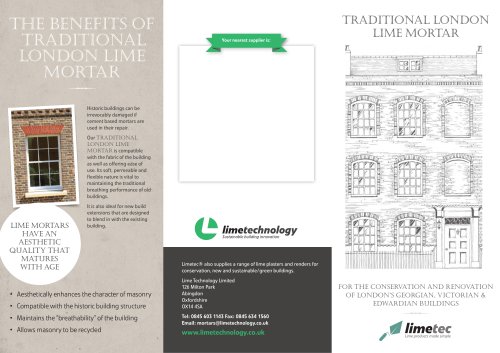



Archived catalogs
 Hydraulic Lime Mortars
37 Pages
 Render & Plaster
14 Pages
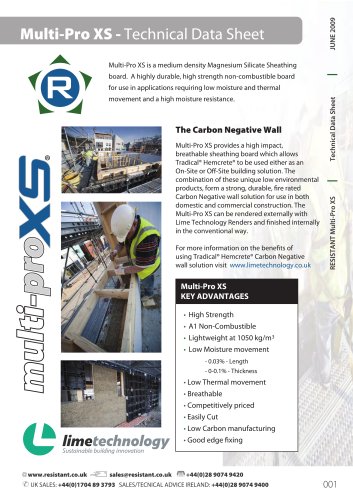 Multi-pro XS
3 Pages
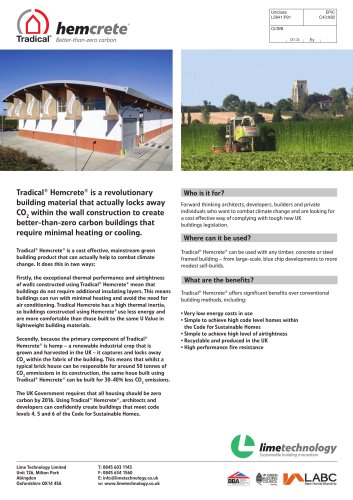 Tradical® Hemcrete® Brochure
2 Pages



Related Searches
*Prices are pre-tax. They exclude delivery charges and customs duties and do not include additional charges for installation or activation options. Prices are indicative only and may vary by country, with changes to the cost of raw materials and exchange rates.
About ArchiExpo
ArchiExpo is a marketplace that offers B2B players a complete experience, from product sourcing to purchase. ArchiExpo is an entity of VirtualExpo Group.
Are you a buyer?
Are you a supplier?