
- Catalogs
- Lime Technology
- Hydraulic Lime Mortars


Hydraulic Lime Mortars

1 / 37 PagesView full catalog
Hydraulic Lime Mortars
Product catalog summary
Introduction to Hydraulic Lime Mortars
Lime mortars have been used historically in building construction due to their unique properties. This document explores the nature of lime, its manufacturing process, and its application in modern construction.
What is Lime?
Lime is a material derived from limestone (CaCO3) through a process of calcination, where heat is applied to produce quicklime (CaO) and carbon dioxide (CO2). When water is added, it forms slaked lime (Ca(OH)2), which can reabsorb CO2 to revert to its original limestone form. This cycle allows for the reabsorption of CO2 emitted during calcination, although CO2 from fuel combustion is not reabsorbed.
Lime vs. Cement Properties
Lime and cement have distinct properties:
Lime Works and Modern Application
Lime is being integrated into modern construction through innovative methods such as silo delivery, which reduces site waste and enhances security. Lime mortars are used in various projects, including private homes, offices, and educational institutions.
Benefits of Lime
Lime mortars have been used historically in building construction due to their unique properties. This document explores the nature of lime, its manufacturing process, and its application in modern construction.
What is Lime?
Lime is a material derived from limestone (CaCO3) through a process of calcination, where heat is applied to produce quicklime (CaO) and carbon dioxide (CO2). When water is added, it forms slaked lime (Ca(OH)2), which can reabsorb CO2 to revert to its original limestone form. This cycle allows for the reabsorption of CO2 emitted during calcination, although CO2 from fuel combustion is not reabsorbed.
Lime vs. Cement Properties
Lime and cement have distinct properties:
- Lime: Soft, permeable, and flexible.
- Cement: Hard, impervious, and rigid.
Lime Works and Modern Application
Lime is being integrated into modern construction through innovative methods such as silo delivery, which reduces site waste and enhances security. Lime mortars are used in various projects, including private homes, offices, and educational institutions.
Benefits of Lime
- Reduces the need for expansion joints.
- Consumes less energy in production compared to cement.
- Reabsorbs CO2 during curing and setting.
- Facilitates masonry recycling at the end of its life.
- Provides a breathable construction form.
- Enhances the aesthetic appeal of masonry.
See more
All Lime Technology catalogs and technical brochures
 RENDERS & PLASTERS
6 Pages
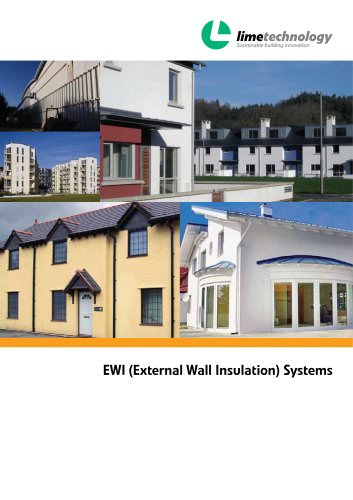
 External Wall Insulation
2 Pages
 Individual homes
6 Pages
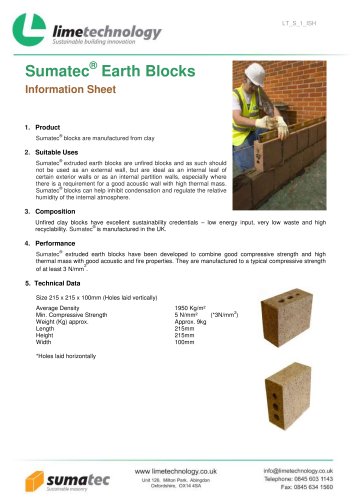 Sumatec® Earth Blocks
2 Pages
 Overview of Lime Technology
85 Pages



Archived catalogs
 Render & Plaster
14 Pages
 Multi-pro XS
3 Pages
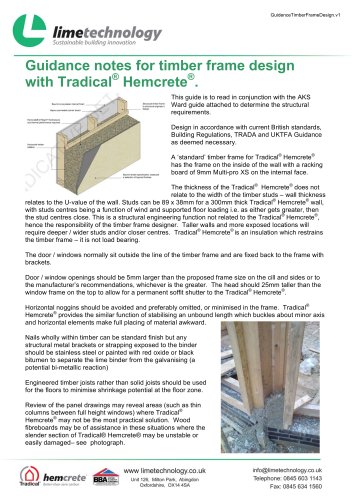
 Tradical® Hemcrete® Brochure
2 Pages



Related Searches
*Prices are pre-tax. They exclude delivery charges and customs duties and do not include additional charges for installation or activation options. Prices are indicative only and may vary by country, with changes to the cost of raw materials and exchange rates.
About ArchiExpo
ArchiExpo is a marketplace that offers B2B players a complete experience, from product sourcing to purchase. ArchiExpo is an entity of VirtualExpo Group.
Are you a buyer?
Are you a supplier?