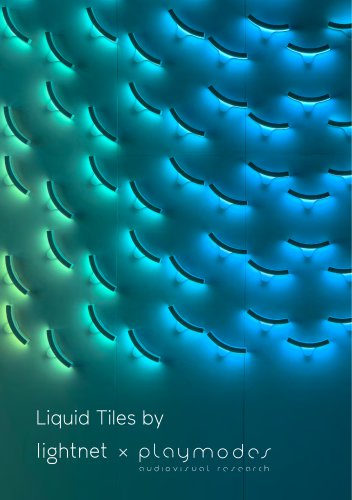
1. Catalogs
  2. Lightnet GmbH
  3. Sustainability Report 2024

Sustainability Report 2024

Sustainability Report 2024
1 / 59 PagesView full catalog

Sustainability Report 2024

Product catalog summary
Editorial Overview: The report opens with a message from Axel Tiebel, highlighting Lightnet's commitment to sustainability as a core corporate strategy. The guiding principle "Together for tomorrow" underscores their dedication to sustainable development, supported by ISO 14001 certification and alignment with GRI standards.
Lightnet in Figures: Lightnet employs over 600 people across seven locations, producing architectural lighting solutions sold in over 50 countries. The company emphasizes in-house production and sustainability in its operations.
Sustainability Strategy: Lightnet's strategy is built on three pillars: redefining light through innovation, sustainable actions for environmental protection, and living responsibility by collaborating with all stakeholders. The company focuses on developing energy-efficient, durable, and demountable luminaires.
ISO-Certified Processes: Lightnet's processes are certified under ISO 9001:2015, 50001:2018, and 14001:2015, ensuring quality, energy efficiency, and environmental management.
Product Development: The company highlights its commitment to eco-design, using recyclable materials, and ensuring products are easy to maintain and repair. Lightnet's luminaires achieve high energy efficiency, with outputs of at least 120 lm/W.
Path to Net Zero Emissions: Lightnet outlines measures for reducing energy and water consumption, using low-CO2 aluminium, and implementing effective waste management. The company also focuses on plastic-free packaging and sustainable materials.
Partnerships and Initiatives: Lightnet collaborates with organizations like One Earth – One Ocean and the Scottish Wildlife Trust to promote environmental conservation and biodiversity.
Diversity and Inclusion: The report emphasizes Lightnet's commitment to diversity, inclusion, and equal opportunities within its corporate management and workforce.
Corporate Management & Outlook: Lightnet provides insights into its multinational team and future sustainability goals, reinforcing its dedication to creating a sustainable future.
GRI Content Index: The report includes a GRI Content Index, ensuring transparency and adherence to international reporting standards.
Material Specifications: The document highlights the use of recyclable PMMA for diffusers, known for its excellent light-diffusing properties and environmental friendliness. PMMA is 100% recyclable, contributing to waste reduction and a sustainable circular economy. Polycarbonate opal diffusers are made from 59% pine oil, a timber industry byproduct, certified by the ISCC mass balancing principle.
Transport and Supplier Selection: Lightnet emphasizes short transport routes to minimize CO2 emissions, exemplified by an aluminium supplier located 4.3 km from their plant. Supplier selection is based on product quality, environmental, social, and ethical standards, ensuring materials come from sustainable sources.
Sustainability Team and Initiatives: The sustainability team at Lightnet is dedicated to environmentally friendly solutions, focusing on legal obligations, sustainable material selection, obtaining environmental certificates, and waste management. The team aims to balance economic, social, and environmental objectives, striving to minimize the ecological footprint while supporting economic growth.
Sustainability Strategy: Lightnet's sustainability strategy includes using renewable energy, obtaining Environmental Product Declarations (EPDs), conducting Carbon Footprint analysis, and implementing ISO 50001 and ISO 14001 standards. The goal is to achieve climate neutrality by 2040, focusing on reducing emissions, improving working conditions, and promoting equality.
Quality and Environmental Responsibility: Lightnet adheres to ISO 9001:2015 for quality management, ensuring precision and reliability in production. Their environmental responsibility aligns with ISO 14001:2015, focusing on energy-efficient luminaires, life cycle assessments, and sustainable resource management. Energy efficiency is enhanced through ISO 50001:2018-certified practices, incorporating renewable energy and smart technologies.
ISO Certifications: The document outlines key insights into ISO certifications, highlighting improvements in energy management, quality management, and environmental management systems. These certifications ensure continuous improvement, customer satisfaction, and compliance with environmental regulations.
Introduction: The document is a sustainability report for 2024, detailing various lighting products and their integration with sustainable practices. It highlights the design, functionality, and environmental considerations of Lightnet's product offerings.
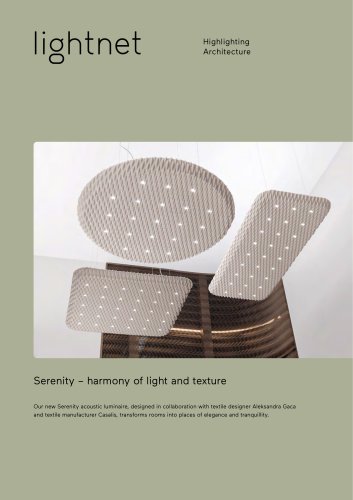
Product Overview: The report introduces several product families, each with unique design and functionality, such as the Matric Luminaire Family with new wooden surfaces, the Basic Family known for its circular shape, and others like Beam Me Up, Caleo Evolution, Code Zero, Cubic, Liquid Line, Lucille, Midpoint, Ringo Star, Serenity, and Vision, each offering distinct features and benefits.
Sustainability Initiatives: Lightnet is committed to sustainable development, aligning with several United Nations Sustainable Development Goals (SDGs). Key initiatives include developing energy-efficient LED lighting solutions, promoting sustainable management and efficient use of natural resources, reducing greenhouse gas emissions, and supporting marine and terrestrial ecosystem conservation through partnerships.
Conclusion: Lightnet emphasizes its responsibility towards the environment and stakeholders, fostering an organizational culture that supports sustainable transformation. The report underscores the company's commitment to innovation in lighting technology while maintaining a focus on environmental sustainability.
Sustainability Strategy Overview: In 2022, Lightnet completed its first materiality analysis, identifying key focus areas for its sustainability strategy, including employee health and safety, business ethics, transparent communication, climate policy, circular economy, and energy efficiency of products.
Key Sustainability Initiatives: Lightnet prioritizes employee health and safety, business ethics, climate policy, circular economy, and energy efficiency, guiding the company's efforts to align corporate goals with a sustainable future.
Energy and Emissions Management: Lightnet's production facilities in Poland are powered by 100% renewable energy. The company aims to achieve net zero emissions by 2040, focusing on reducing Scope 1 and Scope 2 emissions, with a 30% reduction in Scope 3 emissions by 2030.
Aluminium and Waste Management: Lightnet sources aluminium produced with renewable energy, resulting in lower CO2 emissions. The company emphasizes recycling and waste management, using 100% plastic-free cardboard packaging and optimizing waste streams to minimize environmental impact.
Water Management: Lightnet's facility in Kety uses wastewater recovery systems to recycle water in production. Water consumption is monitored to ensure efficient use and corrective actions are taken as needed.
Partnerships for Environmental Conservation: Lightnet supports the Scottish Wildlife Trust in protecting peatlands, which play a crucial role in carbon storage and water quality improvement. The partnership focuses on restoring habitats at Cander Moss and Bankhead Moss.
Introduction: Lightnet is committed to sustainability and environmental protection, as demonstrated by their various initiatives and partnerships aimed at preserving natural ecosystems and promoting green practices.
Peatland Restoration: On March 6, 2025, Lightnet UK participated in a volunteer day at Cander Moss, a Scottish peatland, to remove birch trees that were drying out the area. Peatlands are crucial for carbon storage, holding twice as much carbon as all the world's forests combined. The restoration efforts, in partnership with the Scottish Wildlife Trust, are vital as over 80% of Scotland's peatlands are degraded.
Marine Conservation: Since 2024, Lightnet Germany has supported the One Earth One Ocean association and the "SeeKuh" cleaning ship, which removes ghost nets from the Baltic Sea. Ghost nets contribute significantly to ocean plastic waste and pose threats to marine life. Lightnet's involvement includes employee engagement and financial support.
Green Mobility: Lightnet promotes sustainable commuting through the JobRad initiative, allowing employees in Cologne to lease e-bikes and bicycles with tax advantages. This program supports a healthy lifestyle and reduces carbon footprints.
Diversity and Inclusion: Lightnet values diversity, with a workforce comprising 12 nationalities. The company promotes equal pay and opportunities regardless of gender, age, or origin. In 2024, Lightnet employed 603 people, with a balanced gender distribution and a commitment to employee well-being.
Employee Training and Safety: In 2024, Lightnet conducted 1,975 hours of training, averaging 3.6 hours per employee. The company emphasizes health and safety, aiming for a zero-incident workplace and fostering an inclusive environment.
Corporate Governance: Lightnet integrates sustainability into its business strategy, guided by ethical practices and compliance with international laws. The management team is committed to the Sustainable Development Goals (SDGs) and upholds human rights and environmental protection.
Stakeholder Engagement: Lightnet maintains open communication with stakeholders, using digital technologies and face-to-face interactions to foster relationships and promote sustainable solutions.
Conclusion: Lightnet's sustainability report for 2024 highlights their ongoing commitment to environmental protection, employee well-being, and ethical governance, aiming for a sustainable future.
Organisational Details: The report includes organisational details and entities involved, as outlined on pages 6-7. It covers the reporting period, frequency, and contact information on page 114.
Employee Information: Details about employees and non-permanent workers are provided on pages 106-109.
Governance and Strategy: The role of the highest governance body in sustainability strategy is discussed on page 6, with a declaration of application of the sustainable development strategy on page 32.
Compliance and Stakeholder Engagement: Compliance with laws and regulations and the approach to stakeholder engagement are addressed on page 113.
Energy and Emissions: Energy consumption and reduction within the organisation are detailed on page 91, while greenhouse gas emissions (Scope 1, 2, 3) are covered on page 95.
Health, Safety, and Training: The occupational health and safety management system is described on page 110. Training for personal and professional development, along with programs for upgrading employee skills, are on page 111.
Discrimination Incidents: Incidents of discrimination and actions taken are reported on page 110.
Contact Information: Contact details for Lightnet's headquarters and international offices are provided, including addresses and email contacts for Germany, Austria, UK, France, Poland, USA, and Mexico.
See more

Catalog excerpts

Sustainability Report 2024-2

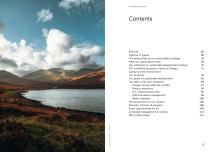
The three pillars of our sustainability strategy 10 Meet our sustainability team 30 Our statement on sustainable development strategy 32 ISO-certified processes in terms of energy, 34 Our goals for sustainable development 86 Our path to net zero emissions 90 • Effective waste management 98 Strong partners for our mission 102 Diversity, inclusion & equality 106 Corporate management & outlook 112

 Open the catalog to page 2
Sustainability Report 2024-4

Dear readers, “Together for tomorrow” – this is the guiding principle that shapes our path to a sustainable future at Lightnet. We firmly believe that sustainability begins at the core of our corporate strategy. In the first part of this report, we explain this approach and how we consistently implement it in all areas of our business. Get to know our sustainability team, which drives forward measures that have a tangible impact. One visible result is our successful certification according to ISO 14001, which brings our environmental management in line with internationally recognized standards....

 Open the catalog to page 4
Sustainability Report 2024-5

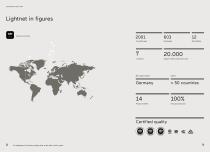
Lightnet in figures Organisational details 2001 603 12 Founding year Employees Nationalities Locations Square meters production area Main sales market Product families Inhouse production For addresses of locations, please refer to the back of this report.

 Open the catalog to page 5
Sustainability Report 2024-6

The three pillars of our sustainability strategy Lightnet designs and produces professional architectural lighting to improve people’s everyday lives, inspire them and enhance their wellbeing. More than 600 employees at seven locations worldwide are united by the goal of inspiring their customers. We value sustainability and the conservation of resources and use our own LED technology. We produce all our products ourselves without exception and have a comprehensive in-house manufacturing depth, which enables us to produce almost all components for our luminaires – from raw PCBs and optical components...

 Open the catalog to page 6
Sustainability Report 2024-7

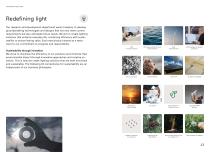
Redefining light Our research and development department works tirelessly to develop groundbreaking technologies and designs that not only meet current requirements but also anticipate future needs. We aim to create lighting solutions that enhance everyday life, combining efficiency with sustainability to ensure lasting value. Each new product stands as a testament to our commitment to progress and responsibility. Sustainability through innovation We strive to maximise the efficiency of our products and minimise their environmental impact through innovative approaches and creative solutions....

 Open the catalog to page 7
Sustainability Report 2024-8

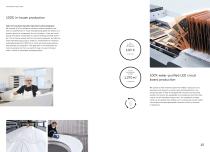
100% in-house production High-tech manufacturing with a high level of vertical integration We produce all of our products ourselves, without exception, and have a comprehensive in-house manufacturing depth that allows us to produce almost all components for our luminaires – from raw circuit boards and optical components to surface finishing and final assembly. This is how we ensure that not only each component, but also the entire manufacturing process, meets our requirements for maximum sustainable production. With this in mind, we continuously examine and optimise our production. This approach...

 Open the catalog to page 8
Sustainability Report 2024-9

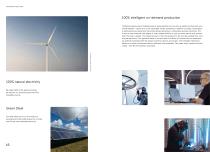
100% intelligent on-demand production Photo by Igor Lepilin on unsplash.com Traditional warehousing of finished products and assemblies not only ties up capital and thus entre-preneurial flexibility - above all, it is not sustainable. Finally, stockpiling, in addition to energy consumption, is automatically associated with inaccurate demand planning or unnecessary (excess) inventories. This is why we have maximised the degree of order-related flexibility to such an extent that we only produce when the order is placed. The ordered product is then fully produced in the shortest possible time, including...

 Open the catalog to page 9
Sustainability Report 2024-10

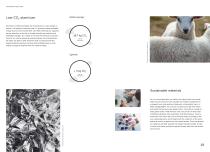
Global average: Aluminium is 100% recyclable, but its production is very energy-intensive. It is therefore important that it is produced using renewable energy sources and recycled after use. When selecting our suppliers, we pay attention to the use of climate-friendly raw materials and renewable energies. As a result of this and the continuous improvement of our internal processes and procedures, the manufacturers we select are able to offer aluminium that is produced with the lowest possible emissions and thus demonstrably leaves a much smaller ecological footprint than the market average....

 Open the catalog to page 10
Sustainability Report 2024-11

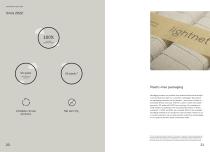
100% recycable packaging materials with 100% local recycling Plastic-free packaging Complete circular economy Packaging protects our products from external influences and helps to ensure that they reach our customers undamaged. We produce our packaging ourselves and on demand – every piece of waste is processed directly into pulp. And this is used to create new packaging parts. 0% waste with 100% local recycling. Our packaging is made entirely of cardboard, with no polystyrene inserts or plastic wrapping *. In 2023 and 2024, we produced 100% of the recyclable packaging materials at our production...

 Open the catalog to page 11
Sustainability Report 2024-12

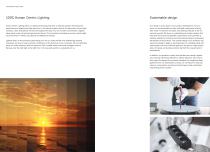
100% Human Centric Lighting Sustainable design Human Centric Lighting (HCL) is a lighting technology that aims to improve people’s well-being and performance by adapting the light spectrum to the natural circadian rhythm. By taking into account light intensity, colour temperature and mood throughout the day, HCL can increase concentration, regulate sleep-wake cycles and promote general well-being. This innovative technology ensures an optimal lighting environment in offices, educational and healthcare facilities. Eco-design is a key aspect of our product development. Our products can be dismantled...

 Open the catalog to page 12
Sustainability Report 2024-13

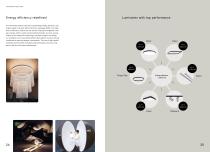
Energy efficiency redefined Luminaires with top performance Our luminaires impress with their outstanding energy efficiency and a light output of at least 120 lm/W (from catalogue 2025). This high level of efficiency means that we achieve impressive brightness with less energy, which is both environmentally friendly and cost-saving. Thanks to the latest LED technology and well-thought-out design, our luminaires not only provide optimal illumination, but also actively contribute to reducing energy consumption. The use of high-quality materials and innovative manufacturing techniques ensures a...

 Open the catalog to page 13

All Lightnet GmbH catalogs and technical brochures
*Prices are pre-tax. They exclude delivery charges and customs duties and do not include additional charges for installation or activation options. Prices are indicative only and may vary by country, with changes to the cost of raw materials and exchange rates.