- Catalogs
- Lano Sports
- Maintenance program

Maintenance program

Maintenance program
The document emphasizes the importance of maintenance for the durability and quality of artificial grass systems. Proper maintenance affects the system's longevity, game quality, player safety, and field aesthetics. It is crucial for those responsible for turf care to be familiar with these guidelines.
General Principles
Regular maintenance includes removing litter and brushing the surface frequently. Preventive measures against moss and weeds are recommended over curative treatments. Specific actions like repairing, adding infill, and maintaining drainage are necessary. Prohibitions include using flat sole or metal spiked shoes, and smoking or carrying food on the field.
Different Procedures
- Brushing: Conducted weekly to spread infill, straighten pile, and improve traction. Use non-metal brushes and vehicles with pneumatic tires.
- Strong Brushing: Performed 1-2 times a year to prevent surface compaction using specialized equipment.
- Collection of Litter: Regularly remove debris to ensure safety and visibility, using brushes or vacuums.
- Anti-Moss and Anti-Herb Treatments: Conducted biannually, using non-acidic products, considering local regulations.
- Snow and Ice Removal: Generally left to melt naturally, but guidelines are provided for scheduled events, emphasizing non-damaging tools and chemicals.
- Field Markings: Apply paint lightly and evenly, ensuring the surface is clean and dry.
- Watering the Surface: Used to clean and cool the field, ensuring even distribution and avoiding polluted water.
- Repairs of Loose Joints or Tears: Minor repairs can be handled by maintenance staff, following specific adhesive and curing guidelines.
- Repair of Cigarette Burns: Use a metal brush or razor knife to separate fused fibers.
- Adding Infill: Conducted after debris removal, applying in thin layers and brushing against the grain.
Conclusion
- Prohibited Activities: Includes storage of materials, unnecessary vehicular traffic, certain sports activities, open flames, and unauthorized cleaning methods.
- Key Points to Remember: Maintain cleanliness, brush the turf regularly, limit vehicular traffic, enforce no smoking, make minor repairs, and adhere to the manual's recommendations.
Catalog excerpts

3. COLLECTION OF LITTER, LEAVES, TWIGS, ... 4. ANTI-MOSS AND ANTI-HERB TREATMENTS 8. REPAIRS OF LOOSE JOINTS OR TEARS 9. REPAIR OF CIGARETTE BURNS
Open the catalog to page 2
The durability of the system will be influenced by the quality of the artificial grass, the installation and the construction of the substructure, but also by the maintenance. This section outlines the regular and general maintenance, as well as the procedures that are specific small repairs, the removal of snow and the preparation of special events. Good maintenance procedures will have a positive influence on: - the security of the players and other users Please distribute this section to those responsible for the day-to-day care of the turf field and check that they are familiar with the content....
Open the catalog to page 3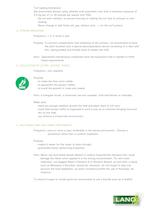
Turf loading limitations: We recommend always using vehicles with pneumatic tires with a maximum pressure of 2.5 kg per m2 or 35 pounds per square inch (PSI). - Do not park vehicles, to prevent burning or melting the turf due to exhaust or over - Never change or add fluids (oil, gas, battery acid, ...) on the turf surface Frequency: 1 or 2 times a year Purpose: To prevent compactation and hardening of the surface, we recommend to have the pitch brushed with a special decompactation device consisting of a rake with thin, spring-loaded and flexible tines to loosen the infill. How: Specialized maintenance...
Open the catalog to page 4
The artificial turf pitch can't be used when there is snow or ice on the surface. In general, snow or ice should be left to melt and drain off the system without assistance. In case of a scheduled event, the snow or ice has to be removed by applying the following guidelines. Snow or ice removal should be done as near as possible to the event time. Snow removal when snow is sticky and wet: - use a rubber snow plow with a rubber tipped blade (never wood, metal or other rigid surface - prevent digging the blade into the infill or primary backing - remove the snow in layers - make the blade kiss...
Open the catalog to page 5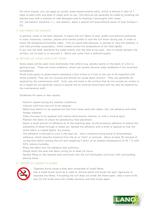
For short events, you can apply an acrylic water-based exterior paint, which is diluted in ratio of 1 dose of paint with one dose of water prior to use. The removal can generally be made by brushing the painted area with a solution of mild detergent and by flushing it thoroughly with water. For 'permanent' solutions ( + /- one season), apply a special turf polyurethane spray of type Conipur L In general, water is the best cleanser. It cleans the turf fibers of dust, pollen and airborne pollutants. In many instances, coaches, players and trainers prefer to wet the turf down during use, in order...
Open the catalog to page 6
A few months after having started using the field, the rubber is mostly settled and the field may require some more rubber in some areas. The same phenomenon can happen after extremely heavy - Only apply once all the litter, leaves, moss and weeds have been removed from the field. - Add the in-fill in thin layers before working it into the field. - Brush the turf against the grain. - Cross brush the complete field. - Storage or materials such as drums, timber, equipment, etc. - Unnecessary vehicular traffic - Golfing, shot putting, javelin or discus throwing, and the use of long spike track shoes...
Open the catalog to page 7All Lano Sports catalogs and technical brochures
 Safe2Play
2 Pages
 Hockey PAssion
2 Pages
 Hockey Revolution
2 Pages
 Hockey Solution
2 Pages
 Profoot MAX
2 Pages
 Green Signature
12 Pages
 Lano Sports
12 Pages
 Profoot MXSi 4G
2 Pages
 Safe 2 play
2 Pages
 Tournement PE15
2 Pages
 Grand Clay 12
2 Pages
 Profoot ONE
2 Pages
 PU newsletter
1 Page
 Yarn Comparison
2 Pages
 Interplay
1 Page