

CE Type 56 Select Guide

CE Type 56 Select Guide
This document provides comprehensive guidance on selecting and using protective coveralls, focusing on Lakeland's Type 5 and 6 garments. It emphasizes the importance of choosing the right garment for protection against hazardous dust and light liquid spray, highlighting factors such as protection, durability, comfort, and design.
Lakeland is a leader in non-woven-based disposable protective coveralls, with over forty years of experience. The company ensures quality by manufacturing its own products and has a global presence.
The guide offers a structured approach to selecting garments, considering fabric strength, CE testing results, and design features.
Type 5 and 6 garments are made from Flashpun Polyethylene, Spunbond-Meltblown Spunbond, and Microporous Film Laminate, each offering different protection and comfort levels.
CE tests assess seam strength, abrasion resistance, puncture resistance, and more. Lakeland's products often match or exceed competitors in these tests.
Tests include resistance to liquid penetration and repellency. Lakeland's MicroMax® options achieve high classifications, indicating strong protection against biological hazards.
Comfort is determined by air permeability. Lakeland designs aim to maximize comfort without compromising protection.
Effective design enhances protection, comfort, and durability. Lakeland's 'Super-B' design incorporates unique features for superior performance.
Selecting the right protective garment is crucial for worker safety and cost-effectiveness. Lakeland offers reliable options for various applications.
The EN 14126 standard is crucial for protection against infectious agents. Lakeland recommends garments with sealed seams for better protection.
MicroMax® options provide superior liquid protection, achieving high results in EN 6530 standard tests.
SafeGardTM offers higher air permeability compared to MicroMax®, enhancing comfort.
Ergonomic designs like 'Super-B' styling improve fit and reduce stress points.
Lakeland Cool Suits® combine protection and comfort, making them a preferred choice.
MicroMax® NS and TS are designed for hazardous environments, featuring microporous film laminate fabric for protection against light splashes and hazardous dusts.
MicroMax® NS Nuclear is approved to Nuclear Industry Standard EN 1073, Type 5 & 6, and EN 1149. MicroMax® TS offers enhanced Type 4 protection.
Products are rated for abrasion resistance, flex cracking, trapezoidal tear, tensile strength, and puncture resistance according to CE class standards.
MicroMax® NS/TS and SafeGard® GP/76 provide effective repellency and penetration resistance against chemicals.
MicroMax® TS is recommended for maximum protection against infectious agents.
SafeGard® GP offers higher breathability, enhancing wearer comfort.
Ergonomic designs like the 'Super-B' style improve movement and comfort.
Products are available in various sizes and colors, with some styles not stocked in Europe.
PyrolonTM Plus 2 is a flame retardant coverall designed for protection against flames and heat, compliant with EN 14116 (Index 1) standards.
Features include intrinsic anti-static properties and ergonomic design for optimal fit and movement.
Rated for abrasion resistance, flex cracking, trapezoidal tear, tensile strength, and puncture resistance.
Effective against chemicals like Sulphuric Acid and Sodium Hydroxide.
PyrolonTM products show superior flame retardant performance.
Should be used over thermal protective garments for optimal protection.
Store in dry conditions away from direct sunlight. Expected shelf life is 10 years or more.
Designed for single use and should be disposed of after one use.
Guidance on selection, use, storage, and disposal of protective coveralls, emphasizing the importance of selecting the appropriate garment for specific applications.
Undamaged garments can be reused if appropriate. Contaminated garments require decontamination before disposal.
Offers a secure alternative to adhesive tape for sealing gloves to garment sleeves.
Choosing the correct garment size is crucial for protection and comfort.
Lakeland offers a wide range of protective clothing options for hazardous chemicals and dusts.
Lakeland Industries is a global leader in industrial clothing design and manufacture, ISO 9001 certified.
Catalog excerpts

Protect Your People to Type 5 & 6 Protective Coverall Selection A guide to the types and selection of common Type 5 & 6 protective coveralls
Open the catalog to page 1
Protect Your People Protect Your People Type 5 & 6 Selection Guide This guide provides detailed descriptions and technical information for Lakeland’s range of garments for protection against CE Types 5 (hazardous dust) & 6 (light liquid spray) applications. This booklet also provides an easy to follow guide to selection of the most appropriate garment for your application. Given that all garments in the market are based on one of three essential fabric types, this guide covers the important factors for consideration; protection, durability, comfort and design. It shows that Lakeland offers the...
Open the catalog to page 2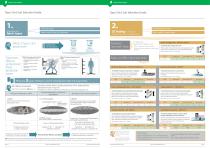
Protect Your People Protect Your People Type 5 & 6 Suit Selection Guide Type 5 & 6 Suit Selection Guide Protection types CE Testing - Physical properties and comparisions Fabrics used for Type 5 & 6 garments fabric types What is Type 5 & 6 protection? Type 5- Hazardous Dry Particles Type tests help to understand these protection types: Fabric profile / physical tests CE Type Tests Type Tests for Types 1 to 6 Finished Garment Tests - Type 5: Hazardous Dry Particles - Type 6: Reduced (aerosol) Liquid Spray Reduced Liquid (aerosol) Spray Seam Strength Test - EN ISO 13935-2 ‘to identify the strength...
Open the catalog to page 3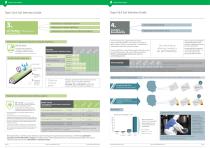
Protect Your People Protect Your People Type 5 & 6 Suit Selection Guide Type 5 & 6 Suit Selection Guide • Resistance to liquid penetration • Resistance to liquid repellency • Resistance to penetration by infectious agents liquid protection EN ISO 6530 Fabric penetration / Repellency Testing Sodium Hydroxide (10%) Fabric sample Absorbant fabric Percentage of liquid running off the fabric • Application of common sense Some manufacturers suggest Moisture Vapour Transmission Rate (MVTR) - the tendency of a fabric to allow moisture vapour to pass through - is equivalent to breathability and results...
Open the catalog to page 4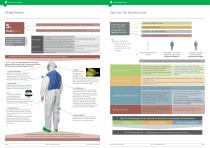
Protect Your People Protect Your People Design Features Type 5 & 6 Suit Selection Guide How can garment design and features make the garment more effective? What features are standard on Lakeland Type 5 & 6 garments? Design Features Pattern Design Garment Size Effective sizing and styling of a garment has a major effect on protection, comfort and durability. Low cost garments often are sized smaller in order to use less fabric and save cost. A poorly sized garment is often uncomfortable and will not last - it may be lower cost but is not a real saving. Garment Features The design and features...
Open the catalog to page 5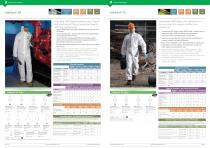
Protect Your People Protect Your People Serged (stitched) overlocked seams Stitched & Bound seams Entry level SMMS based hazardous dust (Type 5) and liquid aerosol (Type 6) protective coverall with high comfort level. Breathable SMMS fabric with stitched and bound seams for superior comfort and protection. 45gsm SMMS fabric with high breathability and superior level of comfort. Air permeability over 10 times that of flash-spun polyethylene or microporous film laminates. Air permeability negates generation of the bellows effect which on low-breathable fabrics encourage penetration of particles...
Open the catalog to page 6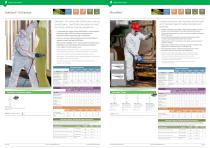
Protect Your People Protect Your People Stitched & Bound seams INDEX ENTYPE 11/0/0 943 TYPE 1a Stitched & Bound seams SafeGardTM 76 version with SMMS fabric and red bound seams. Specifically developed to meet the French Asbestos Industry regulations. • • • • Inset sleeves – torso shaped to body to mazimise freedom of movement and negate the need for thumbloops. Tougher fabric for more demanding applications Addition of unique scrim results in highest tear strength in its class – tougher and more durable for more demanding environments. Stitched and bound exterior seams to enhance strength and...
Open the catalog to page 7
Protect Your People Protect Your People Serged (stitched) overlocked seams MicroMax® NS EN 943 TYPE 1a TYPE 1 Serged (stitched) overlocked seams High quality microporous film laminate fabric provides superior liquid resistance against liquids, light oils and light sprays of liquid chemicals. • • • • Type 5 & 6 protective coverall with protective rear sleeve for harness lanyard. • • • • • Lakeland “Super-B” ergonomic styling – unique combination of three design elements to optimise fit, durability and freedom of movement. Three piece hood for rounder head shape and greater comfort. Inset sleeves...
Open the catalog to page 8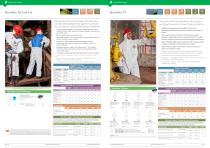
Protect Your People Protect Your People Bound seams MicroMax® NS Cool Suit TYPE 1 INDEX EN 943 TYPE 1a TYPE 11/0/0 Stitched & Taped Seams Microporous film laminate Type 5 & 6 protective coverall with breathable rear panel for comfort & bound seams for added protection and durability. • • • • • • Physical Properties Property Abrasion Resistance Flex Cracking Trapezoidal Tear Tensile Strength Puncture Resistance Anti-static Seam Strength Physical Properties MicroMax® NS /TS Abrasion Resistance Flex Cracking Trapezoidal Tear Tensile Strength Puncture Resistance Anti-static Chemical Repellency and...
Open the catalog to page 9
Protect Your People Protect Your People MicroMax® TS Cool Suit Stitched & Taped Seams Microporous film laminate coverall with taped seams and covered breathable rear panel. Seam Strength Lakeland “Super-B” ergonomic styling – unique combination of three design elements to optimise fit, durability and freedom of movement. Three piece hood for rounder head shape and greater comfort. Inset sleeves – torso shaped to body to mazimise freedom of movement and negate the need for thumbloops. Two piece crotch gusset – enhances freedom of movement and reduced crotch splitting. Physical Properties MicroMax®...
Open the catalog to page 10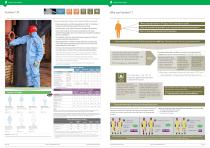
Protect Your People Protect Your People Serged (stitched) overlocked seams Flame retardant Type 5 & 6 breathable coverall • • • • • • • • • • When should PyrolonTM FR Type 5 & 6 coveralls be used? Pyrolon garments meet the requirements of EN 14116 (Index 1) for garment for protection against flames and heat. Includes nylon scrim which improves strength and durability.. Fabric will not ignite, chars at low temperature and unlike standard disposables does not continue burning after the ignition source is withdrawn. Can safely be used over thermal protective garments without compromising thermal...
Open the catalog to page 11All Lakeland catalogs and technical brochures
 CE MicroMax NS PDS EN
2 Pages
 CE Pyrolon XT PDS
2 Pages
 CE SafeGard GP PDS
2 Pages
 Arc® X
2 Pages
 PermaSURE
2 Pages
 ChemMax® Encapsulating Suits
2 Pages
 ALM 300
2 Pages
 ALM 300/500
2 Pages
 Arc® 43
2 Pages
 Lakeland ALM®
4 Pages
 Chemical Suit Selection
28 Pages


