- Company
- Products
- Catalogs
- News & Trends
- Exhibitions
Thermal Insulation Systems Kreisel
Thermal Insulation Systems Kreisel
The document emphasizes the significance of thermal insulation systems in enhancing energy efficiency and environmental sustainability. It outlines the advantages of effective insulation, including reduced heat loss, improved energy balance, and increased building durability.
Older buildings often fail to meet current thermal protection standards, resulting in high energy consumption and costs. Proper insulation minimizes heat loss, stabilizes indoor temperatures, and enhances facade durability, contributing to climate protection by reducing fossil fuel usage.
Effective insulation requires correct placement to avoid heat bridges and moisture issues. Insulation should be installed on the cooler side of the wall, typically the exterior, to prevent freezing and condensation. Internal insulation is less favorable due to risks of condensation and mold.
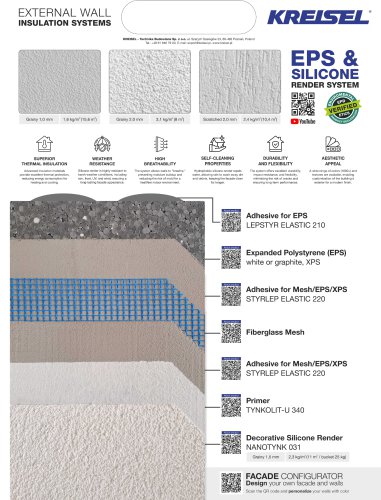
KREISEL offers TURBO systems for external wall insulation, providing durability, aesthetics, and energy efficiency. These systems include adhesive compounds, insulation boards, reinforced layers, and facade plastering, suitable for both new and retrofitted buildings.
The document outlines the components of KREISEL's insulation systems and provides recommendations for installation, including temperature and humidity conditions. It emphasizes avoiding work during adverse weather and ensuring facade layer stability.
Proper thermal insulation is crucial for energy efficiency, building durability, and occupant comfort. KREISEL's solutions offer comprehensive and modern approaches to meet these needs, ensuring long-term benefits for both the environment and property value.
Various renders are discussed, including SILICONE PROTECT 031 for enhanced water and dirt resistance, BIOTYNK 042 for superior mechanical resistance, and POZTYNK-SZ 062 for vapour-permeability. Each render is suited for specific environmental conditions and applications.
Details on adhesives and bonding mortars for thermal insulation boards are provided, along with reinforcing mesh and rendering primers to enhance durability and adhesion. Decorative renders and facade paints are categorized by type and application.
Proper substrate preparation is crucial for facade durability, involving seasoning, cleaning, priming, and filling cavities. Techniques for cleaning and priming are outlined, emphasizing the importance of selecting primers based on substrate characteristics.
Adhesive application methods for thermal insulation boards include full-surface and spot-and-strip techniques, with emphasis on perimeter strips for stability and fire resistance. Proper board installation is critical to prevent cracks and ensure durability.
Details on levelling mortars, primers, and mounting accessories are provided, highlighting their roles in ensuring mechanical strength and substrate compatibility.
Adhesive mortars like LEPSTYR 210 and others are discussed, with specifications including adhesion strength, application temperature ranges, layer thickness, and consumption rates.
The document emphasizes proper application techniques, such as even distribution of forces when fixing insulation panels and embedding reinforcing mesh in mortar layers to protect against mechanical damage.
Reinforcing mortars like STYRLEP 220 are highlighted for embedding mesh and providing a durable protective layer. Correct mesh installation is crucial to prevent cracks and ensure system integrity.
Products are designed to withstand water, frost, and UV exposure, with recommendations for additional protection using primers before winter.
Recommendations include avoiding painting the reinforcing layer, ensuring proper mesh tension, and using additional reinforcements in high-stress areas.
Applying reinforcing mortar below +5°C can weaken the structure, leading to crumbling and failure to meet required parameters.
Primers increase adhesion, regulate processing time, and ensure color uniformity, creating a strong adhesive bridge between the reinforcing layer and the render.
Decorative renders provide aesthetic and protective functions for facades, with types including mineral, silicone, silicate, and acrylic renders, each with specific advantages and applications.
Color choice affects aesthetics, durability, and thermal comfort. Avoid very dark colors for large areas to prevent overheating.
Apply the selected render using a stainless steel trowel, ensuring a layer of grain thickness is achieved. Texturing is done with a plastic trowel while the render is fresh.
Exterior paints protect buildings by reducing water absorption and preventing algae and fungal growth. Silicone paints are recommended for insulated facades due to their UV resistance and flexibility.
Mosaic renders like MOZATYNK-S 051 are popular for plinth zones due to their rich colors and stone-like appearance, offering easy cleaning and resistance to fading.
Wood-like facades can be achieved using flexible panels that mimic wood boards, offering durability against environmental conditions.
Architectural Concrete 055 offers a durable and ductile alternative to traditional concrete, suitable for both indoor and outdoor decorative applications.
Regular maintenance is crucial for longevity, with inspections every few years to check for damages. Cleaning and painting should be done every 8-15 years.
Minor damages can be repaired with acrylic or new render. For larger damages, meshed mortar or a new layer of insulation may be necessary.
Final acceptance of insulation work is essential to ensure durability and aesthetics, with specific checks for reinforcing layer thickness and facade homogeneity.
Specific deviation values are outlined for insulation acceptance, ensuring quality and compliance.
Details various stages of insulation work, including substrate preparation, flashing, fixing insulation boards, and more, with specific checks to ensure proper installation.
A comprehensive list of products is provided, categorized into substrate preparation, adhesive mortars, primers, decorative renders, and more.
Emphasizes the importance of following recommended practices and verifying the quality of materials used.
Contact details for KREISEL - Technika Budowlana Sp. z o.o. are provided for further inquiries and support.
Catalog excerpts
Thermal Insulation Systems www.kreisel.pl
Open the catalog to page 1
| KREISEL Thermal Insulation System KREISEL Thermal Insulation System | The modern approach to building management increasingly involves not only the convenience of the inha- bitants, but also efficiency in energy consumption and care for the environment. In this context, proper thermal insulation of the building envelope becomes one of the most important elements that affect the technical condi- tion of the building and the household budget. Many older buildings – especially those built de- 8 Thermal insulation systems cades ago – do not meet today’s thermal protection standards. The effects...
Open the catalog to page 2
4 | KREISEL Thermal Insulation System KREISEL Thermal Insulation System | 5 Insulation of residential, public, or industrial buildings is a very important aspect, both because of the need to rationalise energy consumption and the need to ensure proper conditions of use and durability of the building. Most of the buildings in use in Poland, especially residential buildings, require too much energy to keep them warm. This is especially true of buildings erected in the 1970s and 1980s, as well as in the early 1990s. The technology of the time has made annual energy consumption for heating purposes...
Open the catalog to page 3
6 | KREISEL Thermal Insulation System KREISEL Thermal Insulation System | 7 Effective thermal insulation of exterior walls is not only a way to reduce heating bills - it is also key to maintaining the longevity of a building and ensuring the comfort of its occupants. costs, compromised comfort, and structural damage to the building. That is why it is so important to follow the rules of construction physics and install insulation on the cooler side - that is, on the outside. General rules The correct placement of thermal insulation is crucial to the effectiveness of the entire insulation system....
Open the catalog to page 4
| KREISEL Thermal Insulation System KREISEL Thermal Insulation System | Thermal Insulation Systems Why are modern thermal insulation systems the 21st century standard? The advantages brought by comprehensive ETICS quality of construction and the durability of the building, plus enhance the comfort of its users. High durability and stability – these systems are Structural lightness – important especially for `retrofitting older buildings, where additional weight on the foundations is highly undesirable. ring that protects against weather conditions. They are buildings (ETICS), providing high durability,...
Open the catalog to page 5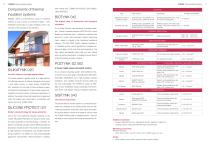
10 | KREISEL Thermal Insulation System KREISEL offers a comprehensive range of insulation systems to suit a variety of investment needs - from residential construction to public buildings. Here is an overview of the company’s key solutions: The system based on silicate render is an ideal solution for buildings exposed to intense biological environment - near parks, forests, or water bodies. SILIKATYNK 020, produced on the basis of liquid potassium glass, combines the advantages of mineral render (vapour permeability) and acrylic render (mechanical resistance). In addition, the render shows high...
Open the catalog to page 6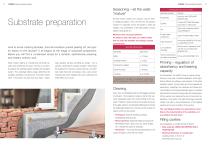
12 | KREISEL Thermal Insulation System Substrate preparation How to avoid cracking facades, thermal insulation panels peeling off, and green stains on the facade? It all begins at the stage of substrate preparation. Below you will find a condensed recipe for a durable, aesthetically pleasing, and healthy exterior wall. KREISEL Thermal Insulation System | 13 Dust, soot, and biological lichen are the biggest enemies of adhesion. Their presence creates a barrier that prevents subsequent layers from fully bonding to the substrate. Therefore, before priming, the facade should be thoroughly washed,...
Open the catalog to page 7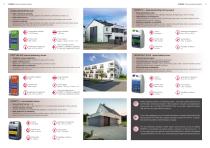
| KREISEL Thermal Insulation System KREISEL Thermal Insulation System | EXPERT 6 - deep-penetrating priming agent LEVELLING MORTAR 428 ▪ High mechanical durability It is an ideal primer for insulating systems, tile adhesives, self-levelling screeds, etc. ▪ Fibre reinforcement Owing to this the mortar is ductile, yet resistant to cracks and shrinkage scratch marks. ▪ Universal substrate It can be used on walls made of ordinary and cellular concrete, ceramic bricks and hollow bricks, silicate blocks and bricks, as well as on cement-lime plaster. ▪ Deep-penetrating action It penetrates the structure...
Open the catalog to page 8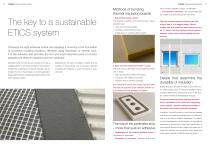
| KREISEL Thermal Insulation System KREISEL Thermal Insulation System | Methods of bonding thermal insulation boards The key to a sustainable ETICS system ment and the possibility of vapour condensation ▪ Increased fire resistance – lack of a perimeter strip can create an air draft that acts as a fire stack! 1. Full-surface (comb) method The adhesive is applied over the entire surface, using a Thermal insulation boards should be laid with notched trowel. a bond, that is, in a stagger pattern. Above used only on level substrates window and door openings, they need to be cut in mandatory when bonding...
Open the catalog to page 9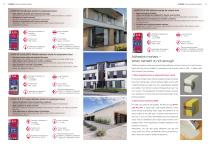
| KREISEL Thermal Insulation System KREISEL Thermal Insulation System | LEPSTYR 210 adhesive mortar for polystyrene foam LEPSTYR-W 230 adhesive mortar for mineral wool ▪ High adhesion strength and mechanical durability Guarantees solid fixing of white polystyrene foam, even in difficult installation conditions ▪ Resistance to water and frost Maintains properties in low temperatures and humidity ▪ Extensive compatibility with various substrates Designed for walls made of concrete, bricks, ceramic blocks, silicate blocks, and plastered surfaces ▪ High mechanical durability ▪ Vapour-permeable and...
Open the catalog to page 10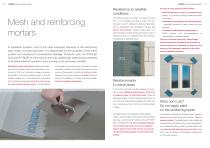
| KREISEL Thermal Insulation System KREISEL Thermal Insulation System | Resistance to weather conditions Mesh and reinforcing mortars Purpose of using diagonal reinforcement: ▪ zones – i.e., corners of openings, where forces often The reinforcing layer can remain uncovered for some time – it is UV resistant and does not age in the sun. Reducing the risk of cracks in increased stress accumulate. Increasing the strength of the reinforcing layer However, it is worth remembering that prolonged expo- – especially important for large window and door sure to precipitation and temperature changes can...
Open the catalog to page 11All Kreisel catalogs and technical brochures
 Facade board
4 Pages
 Plaster Systems Kreisel
39 Pages
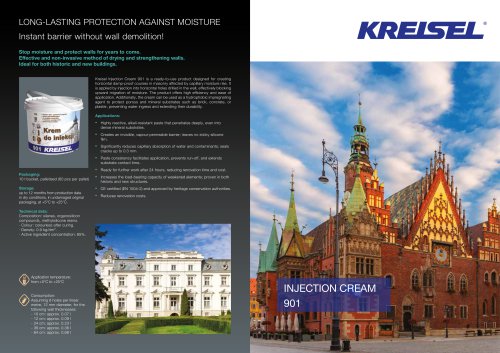 Injection Cream 901
2 Pages
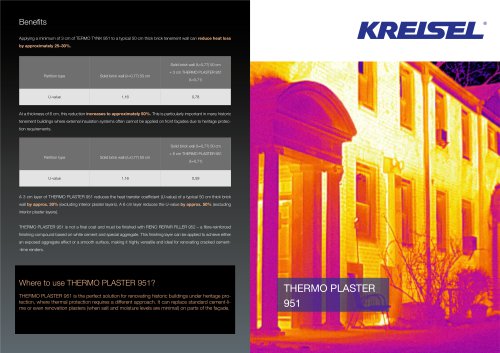 Thermo Plaster 951
2 Pages
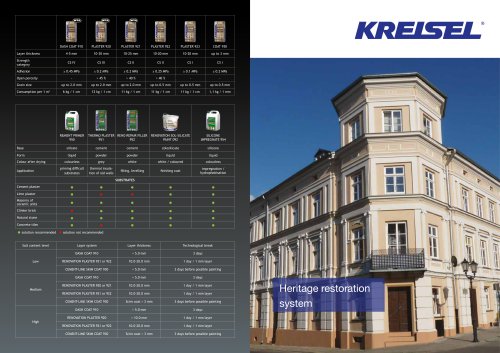 Heritage restoration system
2 Pages
 Catalogue KREISEL
120 Pages
 Portfolio Kreisel
8 Pages