
- Catalogs
- johnlord specialist flooring
- FeRFA GUIDE TO CLEANING RESIN FLOORS

FeRFA GUIDE TO CLEANING RESIN FLOORS

FeRFA GUIDE TO CLEANING RESIN FLOORS
Resin flooring systems, such as epoxy, polyurethane, and methacrylate resins, are utilized in diverse environments. The BS 8204-6 standard highlights the necessity of consulting with end users, contractors, and manufacturers to ensure the chosen resin flooring is appropriate for specific conditions. Maintaining a proper cleaning regime is essential to preserve the performance characteristics of resin floors.
Cleaning resin floors involves both mechanical and chemical methods. Mechanical cleaning can be manual or machine-assisted, using tools like floor scrubbers or pressure washers. Chemical cleaning requires solutions that dissolve or emulsify soil. It is crucial to adhere to the manufacturer's instructions and conduct spot tests before using new cleaning products.
- Mop and Bucket: Suitable for spillages but not recommended for routine cleaning due to the risk of spreading dirt.
- Manual Scrubbing: Involves sweeping, applying cleaning agents, scrubbing, and rinsing with clean water.
- Mechanical Scrubbing: Preferred method using machines for controlled application and removal of cleaning agents and water.
- Pressure Washers/Steam Cleaning: Effective for deep cleaning but requires careful handling to avoid damage.
Cleaning and wear can alter the electrical properties of static-controlled flooring. Routine testing and careful selection of cleaning materials are necessary to maintain antistatic performance.
A variety of cleaning materials are available, often complex blends targeting specific contaminants. It is crucial to verify the suitability of these materials with the flooring manufacturer to avoid damage.
Regular cleaning extends the life of resin floors. Dust and debris act as abrasives, so maintaining a clean environment is essential, especially in industries like pharmaceuticals and food processing.
Cleaning Agents: Various types of cleaning agents are used for different purposes. Nonionic emulsification is effective for taking oils and greases into the aqueous phase. Acid/alkali cleaners are used for removing scale and water deposits, while conditioning agents modify wash water to enhance cleaning efficiency.
Specific Additives: These include solvents like iso-propanol, citrus oils, and enzymes that target specific contaminants. Biologically based products use natural surfactants and plant extracts for environmentally friendly cleaning.
Specialist Products: Designed for specific applications such as sterilization, disinfection, and removal of polishes, chewing gum, and stains.
Proper disposal of wastewater from floor cleaning is crucial. The disposal method depends on contamination levels and the disposal point.
Regular maintenance is essential for preserving floor appearance. High gloss floors may require an acrylic polish layer, which should be maintained and occasionally stripped and reapplied.
Immediate cleanup of spillages is important for safety and floor maintenance. Damaged acrylic coatings should be stripped and reapplied.
Floor Seal: Light duty, wash and vacuum dry.
Floor Coating: Light/medium duty, wash and vacuum dry.
High Build Floor Coating: Medium duty, mechanical scrubber/dryers.
Multi-layer Flooring: Medium/heavy duty, rotary brush vacuum machine.
Flow Applied Flooring: Medium/heavy duty, wash & vacuum or scrubber drier.
Resin Screed Flooring: Medium/heavy duty, scrubber drier.
Heavy Duty Flowable Flooring: Heavy/very heavy duty, scrubber drier.
Heavy Duty Resin Flooring: Very heavy duty, high pressure washer.
Do: Clean regularly, use quality equipment, and follow manufacturer instructions.
Don't: Use excessive cleaning agents, mix chemicals, or use solvents and synthetic pads on textured surfaces.
Includes standards like BS8204-6:2008 and resources from organizations such as CCFRA and CIEH. FeRFA publications provide additional guidance on resin flooring.
Catalog excerpts

The Resin Flooring Association FeRFA GUIDE TO CLEANING RESIN FLOORS
Open the catalog to page 1
The Resin Flooring Association CONTENTS 1. 2. FeRFA FeRFA, the Resin Flooring Association represents resin flooring product manufacturers, specialist contractors and allied trades. Established in 1969, FeRFA now represents over 60 UK based companies. The Association has established Codes of Practice for full members. It takes an active role in promoting resin flooring and in developing both national and international standards. All FeRFA publications are freely downloadable from the website at www.ferfa.org.uk for further information, contact FeRFA at:16 Edward Road, Farnham, Surrey GU9 8NP T:...
Open the catalog to page 2
The Resin Flooring Association 1. INTRODUCTION A variety of different types of synthetic resin systems are available which can form the binder of a flooring system. These include typically epoxy, polyurethane and methacrylate resins. Resin flooring systems are used in a wide variety of situations, for each particular situation there is an optimal specification which takes into account the required performance parameters. The new BS 8204-6 (following the FeRFA Guide) states in section 4.2 that: "It is essential that, in the design and construction stages, there should be full consultation with...
Open the catalog to page 3
Thus, to maintain a clean, safe and healthy environment, proper management is required including suitable cleaning/vacuum removal and dust control systems (e.g. mats), in addition to routine manual/mechanical sweeping as required. 3. TYPICAL CLEANING METHODS 3.1 Mop and Bucket Over 300,000 cleaners daily in the UK still use the mop and bucket This should be the cleaning method for dealing with spillages, but is not for routinely cleaning the floor. In normal every day usage the mop and bucket may remove heavy soiling but typically the water is changed infrequently with the result that the floor...
Open the catalog to page 4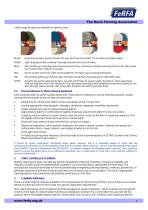
A wide range of pads are available for specific tasks. BLACK Heavy duty stripping, quickly removes dirt, wax, floor finish and sealers. For use with any stripping agent. GREEN Light stripping and wet scrubbing. Thoroughly removes dirt and scuff marks. BLUE Wet scrubbing or heavy duty spray cleaning. Gives the floor a thorough scrubbing removing dirt and scuffs. Will remove top of surface finish ready for re-coating. RED Use for smooth shiny finish whilst removing light dirt. The typical spray cleaning/buffing pad. TAN Dry polishing/buffing pad. Removes light dirt whilst shining floors....
Open the catalog to page 5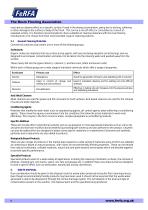
may have an adverse effect on a specific surface if used in the wrong concentration, giving rise to etching, softening or other damage to the surface or body of the finish. This can be a one off effect or cumulative as a result of repeated activity. It is therefore recommended to check suitability of cleaning materials with the resin flooring manufacturer or to choose from their recommended range of cleaning products. 5.1 General Cleaning Materials Commercial products may contain one or more of the following groups: Surfactants Organic molecular materials that are surface active agents, with...
Open the catalog to page 6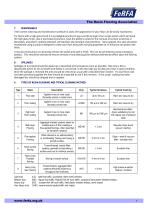
7. MAINTENANCE If the correct cleaning and maintenance schedule is used, the appearance of your floor can be easily maintained. For floors with a high gloss finish it is acceptable practice to lay a sacrificial layer of an acrylic polish, which will keep the high gloss finish, give a hard wearing surface, have the ability to allow for the removal of surface scratches or blemishes, and where carefully selected, will maintain slip resistant characteristics. Once applied, this seal should be maintained using a product designed to clean your floor along with carrying properties to re -enhance and...
Open the catalog to page 7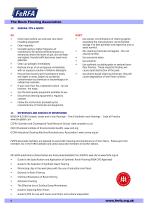
10. GENERAL TIPS & ADVICE DO ■ Initial clean before use and take care when installing equipment ■ Clean regularly ■ Consider giving a higher frequency of maintenance to heavily trafficked areas (e.g. entrances) where the levels of grit, dirt and wear are highest. Heavily trafficked areas need more attention ■ Clean up spillages immediately. ■ Remove traces of oil and grease immediately with an aqueous solution of alkaline detergent. ■ Ensure that cleaning and maintenance levels are higher in areas subject to accidental contamination by chemicals or bacteriological or radioactive materials. ■ If...
Open the catalog to page 8All Johnlord specialist flooring catalogs and technical brochures
 John lord industry brochure
44 Pages
 Brochures Aspen Stainless
28 Pages
 URAGARD HT100
2 Pages
 EPIGARD SL AntiStatic
2 Pages
 EPIGARD Fastrac
2 Pages
 EPIFLEX Jointing Mastic
2 Pages
 ACRIGARD FK
3 Pages