


- Company
- Products
- Catalogs
- News & Trends
- Exhibitions
Grease Guardian manual passive grease trap

Grease Guardian manual passive grease trap
The Grease Guardian manual units are designed to manage kitchen waste by separating grease, solids, and wastewater. The system allows for entry from either side, with solid food waste captured in a removable strainer above water level. Grease is separated in a middle chamber and treated water exits through a baffle wall.
Dry Basket Filtration
The system includes a removable strainer basket that collects solid debris. Grease floats to the surface and is trapped, while clear water exits to the drainage system. The trapped grease can be treated with FatBio solution, which uses non-pathogenic bacteria, nutrients, and enzymes.
Three-Stage Operation System
- Stage 1: Solids Collection - Captures solid waste in a strainer basket.
- Stage 2: Grease & Oil Separation - Grease is trapped in the middle chamber.
- Stage 3: Optional Dosing - FatBio solution can be used for grease treatment.
Product Features
The X Series is suitable for small catering applications like coffee shops and patisseries. Features include stainless steel fabrication, intelligent design, small footprint, inspection window, and easy maintenance. The lid closure gasket ensures a better seal to minimize odors.
Configuration and Models
The manual grease trap models GGXM15, GGXM25, and GGXM35 vary in dimensions and maximum flow rates. The document provides detailed measurements for installation and clearance requirements. Additional options include a bacteria dosing set with a dosing kit and FatBio solution.
Additional Information
GT100 and GT200 models are available upon request, with dimensions subject to change. Customers are advised to request the latest drawings from suppliers.
Catalog excerpts

Sustainable Grease Management Manual Rang (GGXM) ■Grease PGrease ■Marine ■ Coffee ■Guardian3 PGuardian® PGuardian® PGuardian Automatic Removal Units Manual Range
Open the catalog to page 1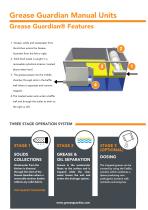
1. Grease, solids and wastewater from the kitchen enters the Grease Guardian from the left or right. 2. Solid food waste is caught in a removable cylindrical strainer, located above water level. 3. The grease passes into the middle chamber through slots in the baffle wall where it separates and remains trapped. 4. The treated water exits under a baffle wall and through the outlet to drain to the right or left. THREE STAGE OPERATION SYSTEM t SOLIDS GREASE &COLLECTIONS OIL SEPARATION Wastewater from the kitchen is directed through the inlet of the Grease Guardian where a removable strainer basket...
Open the catalog to page 2
X Series At Source / Under Sink ifeoH v/ijoHi Product Features > Suitable for coffee shops, cake shops, snack bars, patisseries and other small catering applications > Stainless steel fabrication > Traps food waste & grease > Small footprint and portable > Easy to install and maintain > Full customer support The Food Strainer Basket is positioned above water level, allowing trapped solids to drip. It is accessed from the front and can be emptied without opening the lid of the unit. indicates when the grease trap is full and needs emptied. Grease Guardian is approved to all major standards www.greaseguardian.com...
Open the catalog to page 3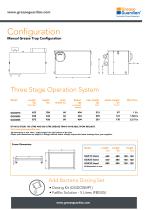
Manual Grease Trap Configuration Three Stage Operation System Model Length Height Inlet/ TANK ONLY Basket Inlet Height (D) (E) CLEARANCE INLET Add Bacteria Dosing Set• Dosing Kit (GGDOSMP1)• FatBio Solution - 5 Litres (FBGS5) www.greaseguardian.com
Open the catalog to page 4All FME catalogs and technical brochures
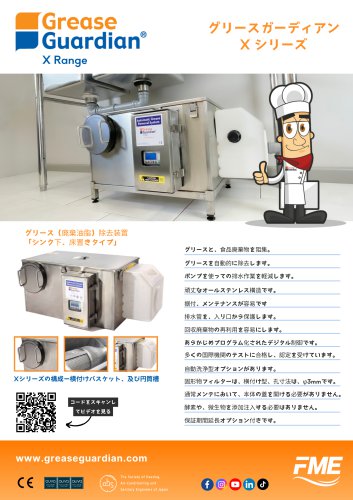 Japanese General Brochure
2 Pages
 Grease Management at Sea
16 Pages
 Grease Guardian sizing guide
12 Pages


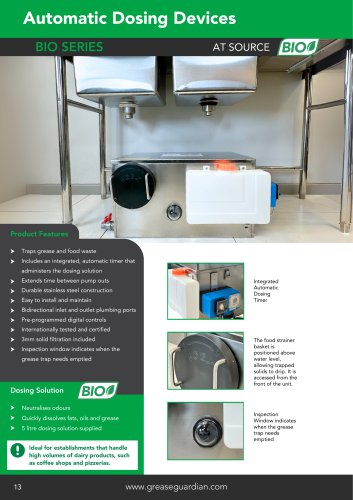

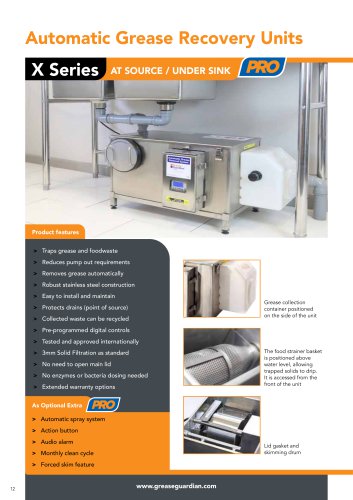
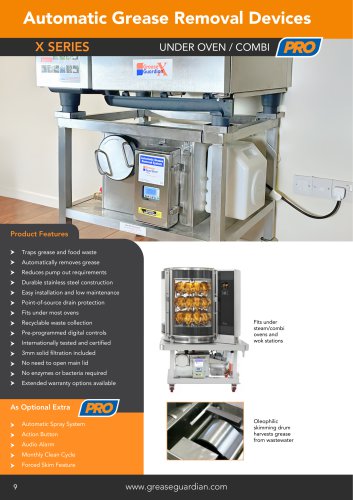
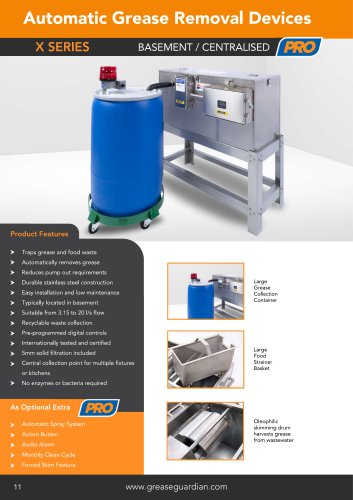

- Grease Guardian commercial grease trap
- Grease Guardian commercial kitchen grease trap
- Grease Guardian stainless steel grease trap
- Grease Guardian automatic grease trap
- Grease Guardian free-standing grease trap
- Grease Guardian under sink grease trap
- Grease Guardian restaurant grease trap
- Grease Guardian wastewater grease trap
- Home grease trap
- Grease Guardian compact grease trap
- Kitchen grease trap