


LEO FS
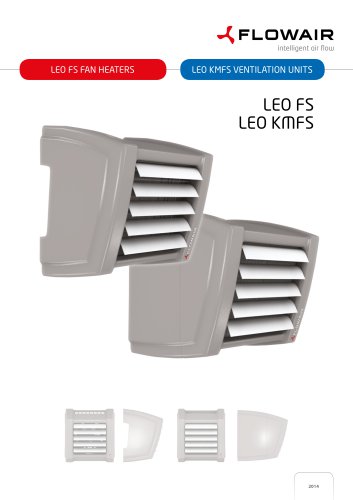
LEO FS
- Specifications: The document outlines the heating capacities at different temperature settings, with detailed data for each scenario. It includes air flow regulation options using TR/TRd regulators or VNTLCD/VNT20 control panels.
- Procedures: Instructions for setting air flow to 100% using the VNTLCD/VNT20 control panel are provided, with specific data for different water temperature settings (e.g., 90/70°C, 80/60°C, etc.).
- Limitations: Certain configurations result in too low outlet air temperatures, which are marked as not allowed.
- Recommendations: For other water temperature settings not covered in the document, it is advised to contact the Sales Office for further guidance.
- Higher inlet water temperatures generally result in higher heating capacities.
- Water pressure drop varies with different temperature settings, impacting the efficiency of the heat exchanger.
Catalog excerpts

LEO KMFS VENTILATION UNITS
Open the catalog to page 1
• Horizontal range of air stream 6 • LEO KMFS control system 16 • LEO KMFS connection diagrams 19 • Air flow regulation - technical data 26 • Heating capacity tables
Open the catalog to page 2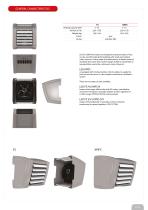
GENERAL CHARACTERISTICS Heating capacity (kW) Air flow (m³/h) Weight (kg) Colour Casing KMFS 5–15 230–1150 32,0–35,0 grey antistatic ABS LEO FS | KMFS fan heaters are designed to operate indoors. They can be used for heating the buildings with small and medium cubic measure. Casing made of durable plastic, air blades made of anodized aluminium and modern design enable to install them in representative rooms like: restaurants, pubs, shops etc. is equipped with mixing chamber, which enables to supply the fresh air into the room. It is the simpliest mechanical ventilation system. There are two types...
Open the catalog to page 3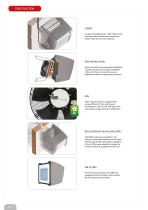
CASING Is made of durable plastic - ABS. It fully covers all of the water and electrical connections, which makes the unit very aesthetic. EASY INSTALLATION Light construction and integrated installation console provide easy and quick installation of the unit. There is no need to use any additional brackets or supporting structures. FAN LEO FS type M units are equipped with energy-efficient EC fan, which power consumption is only 57,5W. This type of fan ensures big savings during unit’s operation. REGULATION OF AIR VOLUME SUPPLY LEO KMFS heating and ventilation unit ensures mechanical ventilations...
Open the catalog to page 4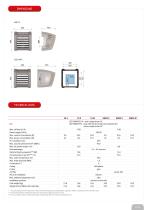
TECHNICAL DATA FS S Fan Max. air flow [m3/h] Power supply [V/Hz] Max. current consumption [A] Max. power consumption [W] IP / Insulation class Max. acoustic pressure level* [dB(A)] Max. air stream range** [m] Heat exchanger Nominal heating capacity***[kW] Air temperature rise (ΔT)*** [oC] Max. water temperature [oC] Max. water pressure [MPa] Connection [”] Casing Colour Air filter Place of installation Max. ambient temperature [oC] Installation position Unit weight [kg] Weight of unit filled with water [kg] LEO FS|KMFS S/V - axial, single phase, AC LEO FS|KMFS M - axial with electronically commutated...
Open the catalog to page 5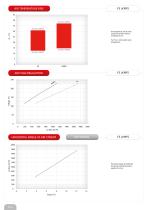
Air temperature rise at unit’s maximum air flow. Inlet air temperature 0°C. Tw1/Tw2 - inlet/outlet water temperature. HORIZONTAL RANGE OF AIR STREAM Horizontal range of isothermal stream (at velocity boundary equal to 0,5 m/s).
Open the catalog to page 6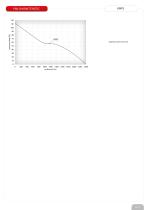
KMFS Operation point of the unit.
Open the catalog to page 7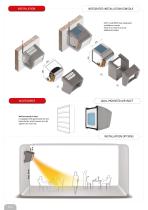
INTEGRATED INSTALLATION CONSOLE LEO FS and KMFS have integrated installation console. There is no need to use any additional holders. Wall-mounted air inlet is equipped with galvanized net and fixed shutter, which protect air inlet against rain, snow etc. INSTALLATION OPTIONS
Open the catalog to page 8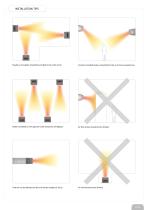
INSTALLATION TIPS Steady air circulation should be provided in the entire room. Correctly installed heaters should direct the air to the occupied zone. Heaters installed on the opposite walls should be overlapped. Air flow stream should not be limited. Fresh air can be delivered to the unit by the straight air ducts. Air inlet should not be limited.
Open the catalog to page 9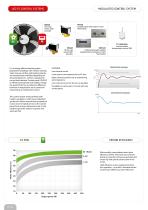
MODULATED CONTROL SYSTEM VNT20 control panel with built-in room thermostat SRQ2d two-way valves with actuator SRQ3d three-way valves with actuator VNTLCD control panel with weekly programmer and built-in room thermostat TEMPERATURE DIAGRAM It is is energy-efficient heating system prepared for buildings with medium and big cubic measure. Airflow and heating capacity are automatically controlled depending on actual temperature - air flow is adjusted to current heat demand. Control panel (VNTLCD or VNT20) automatically and stepless change the speed of the fan according to difference between air...
Open the catalog to page 10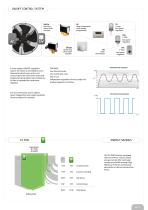
ON/OFF CONTROL SYSTEM RE room thermostat with weekly programmer SRQ2d two-way valves with actuator TR 5-step fan speed regulator TRd 5-step fan speed regulator S/V SRQ3d three-way valves with actuator It is the simplest ON/OFF regulation system. Fan heater is controlled by room thermostat, which turns on the unit (or/and opens the valve) when measured temperature drops below set temperature. Air flow is regulated by transformer regulator. FEATURES: Low thermal inertia. Low investment costs. Easy to use. Independent regulation of every single unit. Gradual regulation of air flow. TEMPERATURE DIAGRAM...
Open the catalog to page 11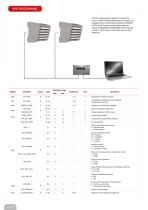
BMS PROGRAMMING VNTLCD control panel enables to connect the system to BMS (Building Management System). It is equipped with communication protocol MODBUS in RTU mode. Communication takes place at a speed of {4800|9600|19200|38400} (without parity control, 1 bit of stop). It is possible to set up to 31 addresses. Temperature of internal sensor Temperature input to the regulator Status of heating/cooling relay Output voltage on AOUT contact Current speed of fans Temperature of antifreeze protection Status of selected master sensor 0 - internal sensor 1 - external sensor Status of control 0 - manual...
Open the catalog to page 12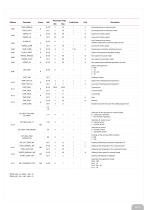
Parameter TZAD_MANUAL TZAD_AUTO VSPEED_HI VSPEED_LO ALARM_ID Parameter range Scale factor Set temperature in manual mode Set temperature in automatic mode Upper limit of fans speed Lower limit of fans speed Unit’s internal error alarms (broken solder joints, communication errors) Correction of fans speed Temperature correction of external sensor Status of temperature regulator setting Fans speed in manual mode Fans speed in automatic mode Fans speed when antifreeze protection is active VSPEED_MANUAL VSPEED_AUTO VSPEED_AF Software version Upper limit of temperature hysteresis.* Lower limit of...
Open the catalog to page 13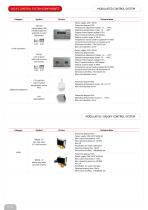
LEO FS CONTROL SYSTEM COMPONENTS Power supply: 230 V 50 Hz Protection degree: IP20 Temperature adjustment range: +5 … +35°C Operating temperature range: -10 … +60°C Output control signal: analog 0-10 V Way of control: buttons, LED display Velocity control range: 0-100% Temperature sensor: built-in (optional PT-1000) Contacts load: inductive 3 A, resistance 8 A Dimensions (HxWxL): 70x120x25 mm Max. wire diameter: 2mm2 VNT20 control panel with built-in room thermostat additional equipment Technical data Power supply: 230 V 50 Hz Protection degree: IP20 Temperature adjustment range: +5 … +50°C Operating...
Open the catalog to page 14All Flowair catalogs and technical brochures
 LEO
LEO24 Pages
 AIR HEATING AND VENTILATION LEO
20 Pages
 FAN HEATERS LEO
28 Pages
 PRODUCT BROCHURE
84 Pages
 ELIS DUO
16 Pages
 LED AGRO
16 Pages
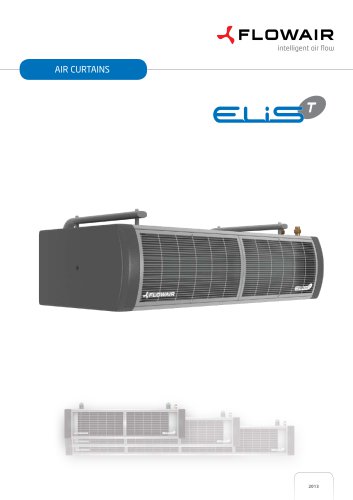 ELIS T
24 Pages
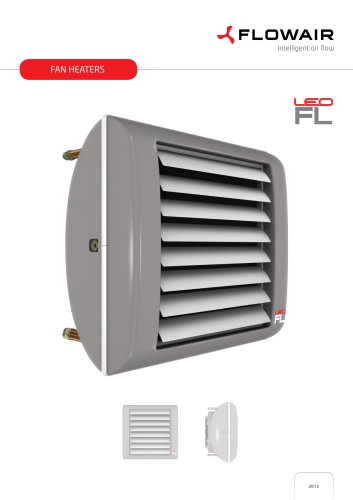 LEO FL
24 Pages
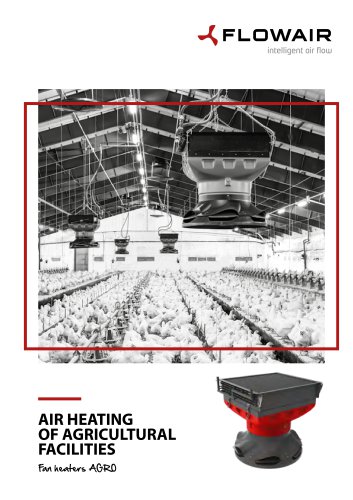

- Metal fan
- Indoor fan
- Surface-mounted detector
- Commercial fan
- Mechanical ventilation unit
- Heating thermostat
- Commercial detector
- Ventilation controller
- Extractor fan
- Wall-mounted ventilation controller
- Industrial fan
- Domestic fan
- Industrial air heater
- Air handling unit
- Commercial ventilation controller
- Industrial air curtain
- Commercial air curtain