
- Catalogs
- Fabric Architecture
- inspired by nature: beautifully practical tensile structures


inspired by nature: beautifully practical tensile structures
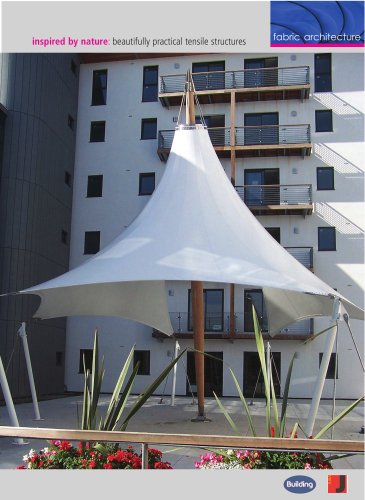
1 / 8 PagesView full catalog
inspired by nature: beautifully practical tensile structures
Product catalog summary
Introduction
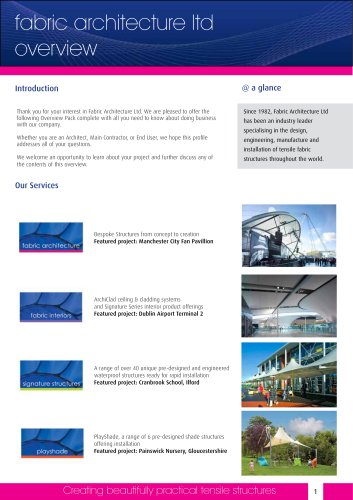
Fabric Architecture has been a leader in the design, manufacture, and installation of tensile fabric structures since 1984. The company offers both bespoke and pre-designed structures, with over 5000 installations worldwide. Nigel Browne, a partner, is recognized for his contributions to tensile design and provides educational seminars for architects.
Project Highlights
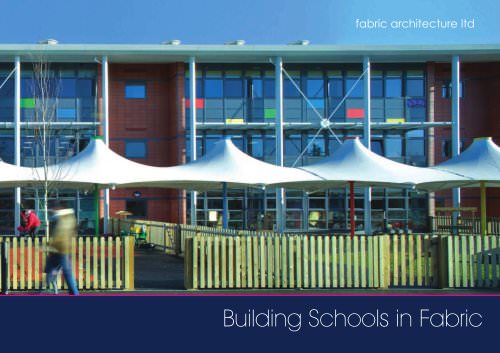
1. St Thomas Moore Catholic College: A bespoke project featuring a curved conic walkway and a large conic structure with integrated drainage and lighting. The installation was completed in 5 days, offering a cost-effective solution compared to conventional building techniques.
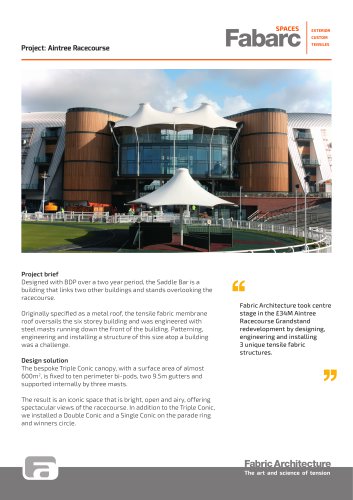
2. Aintree Racecourse: A significant project involving a tensile membrane roof for the grandstand redevelopment. The design evolved from a conventional roof to a complex tensile structure, addressing challenges like asymmetric loads and water management.
Advantages of Tensile Structures
- Greater spans with minimal support compared to conventional materials.
- Enhanced translucency and dynamic shapes.
- Cost-effective with reduced installation time.
- Environmentally sensitive, reducing material volume and carbon footprint.
- Use of recyclable materials like silicone-coated glass weave.
Technical Insights
- Tensile structures should be integrated into the building design from the concept stage.
- Key considerations include load determination, foundation placement, and rainwater management.
- Different fabric types offer varying life expectancies, flame retardancy, and light transmission.
Signature Structures
These are pre-designed tensile fabric structures known for their aesthetic appeal and ease of installation. They can be customized in terms of lighting, fabric type, and color, and are engineered to withstand 50-year wind cycles.
Conclusion
Fabric Architecture continues to innovate in the field of tensile structures, offering practical and aesthetically pleasing solutions that are environmentally friendly and cost-effective.
Fabric Architecture has been a leader in the design, manufacture, and installation of tensile fabric structures since 1984. The company offers both bespoke and pre-designed structures, with over 5000 installations worldwide. Nigel Browne, a partner, is recognized for his contributions to tensile design and provides educational seminars for architects.
Project Highlights
1. St Thomas Moore Catholic College: A bespoke project featuring a curved conic walkway and a large conic structure with integrated drainage and lighting. The installation was completed in 5 days, offering a cost-effective solution compared to conventional building techniques.
2. Aintree Racecourse: A significant project involving a tensile membrane roof for the grandstand redevelopment. The design evolved from a conventional roof to a complex tensile structure, addressing challenges like asymmetric loads and water management.
Advantages of Tensile Structures
- Greater spans with minimal support compared to conventional materials.
- Enhanced translucency and dynamic shapes.
- Cost-effective with reduced installation time.
- Environmentally sensitive, reducing material volume and carbon footprint.
- Use of recyclable materials like silicone-coated glass weave.
Technical Insights
- Tensile structures should be integrated into the building design from the concept stage.
- Key considerations include load determination, foundation placement, and rainwater management.
- Different fabric types offer varying life expectancies, flame retardancy, and light transmission.
Signature Structures
These are pre-designed tensile fabric structures known for their aesthetic appeal and ease of installation. They can be customized in terms of lighting, fabric type, and color, and are engineered to withstand 50-year wind cycles.
Conclusion
Fabric Architecture continues to innovate in the field of tensile structures, offering practical and aesthetically pleasing solutions that are environmentally friendly and cost-effective.
See more
All Fabric Architecture catalogs and technical brochures
 Chester Racecourse
2 Pages
 Orwell Quay
2 Pages
 Salford University
2 Pages
 Aintree Racecourse
2 Pages
 Etihad Stadium
2 Pages
 Swan Bridge
2 Pages
 Riverchase Galleria
2 Pages
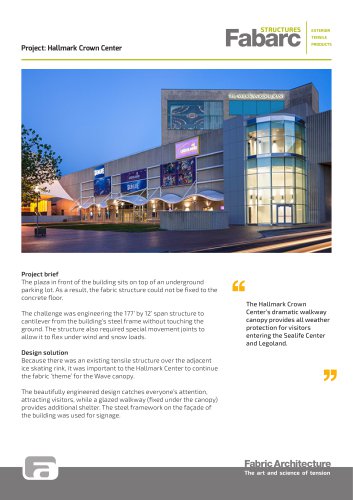 Hallmark Crown Center
2 Pages
 Pensacola
2 Pages
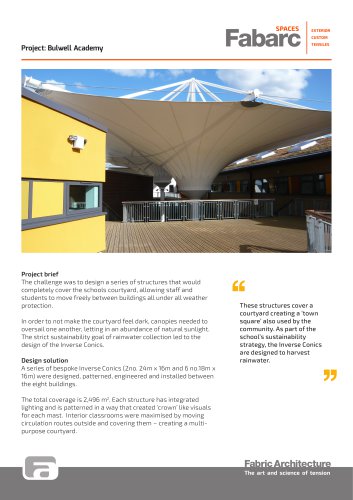 The Bulwell Academy
2 Pages
 Ferrari World
2 Pages
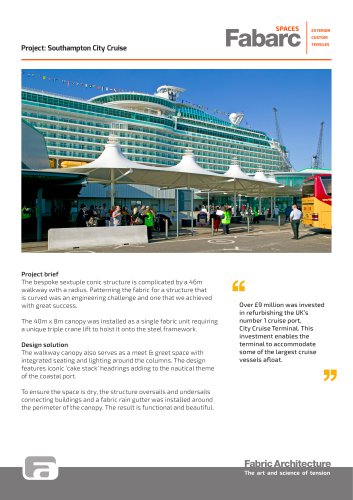 Southampton City Cruise
2 Pages
 Heathrow T2B
2 Pages
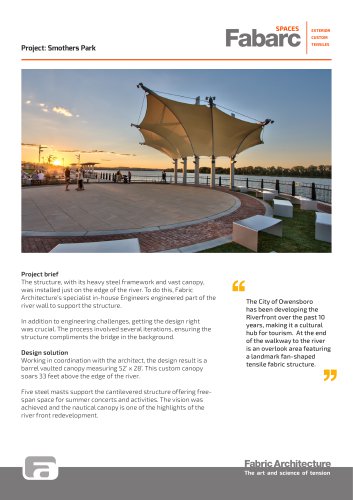 Smothers Park
2 Pages
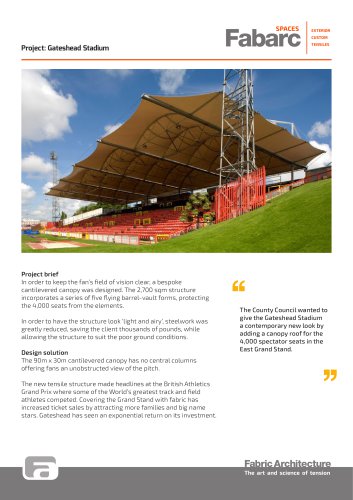 Gateshead Stadium
2 Pages
 T2 Dublin
2 Pages
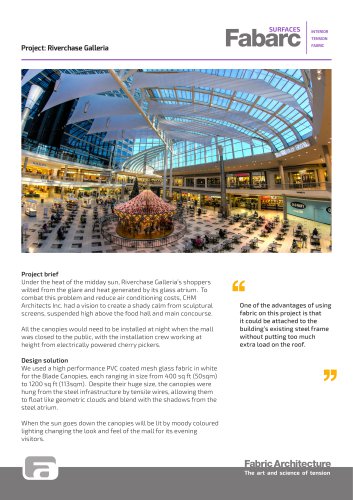 Project: Riverchase Galleria
2 Pages
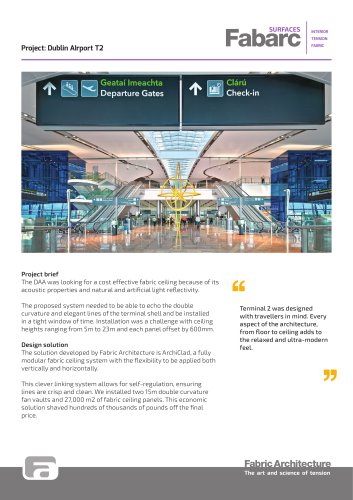 Project: Dublin AIrport T2
2 Pages
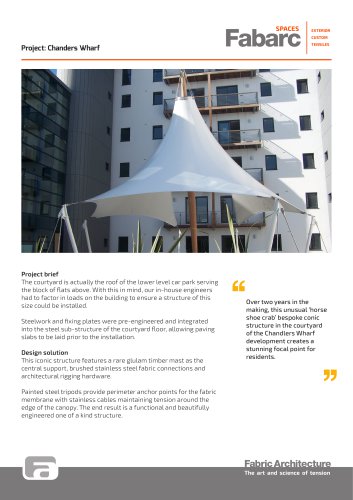 Project: Chanders Wharf
2 Pages
 Schools Pack
8 Pages
 Supplier Overview
9 Pages
 concept to completio
2 Pages
 fabric interiors
5 Pages
 archiclad system
8 Pages
 signature structures
92 Pages
 playshade
12 Pages
 Double Conic Brochure
2 Pages
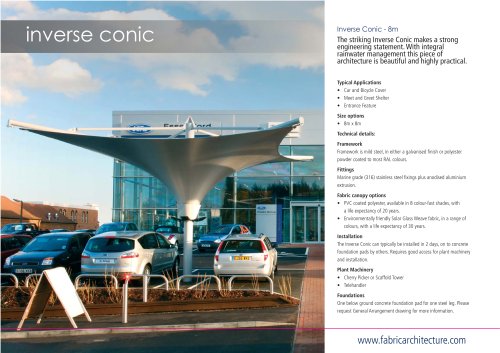 Inverse Conic Brochure
2 Pages
 Pagoda Multi Brochure
2 Pages




Archived catalogs
 Halo Brochure
2 Pages
 Pow Wow
2 Pages
 Skylar
2 Pages
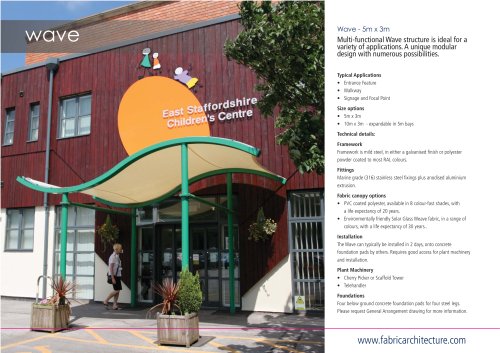 Wave
Wave2 Pages
 Bandshell
2 Pages
 Pagoda
2 Pages
 Hull
Hull2 Pages
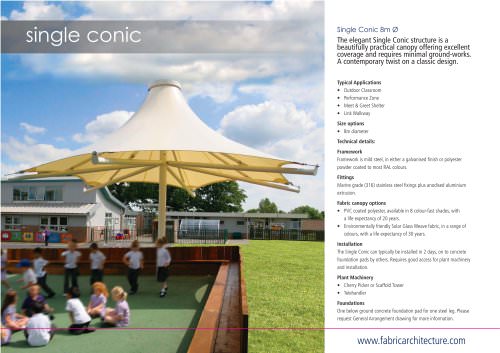 Single Conic
2 Pages
Related Searches
- Industrial canopy
- Contemporary canopy
- Metal canopy
- Tensile roof
- Metal frame tensile structure
- Tensile structure with PVC membrane
- Industrial shade sail
- Commercial canopy
- Industrial entrance canopy
- Tensile public area structure
- Cable-and-membrane tensile structure
- Commercial shade sail
- Industrial shade structure
- Curved canopy
- Shelter
- Translucent tensile structure
- Tensile shelter
- Commercial shade structure
- Tensile special event structure
*Prices are pre-tax. They exclude delivery charges and customs duties and do not include additional charges for installation or activation options. Prices are indicative only and may vary by country, with changes to the cost of raw materials and exchange rates.
About ArchiExpo
ArchiExpo is a marketplace that offers B2B players a complete experience, from product sourcing to purchase. ArchiExpo is an entity of VirtualExpo Group.
Are you a buyer?
Are you a supplier?