
- Catalogs
- Ejendals Tegera
- Protective hand- and footwear 2017

Protective hand- and footwear 2017

Protective hand- and footwear 2017
Ejendals is a Swedish company specializing in protective hand and footwear, focusing on protection, durability, and ergonomics. Their safety concept aims to reduce accidents through quality products, education, and safety inspections.
Founded in 1949, Ejendals expanded from work gloves to protective shoes in the 1970s, serving various European markets with an annual turnover exceeding EUR 130 million.
Ejendals emphasizes quality, with half of their products manufactured in Finland. They maintain long-term relationships with factories and are known for fast deliveries and excellent customer service.
Ejendals integrates function and design, winning international awards and advocating for a zero vision in occupational injuries.
The safety concept includes reducing accidents, improving attendance, and lowering costs through safety inspections and courses at the Ejendals Academy.
Ejendals adheres to a code of conduct for fair worker treatment and minimizes environmental impact through efficient energy use and recycling.
The TEGERA® brand offers advanced hand protection solutions, including ESD, cut-resistant, thermal, and chemical-resistant gloves.
TEGERA® offers gloves for different tasks, emphasizing grip, chemical resistance, cut protection, and thermal insulation.
Proper gloves protect hands from mechanical damage, heat, cold, and chemicals, with advice provided in the "Handbook" by Dr. Olle Bobjer.
Protective gloves must comply with EN standards for CE marking, with the new regulation EU 2016/425 promoting worker safety.
Personal equipment is divided into three categories based on risk: minimal, intermediate, and high-risk protection.
Gloves must provide intended protection, be easy to wear, and allow maximum dexterity, meeting specific pH and chromium content standards.
Gloves must be marked with the manufacturer's name, designation, size, and CE mark, with additional markings for higher categories.
Gloves are tested for abrasion, cutting, tearing, and puncture resistance, with updated methods for cut resistance and impact protection.
The document outlines standards and tests for protective gloves, including cut protection, impact protection, chemical resistance, thermal risks, cold protection, electrostatic properties, and food contact suitability.
Testing procedures for various protections are detailed, including cut protection, impact protection, chemical resistance, thermal risks, cold protection, electrostatic properties, and food contact suitability.
Gloves must meet specific performance levels, with regular testing and maintenance recommended to ensure continued protection.
Includes tables listing chemicals for resistance testing, performance levels for thermal and cold protection, and conditions for electrostatic discharge testing.
Gloves must be tested and certified for specific risks, with proper selection, use, and maintenance crucial for effective protection.
Emphasizes selecting appropriate protective gloves based on risk assessments and job requirements, considering protection extent, performance level, and EN standards compliance.
Choice depends on material properties, fit, tactile properties, freedom of movement, and comfort, with guidance on selecting gloves for specific tasks.
Proper maintenance ensures protective properties remain intact, with instructions for cleaning, drying, and storage provided.
Discusses materials used in glove manufacturing, including synthetic leather, leather, textile materials, and dipping materials.
Highlights advanced materials and technologies like Microthan®, Macrothan®, Polythan®, GripForce®, and OGTTM Oil Grip Technology.
Emphasizes selecting the right protective gloves based on job requirements and environmental conditions, with detailed information on materials and technologies provided.
Different materials offer varying levels of protection against chemicals, with usage guidelines and material limitations outlined.
Designed to protect against crushing, cuts, and vibration injuries, with specific materials used for cut resistance.
Synthetic leather gloves offer flexibility, durability, and good grip, with various designs for different environments and tasks.
Gloves are available in various sizes and lengths, designed for use in dry, dirty, slippery, and oily environments.
Includes leather and synthetic gloves, with features like reinforced fingertips, water and oil repellency, and breathable backs.
Gloves provide high levels of protection, good fingertip sensitivity, and a perfect fit, designed to be durable, flexible, and comfortable.
Suitable for various environments, including dry, dirty, slippery, oily, and greasy conditions, with specific models for fine assembly work and precision tasks.
Most gloves comply with EN 388 standards, indicating suitability for mechanical risks.
Highlights benefits of different liner and dipping materials, emphasizing roles in enhancing grip, durability, and comfort.
Provides detailed specifications and features of various synthetic and textile gloves, focusing on protection, comfort, and functionality in specific conditions.
Gloves are made from materials like PU, PVC, nylon, polyester, and cotton, with different dipping techniques and grip patterns.
Includes water and oil repellency, breathability, fingertip sensitivity, durability, and flexibility.
Tailored for specific environments such as dry, clean, oily, greasy, and dirty settings.
Most gloves conform to Cat. II standards and EN 388, indicating suitability for general handling and light-weight work.
Choose gloves based on specific work environment and required protection level, considering factors like material, grip pattern, and additional features.
Provides detailed specifications and features of various synthetic and leather gloves, highlighting materials, design, and primary environments of use.
Gloves are categorized under Cat. II and adhere to EN 388 standards, available in various sizes and colors.
Includes synthetic leather and leather gloves, with features like reinforced seams, pre-curved fingers, and ergonomic design.
Designed for various environments, including dark, slippery, dry, moist, oil and greasy, and dirty conditions.
Gloves offer good fingertip sensitivity, flexibility, durability, excellent grip, and a perfect fit.
Provides detailed specifications and features of various types of work gloves designed for different environments and applications.
Gloves are made from materials like full grain goatskin, cowhide, pigskin, synthetic materials, and textiles with PVC dots.
Gloves are designed for use in dry, moist, harsh, and dirty environments, with some specifically for oily and greasy conditions.
Gloves are rated for abrasion, cut, tear, and puncture resistance, with specific ratings provided for each model.
Choose gloves based on specific environment and task requirements, considering factors like moisture absorption, flexibility, and thermal insulation.
High level of protection with durable materials and reinforced areas, designed for good fit, flexibility, and comfort.
Provides detailed specifications and descriptions of various types of gloves designed for different work environments and tasks.
Made from cotton, Lycra®, polyester, and other materials, suitable for dry and clean environments.
Categorized under Cat. II, designed for harsh environments, made from full grain cowhide, oxhide, and goatskin.
Developed for specific needs like impact reduction and anti-vibration, using materials like Microthan®, Vibrothan®, and KEVLAR® fiber.
Designed to reduce impact and vibration, suitable for harsh environments.
Provide additional wrist support, designed for all-round work in dry and dirty environments.
Emphasizes selecting the right glove based on work environment and specific requirements, providing comprehensive details on each model.
Provides detailed specifications and features of various types of gloves designed for different work environments.
Each glove type is described with specific materials, lining details, grip patterns, fastening methods, color options, size ranges, and packaging details.
Gloves are designed with features like reinforced seams, pre-curved fingers, and ergonomic shapes to enhance comfort and functionality.
Specifies environments where each glove type is most effective, such as dark, dry, slippery, cold, moist, or dirty environments.
Gloves conform to various standards like EN 388 and IEC 61340-5-1, indicating compliance with safety and performance requirements.
Discusses advanced materials like Microthan®, Dyneema®, Kevlar®, and CRF® for enhanced protection and performance.
Designed to provide protection against cuts while maintaining flexibility and comfort.
Emphasizes selecting the right glove based on specific work environment and required level of protection, highlighting continuous development and refinement of glove materials and designs.
Provides detailed specifications and features of various cut-resistant gloves designed for different work environments.
Gloves are categorized under different cut resistance levels according to EN 388 standard, made from materials like Dyneema®, Lycra®, nylon, KEVLAR® fiber, and glass fiber thread.
Key features include cut resistance, oil and grease resistance, water repellency, and breathability.
Suitable for environments with cut risks, slippery conditions, oil and greasy surfaces, dirty environments, and harsh conditions.
Lists several product variants, each with unique features like reinforced seams, pre-curved fingers, and specific grip patterns.
Provides detailed specifications and features of various cut-resistant and thermal gloves and sleeves designed for different environments and applications.
Gloves are categorized under Cat. II with EN 388 standards, offering cut resistance levels up to 5.
High protection, good fingertip sensitivity, flexibility, durability, and comfort.
Suitable for cut risk, dry, clean, cold, warm, and dirty environments.
Made from materials like Dyneema®, Lycra®, and nylon, with cut resistance levels up to 5.
Flexible, durable, comfortable, and breathable.
Ideal for cut risk and harsh environments.
Designed to protect against thermal risks such as frostbite and burns.
Waterproof, windproof, reinforced for durability, and designed for comfort and flexibility.
Suitable for cold, wet, windy, and slippery environments, as well as for precision work.
Includes liner materials like CRF® Technology, Dyneema®, and Kevlar®, and dipping materials like polyurethane, nitrile, and latex.
Choose gloves based on specific risk environment and required protection level, considering features like flexibility, grip, and comfort.
Provides detailed specifications and features of various types of gloves designed for heavy work, cold insulation, chemical protection, heat resistance, and welding.
Includes synthetic leather, full grain goatskin, oxhide, cowhide, and pigskin, with winter-lined materials like fleece, Thinsulate®, and artificial fur.
Reinforced fingers and thumb, water repellent, high durability, and excellent grip.
Suitable for dark, windy, slippery, dry, cold, moist, and greasy environments.
EN 388 and EN 511 certifications.
Made from PVC (Vinyl) and neoprene, with winter-lined fleece.
Fully dipped, protection against chemicals, withstands contact heat up to 500°C, latex-free.
Chemical risk, microbiological risk, corrosive, and harsh environments.
EN 388, EN 511, EN 374-2, and EN 374-3 certifications.
Made from full grain goatskin, cowhide, KEVLAR® fiber, nitrile-dots, with fully lined KEVLAR® fiber or jersey.
Withstands contact heat up to 250°C, reinforced seams, flame retardant.
Warm, moist, and harsh environments.
EN 388, EN 407, and EN 1149-2 certifications.
Made from full grain goatskin, with features like contact heat resistance up to 100°C, reinforced seams, and chrome-free.
Warm surfaces, dirty, and harsh environments.
EN 388, EN 407, EN 12477 + A1, and EN 1149-2 certifications.
Categorizes gloves based on specific use cases, materials, and protective features, ensuring suitability for various harsh and demanding environments.
Provides detailed specifications and guidelines for various types of protective gloves, including welding gloves and chemical-resistant gloves.
Lightweight, medium weight, and heavy weight options, made from materials like full grain goatskin, KEVLAR® fiber, and split grain cowhide.
Protect against hazardous chemicals, intended for single-day use, with a chemical protection guide provided.
Consult chemical protection guide or sellers when choosing gloves, consider environment and specific risks, and ensure gloves are not mechanically damaged.
Provides detailed specifications and features of various disposable and chemical-resistant gloves, primarily made from nitrile, neoprene, PVC, and PE materials.
Each glove type is described with material, thickness, color, size range, length, and packaging details.
Gloves provide varying levels of fingertip sensitivity, flexibility, durability, and grip, suitable for chemical, microbiological, and moisture risks.
Includes nitrile, neoprene, latex, PVC, PE, butyl rubber, laminates, and Viton, with specific properties outlined.
Suggests selecting gloves based on specific chemical risks and environments, with a compatibility chart provided.
Gloves are categorized under EN standards for chemical protection and approved for handling foodstuffs.
Suitable for chemical risk environments, microbiological risk environments, wet and dirty environments, and environments hazardous to health.
Provides detailed specifications and features of various chemical protection gloves under the Tegera brand.
Gloves are made from materials like nitrile, latex, neoprene, and PVC, with thickness, grip pattern, color, size range, length, and packaging details provided.
Includes EN 388, EN 374-2, and EN 374-3, indicating protection against mechanical and chemical risks.
All gloves provide protection against chemicals and are approved for handling foodstuffs, with most being latex-free.
Suitable for chemical risk environments, microbiological risk environments, environments hazardous to health, corrosive environments, wet and moist environments, oil and greasy environments, dirty environments, and harsh environments.
Provides detailed specifications and features of various chemical protection gloves and safety footwear, focusing on materials, design, and primary environments of use.
Made from PVC and nitrile, with various grip patterns and features like splash protection against chemicals, phthalate-free, and high durability.
JALAS® safety footwear offers advanced shock absorption, ESD compliance, and protection against stress and strain injuries.
Crucial for preventing damage to sensitive electronic equipment, with standards like IEC 61340-5-1 and IEC 61340-4-3 ensuring resistance requirements are met.
Essential for ensuring safety in all work situations, with contact information for national health and safety agencies provided.
Proper footwear size and cushioning are crucial for preventing injuries, with JALAS® offering insoles for different foot arches and a FootStop Service for personalized fitting.
Size guide provided for converting shoe sizes across regions, with recommendations for trying on shoes for the best fit.
Waterproof yet ventilating membrane keeps feet dry and warm, especially in winter-lined models with thermal insulation.
Ensure materials are suitable for the environment, dry shoes at room temperature, and waterproof them regularly.
JALAS® insoles are certified under EN ISO standards, with different models offering features like shock absorption and ESD compliance.
Different materials like RPU, nitrile rubber, PU, and TPU offer varying levels of grip, durability, and suitability for different environments.
JALAS® footwear includes features like anti-static properties, slip resistance, impact protection, toe wear protection, and safety toecaps, all complying with EN ISO standards.
Various lining materials provide ventilation and warmth, while membranes like Drylock offer waterproofing and breathability.
JALAS® safety footwear meets EN ISO 20345:2011 standards, offering protection against impact, penetration, and various environmental conditions.
Provides detailed specifications and features of various JALAS® safety footwear collections, highlighting their suitability for different environments and tasks.
Footwear features include heat resistance, ESD and anti-static properties, oil resistance, and slip resistance, with soles made from materials like nitrile rubber and PU.
Includes advanced technologies like the Stabilizator system for arch support, FX2 and FX3 insoles for shock absorption, and materials like aluminium for lightweight toecaps.
Describes several collections, including Zenit, Exalter2, Green Line, Drylock, and Respiro, each offering unique features and benefits.
Footwear is recommended for industrial workers, craftsmen, and environments requiring high safety standards, with regular cleaning advised to prolong shoe life.
Provides detailed specifications and features of various Jalas® safety footwear models, each designed to meet specific safety standards and environmental conditions.
Includes toecap material, nail protection, fitting, size range, platform, sole material, insole material, upper material, lining material, and color options.
All models feature oil-resistant and anti-static properties, with many also being heat-resistant and water-repellent.
All models are designed for excellent grip, perfect fit, and extra comfort, with breathability and shock absorption emphasized.
Suitable for various environments, including indoors, outdoors, dry, clean, and environments with risk for outsole penetration.
Provides detailed specifications and features of various safety footwear models under the Jalas® brand, each conforming to EN ISO 20345:2011 standards.
Includes toecap material, nail protection, fitting, size range, platform types, sole material, insole material, upper material, and lining material.
Includes heat and oil-resistant outsoles, anti-static properties, ventilating insoles, and padded boot shafts.
All models offer the highest level of protection, excellent grip, perfect fit, and comfort, with excellent shock absorption.
Suitable for outdoor and indoor use, environments with risk for outsole penetration, clean environments, harsh environments, and wet conditions.
Provides detailed specifications and features of various Jalas® safety footwear models, all conforming to EN ISO 20345:2011, S3 SRC standards.
Includes protection materials, fitting and size range, platform and sole material, insole and upper material, and color options.
Includes oil-resistant and anti-static properties, water repellent and ventilating insoles, metal-free options, and ProNose toe reinforcement.
Designed for outdoor use, environments with metal-free requirements, and areas with risks for outsole penetration.
All models meet the S3 safety rating, with some models also meeting additional criteria like CI, WR, and HRO.
Provides detailed specifications and features of various Jalas® safety footwear models, each designed for specific environments and conditions.
Includes features like aluminium toecaps, various nail protection materials, and different fitting options.
Uses a combination of PU-coated leather, full-grain leather, and various lining materials.
Includes ProNose toe reinforcement, heat and oil-resistant outsoles, anti-static properties, and water repellency.
Designed for outdoor use, environments with risk for outsole penetration, cold and harsh environments, and some models suitable for wet conditions and warm surfaces.
Most models have a safety rating of S3, indicating suitability for environments with high safety requirements.
Includes Jalas® 1808 Icetrack, Jalas® 3325 Drylock, Jalas® 1878 Offroad, Jalas® 1898 Winter King, and Jalas® 1848 Titan+.
Jalas® safety footwear provides a comprehensive range of options tailored to various environmental conditions and safety requirements, ensuring maximum protection, comfort, and durability.
Provides detailed specifications and features of various Jalas® safety and occupational footwear models, highlighting their compliance with EN standards and suitability for different environments.
Includes Jalas® 1898 Winter King, Jalas® 1578 Fire Rescue, Jalas® 4768 Fire, and Jalas® 2900 Jack, each with specific features and compliance with relevant EN standards.
Includes Jalas® 9512 Exalter, Jalas® 1122 Stella, Jalas® 1102 Viola, and Jalas® 5062 Free, each with specific features and compliance with relevant EN standards.
All footwear complies with relevant EN standards based on the PPE Directive (89/686/EEC).
Includes Flower Collection, Grand Walking Collection, Gram à la Sara Collection, and Tandem Collection, each designed for specific sectors and environments.
Provides detailed specifications and features of various Jalas® occupational footwear models, focusing on safety, comfort, and environmental suitability.
Footwear models are categorized based on safety ratings, fitting, size range, and materials used.
Includes oil-resistant and anti-static outsoles, ventilating insoles, adjustable straps, and waterproof membranes.
Highlights the importance of insoles in providing comfort and preventing foot pain, with Jalas® insoles featuring double shock absorption zones.
Includes other footwear and accessories like socks and insoles, emphasizing ergonomic design and comfort.
Provides detailed specifications and features of various JALAS® insoles and socks, highlighting their materials, properties, and intended uses.
Includes JALAS® 8711L Low Arch Support, JALAS® 8102 FX2 Pro Insole, JALAS® 8202 FX2 Supreme Insole, JALAS® 8302 FX3 Exalter Insole, JALAS® 8002 FX2 Flower Insole, JALAS® 8244 FX2 Winter Insole, and JALAS® 8012 Spenco®.
Includes JALAS® 8215 Light Ankle Sock, JALAS® 8201 Light ESD Sock, JALAS® 8208 Lightweight Sock, JALAS® 8210 Mediumweight Sock, JALAS® 8212 Heavy Weight Sock, JALAS® 8214 Flame Retardant Sock, JALAS® 8203 Bamboo Sock, JALAS® 4400 and 4451 Cotton Socks, JALAS® 8205 Coolmax® Sock, and JALAS® 4700 Wool Sock.
Includes shoelaces and anti-slip protection, with materials and properties outlined.
Includes viscose, bamboo, beech fibre, FR, wool, and ESD sock, with specific properties outlined.
Catalog excerpts
PROTECTING HANDS AND FEET Product catalogue Protective hand- and footwear
Open the catalog to page 1
Ejendals is a Swedish company that for generations has specialised in developing, manufacturing and marketing high-quality products that protect hands and feet. In close collaboration with researchers and our customers, we design products that deliver the highest standard of protection, durability and ergonomics. We sell a complete safety concept, which aims to reduce accidents through quality products, education and safety inspections. From our corporate head office in Leksand, we envision a safer day with zero injuries to hands and feet.
Open the catalog to page 2
Ejendals: from Leksand to Europe Ejendals was founded in 1949 by Valfrid Ejendal in Leksand, Sweden. The family name derives from nearby Lake Ejen. A clothing company, the product line included work gloves that were manufactured locally, and customers largely consisted of the regional mills and industries. As demand grew, Ejendals started to look for suppliers who could meet demands in terms of quality and efficiency. This led to some production being carried out in China. Over the years, this concept has been expanded, while research, development and testing facilities remain in Sweden and Finland....
Open the catalog to page 4
A reliable partner Our products make everyday life safer at tens of thousands of workplaces in Europe. Your investments in quality hand and foot protection always pay off. They result in fewer occupational injuries, improved levels of attendance and increased productivity, ultimately leading to lower overall costs. Thanks to our cooperation with researchers and customers, we constantly receive suggestions for improvements that we can use when developing new products. Our testing facilities give us confidence that the new models are better and safer in every way.
Open the catalog to page 5
Customer service Our customers often let us know that we have excellent customer service. You’re the most important to us, and we continue to think of ways to remain available and open to suggestions. We value close contact with our customers and are represented in most European countries. This makes it easy to contact us when you need help and advice on questions related to protecting hands and feet. fast deliveries ‘Call us today if you need gloves tomorrow’ was the motto of Ejendals’ founder. Fast deliveries are still one of the things that set us apart from our competitors. Our strategy is...
Open the catalog to page 6
Quality in every seam Ejendals’ underlying concept is to deliver the best quality possible. To this end, we limit production to our own factory in combination with a few independent ones. Roughly fifty per cent of our products are manufactured in our own factory in Finland. long-term cooperation The remaining factories we have chosen to cooperate with are among the best in the world, and our contact with them is without the use of intermediaries. All of our factory collaborations are solid and most go back more than 20 years. For monitoring purposes and quality assurance, we also have our own...
Open the catalog to page 7
Our laboratories Ejendals’ products are all tested thoroughly in order to withstand the stresses they will be exposed to. We have two high-tech laboratories – one in Leksand, Sweden, where we test our gloves, and one in Jokipii, Finland, where we test our shoes. Our laboratories enable us to maintain the consistent high quality of our products. We can also keep up an even, high working pace when developing new products, since we don’t have to wait our turn at external laboratories.
Open the catalog to page 8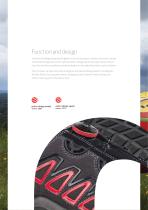
Function and design Function and design always work together in all of our products, and we consciously started to work with design early on. For safety products, design can actually help improve the primary function. But a carefully considered design can also make the product look a lot better. Over the years, we have won many prestigious international design awards, including two Red Dot Award. Our customers want to look good at work, whether they’re sitting in an office or working out on the factory floor.
Open the catalog to page 9
Every injury is one too many More than half of all occupational injuries are directly related to injuries to hands, wrists, fingers, feet, ankles and toes. This is a high proportion; in addition, hidden statistics are probably considerable. a zero vision An injured employee may have to be signed off sick, and thus lose income. The company suffers a loss of productivity, and incurs costs for the worker who is off sick. Occupational injuries also represent an expense for society as a whole. Our zero vision when it comes to hand and foot injuries benefits individuals, companies and society. By investing...
Open the catalog to page 10
Ejendals’ safety concept At Ejendals, we don’t just sell shoes and gloves. We sell a whole concept, which we refer to as our safety concept. When we work with a customer, we have a set number of targets: we want to reduce the number of accidents that occur, we want to improve levels of attendance, and we want to reduce long-term costs because quality always pays in the long run. We also recommend that we join the customer on a safety inspection of their place of business. We look at the working environment and what appropriate protection for hands and feet the employees need. This is an exciting...
Open the catalog to page 11
Social responsibility Social responsibility comes naturally to us. At Ejendals we always consider the long-term effects of our actions. Decisions made today will stay with us for many years. This involves everything from the quality of our products to the way we treat customers and employees. Always making conscious decisions and taking responsibility for everything we do has resulted in many long and rewarding relationships. We see our long-standing relationships as proof that we act responsibly. To ensure that all our partners do the same, we have drawn up a social code of conduct that we work...
Open the catalog to page 12
Certified At Ejendals, we work continuously to improve our operations. This includes the way we work, cooperate with others and take responsibility. Over the years, we have drawn up different systems for our way of working and are now certified in accordance with several standards. These vouch for the fact that our procedures are in good order, that we comply with laws and regulations, that our management takes responsibility, and that we work in accordance with the policies we have in place. OHSAS 18001 Working environment management system ISO 9001 Quality management system ISO 14001 Environmental...
Open the catalog to page 13All Ejendals Tegera catalogs and technical brochures
 JALAS® 9915 EXALTER
3 Pages
 NEWS FALL 2020
20 Pages
 JALAS® 1228W
3 Pages
 TEGERA® 8815 INFINITY
3 Pages
 JALAS® 7178 ZENIT EVO
3 Pages
 JALAS® 7168 ZENIT EVO
3 Pages
 JALAS® 7158 ZENIT EVO
3 Pages
 TEGERA® 9900
3 Pages
 JALAS® 1948 Metatarsal
3 Pages
 JALAS® 1278 Heavy Duty
3 Pages
 JALAS® 8023
1 Page
 Protective Gloves 2017
133 Pages
 Ejendals News 2018
36 Pages
 PRODUCT CATALOGUE 2017
93 Pages
 TEGERA® 8806
4 Pages