
- Catalogs
- Crossville
- Ecocycle

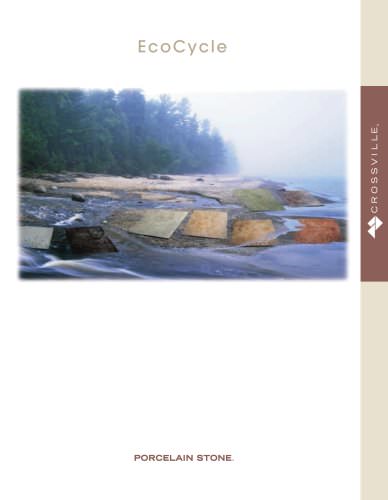
Ecocycle
1 / 10 PagesView full catalog
Ecocycle
Product catalog summary
Recommended Usage
EcoCycle tiles are designed for interior floors and walls, as well as exterior walls in both commercial and residential settings. They are not recommended for exterior horizontal use, except for the EC001 model in the Cross-Tread finish, which is suitable for such applications.
EcoCycle tiles are designed for interior floors and walls, as well as exterior walls in both commercial and residential settings. They are not recommended for exterior horizontal use, except for the EC001 model in the Cross-Tread finish, which is suitable for such applications.
Care and Maintenance
Regular cleaning with hot water and a household cleaner is advised. Tiles should be rinsed thoroughly and dried with a soft cloth. No waxes or sealers are necessary.
Regular cleaning with hot water and a household cleaner is advised. Tiles should be rinsed thoroughly and dried with a soft cloth. No waxes or sealers are necessary.
Product Performance
EcoCycle EC001 tiles exhibit a breaking strength of over 350 lbf, bond strength over 200 psi, and resistance to chemicals and frost. They have a water absorption rate of less than 0.10% and a scratch hardness of 7 on the MOH's scale. The coefficient of friction is greater than 0.65 dry and 0.6 wet.
EcoCycle EC001 tiles exhibit a breaking strength of over 350 lbf, bond strength over 200 psi, and resistance to chemicals and frost. They have a water absorption rate of less than 0.10% and a scratch hardness of 7 on the MOH's scale. The coefficient of friction is greater than 0.65 dry and 0.6 wet.
Shade & Texture Index
EcoCycle tiles have a moderate shade variation (V3), while EC001 has a uniform appearance (V1).
EcoCycle tiles have a moderate shade variation (V3), while EC001 has a uniform appearance (V1).
Sizes Available
Tiles are available in nominal sizes of 8" x 8" and 12" x 12", with specific actual sizes and thicknesses provided.
Tiles are available in nominal sizes of 8" x 8" and 12" x 12", with specific actual sizes and thicknesses provided.
Environmental Responsibility
EcoCycle tiles are cost-effective and environmentally responsible, contributing to LEED certification efforts. Crossville employs sustainable practices, including wastewater reclamation and recycling of raw waste materials.
EcoCycle tiles are cost-effective and environmentally responsible, contributing to LEED certification efforts. Crossville employs sustainable practices, including wastewater reclamation and recycling of raw waste materials.
Green Design and LEED Certification
Crossville supports green design principles as outlined by the USGBC, focusing on sustainable site planning, water efficiency, energy efficiency, material conservation, and indoor environmental quality. EcoCycle products have a certified recycled content of 40% and contribute to LEED points in the Materials and Resources category.
Crossville supports green design principles as outlined by the USGBC, focusing on sustainable site planning, water efficiency, energy efficiency, material conservation, and indoor environmental quality. EcoCycle products have a certified recycled content of 40% and contribute to LEED points in the Materials and Resources category.
Overview
The document serves as a guide for building owners and project teams to enhance the environmental and economic performance of commercial buildings using industry principles and materials. It highlights the benefits of LEED certification, including third-party validation, government incentives, and positive economic impacts over a building's lifecycle.
The document serves as a guide for building owners and project teams to enhance the environmental and economic performance of commercial buildings using industry principles and materials. It highlights the benefits of LEED certification, including third-party validation, government incentives, and positive economic impacts over a building's lifecycle.
LEED Certification
LEED certification offers four levels: Certified, Silver, Gold, and Platinum, based on a point system across six categories: Sustainable Sites, Water Efficiency, Energy and Atmosphere, Materials and Resources, Indoor Environmental Quality, and Innovation and Design. A total of 69 points are possible, with specific thresholds for each certification level.
LEED certification offers four levels: Certified, Silver, Gold, and Platinum, based on a point system across six categories: Sustainable Sites, Water Efficiency, Energy and Atmosphere, Materials and Resources, Indoor Environmental Quality, and Innovation and Design. A total of 69 points are possible, with specific thresholds for each certification level.
EcoCycle by Crossville
EcoCycle products are certified green with 40% recycled content, verified by Scientific Certification Systems. The products contribute to LEED points in the Materials and Resources category, particularly when manufactured and sourced within 500 miles of the project site.
EcoCycle products are certified green with 40% recycled content, verified by Scientific Certification Systems. The products contribute to LEED points in the Materials and Resources category, particularly when manufactured and sourced within 500 miles of the project site.
Product Specifications
EcoCycle tiles are recommended for interior floors and walls and exterior walls, with specific products suitable for exterior horizontal surfaces. Key performance metrics include breaking strength, bond strength, chemical resistance, frost resistance, water absorption, and scratch hardness. The tiles are available in various sizes and colors, with a moderate shade variation.
EcoCycle tiles are recommended for interior floors and walls and exterior walls, with specific products suitable for exterior horizontal surfaces. Key performance metrics include breaking strength, bond strength, chemical resistance, frost resistance, water absorption, and scratch hardness. The tiles are available in various sizes and colors, with a moderate shade variation.
Environmental Commitment
Crossville emphasizes sustainable practices, including wastewater reclamation and recycling of raw waste materials, to minimize environmental impact while maintaining product quality.
Crossville emphasizes sustainable practices, including wastewater reclamation and recycling of raw waste materials, to minimize environmental impact while maintaining product quality.
Care and Maintenance
Regular cleaning with hot water and household cleaners is recommended to maintain the appearance of EcoCycle tiles. No waxes or sealers are needed.
Regular cleaning with hot water and household cleaners is recommended to maintain the appearance of EcoCycle tiles. No waxes or sealers are needed.
See more
All Crossville catalogs and technical brochures
 EcoCycle Americana brochure
3 Pages
 Limestone Brochure
6 Pages
 Ebb & Flow Brochure
11 Pages
 Buenos Aires Mood Brochure
20 Pages
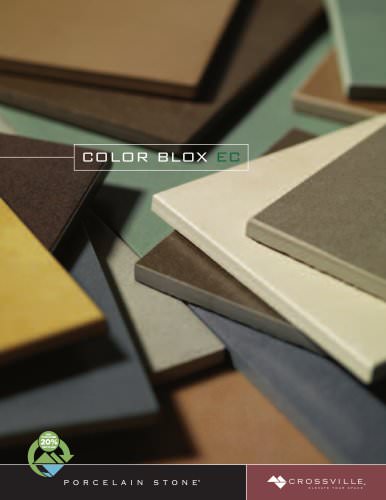 Color Blox EC Brochure
8 Pages
 Origins Glass Brochure
4 Pages
 Mixology Brochure
8 Pages
 Structure Brochure
8 Pages
 Main Street Brochure
4 Pages
 Bluestone Brochure
8 Pages
 2012 Tile Catalog
139 Pages
 Wood Impressions Brochure
5 Pages
 Retro Active
10 Pages
 Savoy Brochure
17 Pages
 Crossville Mosaics
3 Pages
 Cotto Americana
6 Pages
 Color By Numbers
6 Pages


Archived catalogs
 Plan
Plan10 Pages
 BUILDING BLOX
13 Pages
 UltiMetal
13 Pages
 Modern mythology
15 Pages
 Bella Via
9 Pages
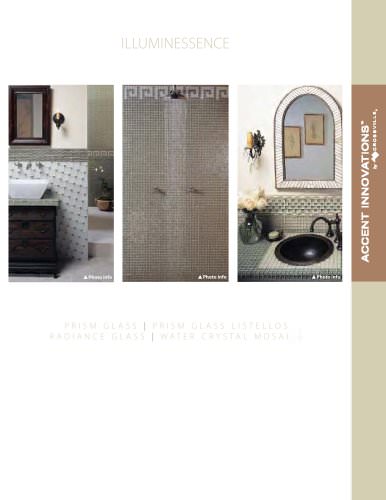 Illuminessence
20 Pages
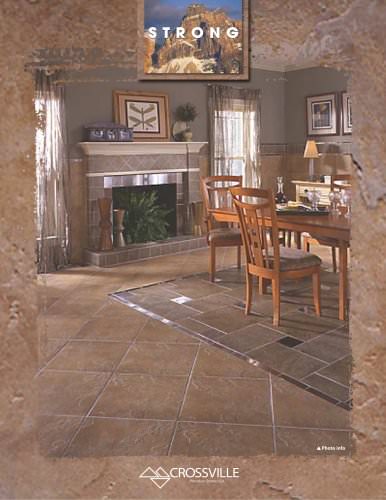 Strong
8 Pages
 Empire
23 Pages
 Color Box
21 Pages
 Character
12 Pages
 Buenos Aires Mood
8 Pages
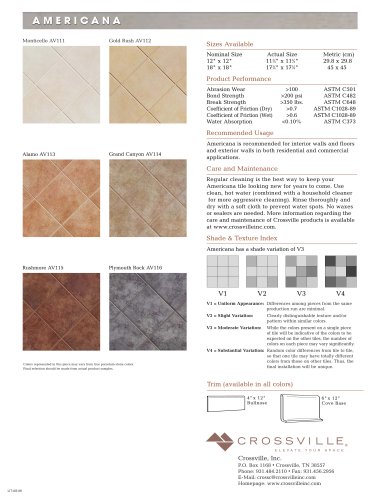 Americana
4 Pages
*Prices are pre-tax. They exclude delivery charges and customs duties and do not include additional charges for installation or activation options. Prices are indicative only and may vary by country, with changes to the cost of raw materials and exchange rates.
About ArchiExpo
ArchiExpo is a marketplace that offers B2B players a complete experience, from product sourcing to purchase. ArchiExpo is an entity of VirtualExpo Group.
Are you a buyer?
Are you a supplier?