- Catalogs
- Conserval Engineering
- Nightsolar

Nightsolar
Nightsolar
- Solar space heating during winter.
- Above sheathing ventilation (ASV) for both steep and low slope roofs.
- Reduces solar gain through the roof.
- Minimizes expansion and contraction issues common with metal roofs.
- Optional integration with photovoltaics (PV) and solar water heating.
- Compatible with rainwater catchment systems.
- Extends the lifespan of the roof.
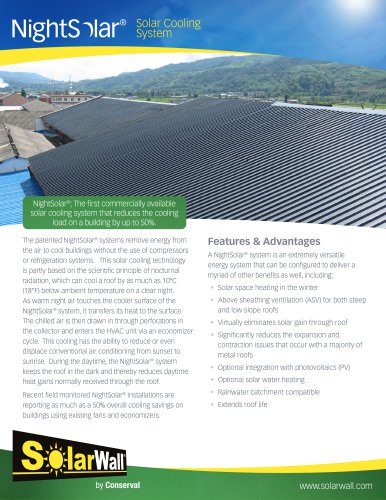
The patented NightSolar® system cools buildings without compressors or refrigeration, using nocturnal radiation to lower roof temperatures by up to 10°C (18°F) below ambient at night. This system can reduce or replace conventional air conditioning from sunset to sunrise and reduces daytime heat gains.
- Field installations report up to 50% cooling savings using existing fans and economizers.
- Ventilated roof design reduces daytime cooling needs by shading and ventilating the roof.
- Oak Ridge National Laboratory highlights the importance of above-sheathing ventilation in reducing attic heat gain.
NightSolar® systems offer year-round energy savings by providing both cooling in summer and heating in winter. They can store thermal energy using separate tanks and qualify for a 30% federal solar tax credit.
Conserval Engineering Inc. (Canada), Conserval Systems Inc. (USA), SolarWall Europe Sarl. (Europe)
Catalog excerpts
Solar Cooling System NightSolar®; The first commercially available solar cooling system that reduces the cooling load on a building by up to 50%. The patented NightSolar® systems remove energy from the air to cool buildings without the use of compressors or refrigeration systems. This solar cooling technology is partly based on the scientific principle of nocturnal radiation, which can cool a roof by as much as 10°C (18°F) below ambient temperature on a clear night. As warm night air touches the cooler surface of the NightSolar® system, it transfers its heat to the surface. The chilled air is then drawn in through perforations in the collector and enters the HVAC unit via an economizer cycle. This cooling has the ability to reduce or even displace conventional air conditioning from sunset to sunrise. During the daytime, the NightSolar® system keeps the roof in the dark and thereby reduces daytime heat gains normally received through the roof. Recent field monitored NightSolar® installations are reporting as much as a 50% overall cooling savings on buildings using existing fans and economizers. Features & Advantages A NightSolar® system is an extremely versatile energy system that can be configured to deliver a myriad of other benefits as well, including: •• Solar space heating in the winter •• Above sheathing ventilation (ASV) for both steep and low slope roofs •• Virtually eliminates solar gain through roof •• Significantly reduces the expansion and contraction issues that occur with a majority of metal roofs •• Optional integration with photovoltaics (PV) •• Optional solar water heating •• Rainwater catchment compatible •• Extends roof life
Open the catalog to page 1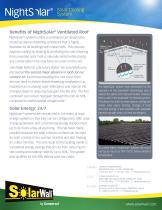
Solar Cooling System Benefits of NightSolar® Ventilated Roof NightSolar® systems utilize a ventilated roof design (also known as above-sheathing ventilation) that is highly desirable for all buildings with metal roofs. This reduces daytime cooling by shading & ventilating the roof, meaning that unwanted solar heat is naturally vented while drying any condensation that may have occurred on the roof. Oak Ridge National Laboratory states “we serendipitously discovered the second major advance in roofs for our century: We found that elevating the roof cover from the roof deck to induce above-sheathing...
Open the catalog to page 2All Conserval Engineering catalogs and technical brochures
 Solar Air Heating
2 Pages
 Solarwall
5 Pages
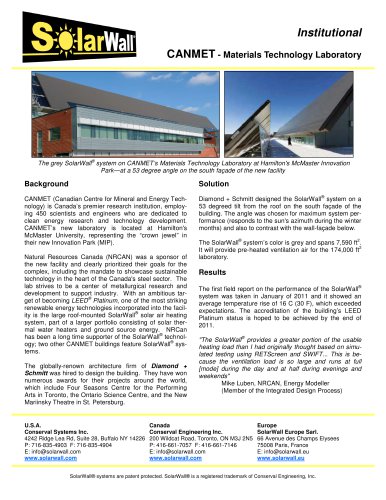 Institutional
1 Page
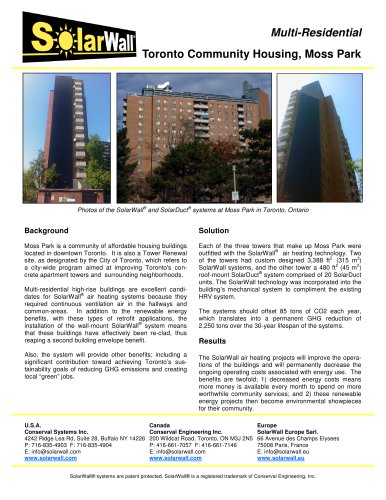 Multi-Residential
1 Page
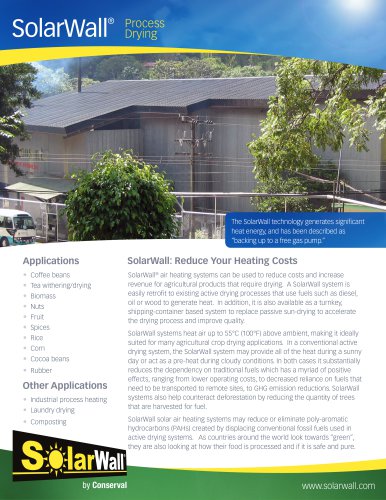 SolarWall Process Drying
2 Pages
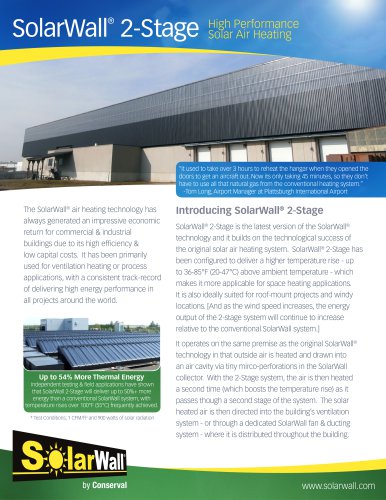 SolarWall 2-Stage
2 Pages
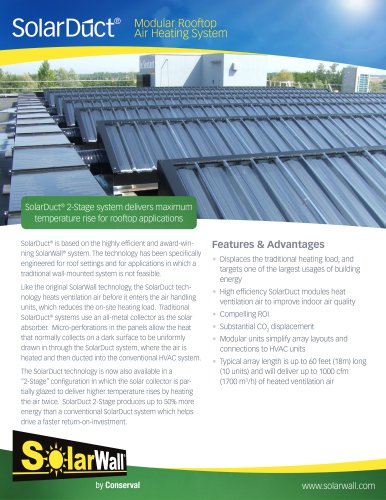 SolarDuctSpec
2 Pages
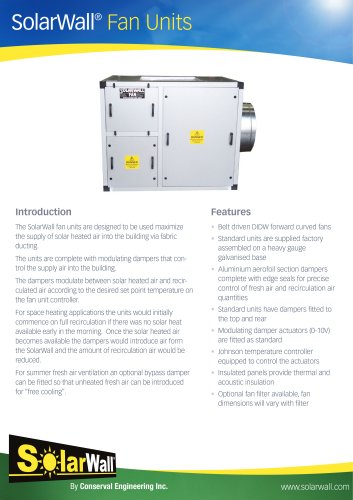 SolarWallFans_2010
11 Pages

Archived catalogs
 Solarwall Brochure
7 Pages
 Industrial
2 Pages
 Commercial Buildings
2 Pages
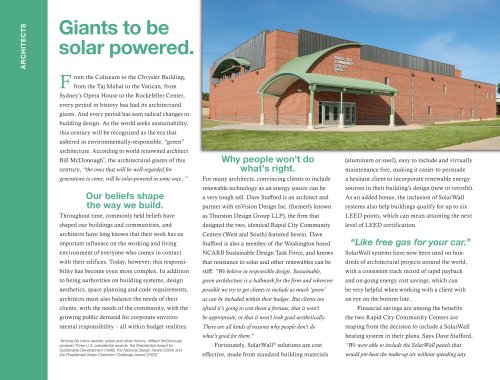 Architects
2 Pages
 SolarDuct and SolarDuct PV/T
2 Pages
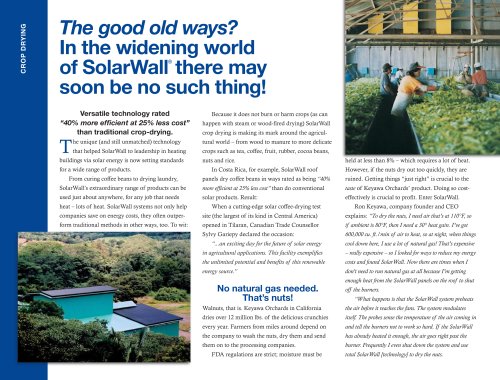 Crop Drying
2 Pages
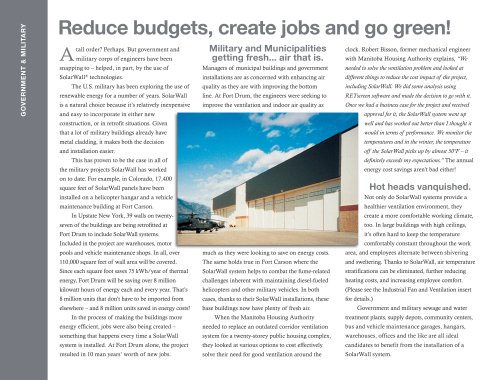 Government & Military
2 Pages
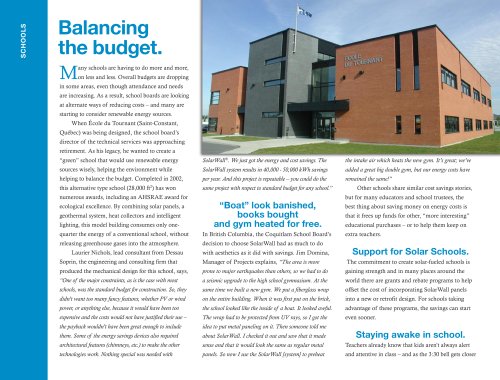 Schools
2 Pages