
- Catalogs
- Buschfeld Design
- Lookbook Edition one

Lookbook Edition one

Lookbook Edition one
Buschfeld has been creating aesthetic lighting solutions since 1989, focusing on timeless design and high-quality technology. The LightLight® system, developed by Hans Buschfeld, is a pioneering architectural low-voltage track system known for its modular architecture and precision.
The lighting industry is rapidly evolving with digital advancements. Buschfeld's slimline track system remains relevant due to its minimalist design and modularity, allowing it to adapt to new technologies. The Buschfeld Sense System® integrates digital capabilities, transforming the track into a smart lighting matrix suitable for complex applications and collaborations with other manufacturers.
The Sense System® offers a 48V energy infrastructure without additional data cables, maintaining aesthetic integrity. It uses Bluetooth mesh technology for communication between luminaires, enabling flexible positioning and grouping for diverse lighting scenarios. Buschfeld collaborates with leading technology partners like Casambi and Xicato to enhance its system's capabilities.
Buildings are becoming central to IoT applications, with digital networks facilitating building management and communication. Bluetooth Low Energy (BLE) with mesh functionality is pivotal for lighting control, presence detection, and environmental monitoring. The Sense System® supports these applications, providing a robust and flexible network.
Buschfeld integrates technologies from Casambi, Xicato, and Soraa, leveraging their innovations in BLE mesh and LED lighting. These partnerships enhance the Sense System's functionality, offering solutions for both private and complex professional environments.
The Sense System® features a decentralized architecture where each luminaire acts as a data hub. This setup ensures reliability and flexibility, allowing for easy updates and changes. The system is designed to be resource-efficient, with components activating only when needed.
The system's user interfaces are designed for intuitive operation, simplifying the management of smart lighting installations. The modular design allows for customization, with tracks that can be bent and cut to specific requirements, ensuring tailored solutions for various applications.
Buschfeld remains committed to its craftsmanship and innovation, producing all systems in-house in Cologne. The Sense System® exemplifies a modular, customizable approach to smart lighting, aligning with the evolving demands of IoT and digital integration.
Freestyler is a tool designed for creating expansive lighting structures in three-dimensional forms. It allows for a variety of configurations and shapes using the Pend48 track, which can be combined in new ways to form large-scale structures. The Sense System offers a modular, application-oriented approach to lighting, with user-friendly interfaces that simplify the operation and management of smart lighting installations.
The Sense System is based on a modular design, allowing for custom configurations. Tracks can be bent horizontally and vertically to meet specific requirements. The system integrates BLE mesh and Beacon technology, enabling a robust and scalable network for smart lighting. The system operates on a low voltage of 48V, ensuring reliability and energy efficiency.
- Sphere: Utilizes curved sections of the 48V DC Sense System track to create large, spherical lighting structures suitable for large spaces like museums and hotels.
- Blade Wheel: Features a wheel-like structure that can be arranged in various sizes and levels, ideal for high-ceilinged spaces or stages.
- Starry Sky: Allows for the creation of star constellations on ceilings, adaptable to different architectural designs.
- Square: A constructivist-inspired grid-like matrix that can be wall-mounted or pendant, suitable for various interior applications.
- Parrot: A 3D chandelier with interconnected ring-shaped tracks, offering versatile accent lighting.
The Ninety-Five series is designed for public and commercial spaces, offering high performance with minimalist precision. It features a 95 mm radius and 16.1 watts of LED power, providing brilliant white light for perfect color rendering. Accessories like Snap-Filters allow for adjustable beam angles, enhancing the versatility of lighting solutions.
The Freestyler and Sense System offer innovative and flexible lighting solutions, combining advanced technology with elegant design to meet diverse architectural and interior lighting needs.
The Ninety-Five range offers high-ceilinged spaces lighting solutions with adjustable beam angles via mobile phone and Snap filters. It provides sparkling white light for optimal color rendering. Technical specifications include lighting control options such as Basic On/Off and Bluetooth mesh (Casambi and Xicato), with lighting features of 2700K/CRI95/950lm and 3000K/CRI95/1000lm. LED wattage options are 16.1W with varying beam angles (9°, 25°, 36°). Accessories include Snap filters and shades available from autumn 2019.
The Fifty series is designed for picture lighting with a CRI of 95 for excellent color rendering. It features digital control technology for precise illumination, enhancing artwork with clear light and shadows. The range is versatile for various settings, including kitchens and offices. Technical data includes lighting control options (Basic On/Off, Bluetooth mesh: Casambi, Xicato), lighting features (2700K/CRI95/680lm, 3000K/CRI95/720lm), and LED wattage (12.2W with beam angles of 15°, 25°, 36°). Accessories include Snap filters and shades from autumn 2019.
The Thirty-Five series is a minimalist design with a 35 mm diameter, offering precise lighting for highlighting exclusive objects and architectural details. It combines digital control technology with high-quality lighting. Technical specifications include lighting control options (Basic On/Off, Bluetooth mesh: Casambi, Xicato), lighting features (2700K/CRI95/405lm, 3000K/CRI95/430lm), and LED wattage (6.7W with beam angles of 25°, 36°). Accessories include shades available from autumn 2019.
The LED Line is an uplighter module for indirect ceiling lighting, combining innovative LED technology with the Pend48 design. The LED Strip offers a slimline linear light for continuous lighting effects, easily integrated into the Buschfeld recessed track system. It can be used with both LightLight and Sense Systems.
The Sense System is a 48V single-phase track system using Bluetooth Mesh technology for wireless communication between luminaires and sensors. It offers flexible lighting control with Casambi and Xicato standards, allowing individual switching, dimming, and scene programming. Light Engines in the system are LED equivalents with pre-programmed light characteristics, compatible with Snap System filters for light direction and color temperature adjustments.
The Sense System offers a versatile lighting solution with network-enabled directional spotlights, including models Thirty-Five, Fifty, and Ninety-Five. These luminaires are equipped with innovative electronics and are designed as a complete unit with integrated lighting control chips and light engines. The system supports lighting control protocols from Casambi and Xicato, allowing individual or group control of luminaires.
Luminaires can be controlled via smartphones, tablets, smartwatches, or conventional switches. The system can be configured using an Apple or Android app, and it supports integration with building management systems through IP gateways. The open Bluetooth standard allows for extensive network capabilities, supporting up to 32,000 participants and over 65,000 scenarios.
The system allows for the creation of various lighting scenarios and the grouping of luminaires to perform specific tasks. Users can easily switch, dim, or program lighting settings to create desired atmospheres. Luminaires can belong to multiple groups, enhancing flexibility in lighting design.
The Sense System is suitable for private homes, small-scale projects, and commercial applications. It offers intuitive use without requiring technical expertise and utilizes the Casambi Cloud for network data synchronization. The system's modular design allows for customization to meet individual lighting requirements.
The system includes options for surface or recessed mounting on walls or ceilings, with track systems available in various finishes. Control gear options are available for both visible and concealed mounting, and the system supports a wide range of luminaires equipped with LEDs.
The Sense System provides a comprehensive and flexible lighting solution, integrating advanced control technologies and offering extensive customization options for various applications.
Soraa Inc., co-founded in California in 2008 by Nobel Prize winner Shuji Nakamura, is renowned for its pioneering LED technology. Soraa focuses on perfect color rendering across the visible spectrum, making it ideal for galleries and museums. Buschfeld was the first German manufacturer to integrate Soraa's LED products into their luminaires in 2013.
Buschfeld's Sense System® luminaires utilize Soraa's Light Engines, featuring GaN on GaN™ LED technology. This ensures focused light with perfect distribution and uniform color temperature. The system allows for high luminous intensity and adaptable beam angles, which can be modified on-site using Snap system accessories. Custom-made heat sinks and integrated temperature sensors support efficient thermal management.
The Snap System enhances lighting flexibility and control by combining GaN on GaN™ LED technology with magnetic filters and lenses. This allows for the adaptation of installations using a single lamp. The honeycomb louvre Snap filter reduces glare, making it ideal for downlight applications.
Soraa's Vivid Color™ technology covers the entire visible spectrum, ensuring accurate color rendering. The Natural White™ technology emphasizes the role of violet light in perceiving white, offering a wide range of white shades. The high CRI and R9 values ensure vibrant red tones and lifelike skin colors.
Soraa's technology provides a superior light spectrum with high optical quality. Buschfeld luminaires produce uniform light with precise prismatic lenses, rendering all colors and shades with clarity and definition.
Buschfeld provided custom lighting for Stefan Diez's exhibition at the Museum of Applied Arts in Cologne. The project involved 302 meters of LightLight track and customized shelving units with integrated lighting. The collaboration between Diez, Hay, and Buschfeld resulted in innovative lighting solutions that enhanced the exhibition's design.
The document discusses the collaboration between Diez Office and Buschfeld in creating customized lighting solutions for exhibitions, particularly focusing on the New Order furniture system by Hay. The projects took place in various locations, including the Museum of Applied Arts in Cologne (MAKK) and the Palazzo Clerici in Milan.
Buschfeld provided tailor-made lighting solutions by modifying their track systems to fit the specific requirements of the exhibition spaces. For instance, they reduced the track height from 28mm to 17mm to integrate seamlessly into the New Order shelves. This customization was crucial for achieving a discreet lighting effect that enhanced the exhibition without being overtly visible.
The exhibition design involved creating cell-like structures from the New Order furniture system, which required a versatile lighting concept. The lighting needed to be adaptable to highlight products from various angles and distances, creating an immersive experience for visitors. The architecture of the exhibition spaces, such as the MAKK building, posed additional challenges due to its unique layout and decorative elements.
The collaboration with Buschfeld was facilitated by recommendations from key figures in the design community. Buschfeld's enthusiasm and quick adaptation to the project requirements were highlighted as significant factors in the successful implementation of the lighting solutions. The projects required a tight timeline, with only two months from concept to realization.
The document concludes by emphasizing the growing importance of customized lighting solutions in architecture and design. Buschfeld's ability to provide bespoke solutions is seen as a strength that will be increasingly in demand.
The collaboration between Diez Office and Buschfeld demonstrates the effectiveness of customized lighting solutions in enhancing exhibition design. The projects in Cologne and Milan showcase the potential for innovative lighting to transform architectural spaces and create engaging experiences for visitors.
All Buschfeld luminaires are equipped with high-quality, dimmable 3000K LEDs from Soraa, which produce minimal UV radiation and no significant heat build-up. The lighting systems are designed to be mounted directly on tracks, reducing installation costs.
- Bavarian State Gallery, Bamberg: The historic chandeliers only illuminated the ceilings, not the artworks. Buschfeld's Rondo system, a ring-shaped version of the LightLight® track system, was used to provide central mounting and power input, utilizing existing gas pipe hooks. Spot 5 luminaires, which are small and flexible, were used to direct light precisely where needed, combined with Tube shades to reduce glare.
- New Palace, Potsdam: The lighting needed to illuminate not only artworks but also sensitive ceiling paintings and sculptures. The LightLight Rondo system with Flex directional spotlights was used, offering 360° rotation and 180° tilt for versatile lighting solutions. LED sources and filters allowed for unique lighting effects, such as lines or rectangular beams.
- Private Residence, Cologne Marienburg: The lighting system needed to highlight a historic coffered ceiling while providing ambient lighting. The Pend track system was used, forming geometric structures that blend with the room's aesthetics.
- Design Post, Cologne: For the "Parklandschaften" exhibition, the LightLight Wall track system was installed in a car park, demonstrating its versatility in transforming spaces. Shop and Poster luminaires were used to optimally illuminate the photographic works.
- Private Residence, Cologne Rodenkirchen: A lighting concept was needed for a house with diverse architectural styles. The Wall track system was used throughout to create a uniform visual appearance, with Max-W spotlights providing versatile lighting for different room functions.
Buschfeld's lighting solutions are characterized by their adaptability, aesthetic integration, and functionality, making them suitable for a variety of settings, from historic galleries to modern private residences.
The document discusses the collaboration between Buschfeld and Swiss luminaire manufacturer Baltensweiler, focusing on the adaptation of the Fez pendant luminaire for the Buschfeld track system. This partnership aims to enhance the flexibility and design potential of interior lighting solutions.
The Fez luminaire, originally designed for fixed ceiling installation, has been adapted to be mounted on the Buschfeld track system. It features two LEDs for glare-free lighting, one directed downwards and the other upwards. The luminaire is adjustable both vertically and horizontally, with a height range of 135 cm. This flexibility allows for repositioning at any point along the track, accommodating multiple luminaires.
The adaptation process involved concealing the adapter to ensure compatibility with the Buschfeld track. This modification allows the integration of high-class decorative luminaires into the system, expanding its application in interior design.
The collaboration opens new opportunities in lighting design, particularly in hybrid interior spaces. The system's flexibility supports various lighting scenarios, enabling the creation of tailored atmospheres in spaces like offices. The combination of different luminaire designs on a single track system enhances creative possibilities.
Designer Lukas Unertl explored the potential of Buschfeld track systems to serve as power sources for digital devices. His research focused on sustainable product concepts that reduce ecological footprints while meeting modern societal needs. Unertl proposed transforming the track into a power rail for digital devices, offering solutions like inductive charging pads and routers.
The document highlights the innovative potential of merging Buschfeld's modular track systems with decorative luminaires from premium manufacturers. This approach not only enhances interior lighting flexibility but also aligns with sustainable design principles, offering new dimensions in lighting and digital integration.
The document discusses the innovative use of modular lighting systems, particularly focusing on the Buschfeld track system. This system is designed to be flexible and adaptable, providing power for digital devices and offering solutions for complex spatial environments.
The Buschfeld track system is available in 12V and 48V versions, allowing for various installation methods including recessed, surface-mounted, and pendant-mounted options. It is designed to be safe, with no visible transformers and no risk of electric shocks. The system supports modularity, enabling quick replacement or updates of individual modules.
The document highlights several applications developed by designer Lukas Unertl using the Buschfeld track system. These include an inductive charging pad for home use, a loudspeaker for retail spaces, and a router/repeater for office environments. Additionally, a USB C adapter module can be applied along the track for further connectivity.
Professor Hans Buschfeld launched the LightLight® Wall system in 1989, which became the foundation for the Buschfeld company. The system was designed to illuminate artworks effectively, and its modular nature has allowed it to evolve over time to include a wide range of lighting solutions.
The LightLight system is known for its minimalist and functional design, with a focus on high-quality materials and workmanship. It offers a variety of luminaires and spotlights, with options for different shades, LED strips, and chandeliers. The system is praised for its timeless aesthetics and adaptability to various architectural spaces.
The document describes several product variants within the LightLight system, including:
- Flex: A versatile directional spotlight suitable for retail, museum, and exhibition spaces.
- Led Line: An uplighter module providing uniform indirect lighting, ideal for corridors and safety lighting.
- Max: A directional spotlight for pendant, surface, and recessed track mounting, suitable for various applications.
- Max-W: A flexible spotlight that can be mounted in various orientations, offering solutions for both professional and private spaces.
The Buschfeld track system and its LightLight products offer a sustainable and adaptable lighting solution, maintaining consistent quality and functionality over decades. The system's modularity and flexibility make it suitable for a wide range of applications, from art illumination to modern digital device integration.
The document describes various lighting solutions designed by Hans Buschfeld, focusing on flexibility, design, and functionality. The Max-W spotlight is highlighted for its versatile mounting options, allowing it to be installed horizontally, vertically, or on sloped surfaces. It is available in both LED and halogen versions, offering 360° rotation and 180° tilt.
- Poster: A universal picture luminaire that can be mounted anywhere on the LightLight Wall system without tools. It features an integral picture rod for hanging and illuminating pictures, suitable for both private and professional spaces.
- Pinpin: A pendant luminaire designed for glare-free table or counter lighting. It includes adjustable LEDs or halogen lamps and is recommended for wide-angle sources. The luminaire can be mounted recessed or surface-mounted, with options for dimmable transformers.
- Shop: Designed for illuminating pictures, shelves, or walls, similar to the Poster but without an integral picture hanger. It can also be used as a pendant luminaire for wall illumination.
- Spot 5: A small, flexible spotlight suitable for various track applications, offering 360° rotation and 180° tilt, ideal for illuminating small pictures and objects.
The document introduces the Sense System, a smart, sensitive, and sustainable lighting solution that integrates sensor technology for data collection and communication. It operates on a constant voltage of 48 V DC and supports the SLE Light Engine module from Soraa, offering high lighting quality with a CRI of 95. The system allows for the creation of lighting scenarios and individual luminaire activation via an app.
Buschfeld emphasizes a reduction to essentials, allowing for component exchange similar to a computer update, ensuring the modular system remains future-proof. The company focuses on perfect product development, precision workmanship, and high-quality materials for long-lasting products.
The document highlights Buschfeld's commitment to innovation and sustainability in lighting design, offering a range of flexible and technologically advanced solutions that cater to both aesthetic and functional needs.
The document describes a lighting system with adjustable beam angles ranging from 0° to 36°. A self-centering magnet allows for easy attachment of various filters and honeycomb louvres without tools. Filters can modify the beam shape from circular to rectangular and adjust color temperature. Recommended filters are from LEE or Rosco. The system offers handmade shades in materials like aluminum, brass, and copper, which can be custom-designed to reduce glare and enhance aesthetics.
The lighting system is modular, allowing for customization based on project requirements. It can be mounted on walls, ceilings, or as pendant systems. Available in four finishes: alumatt, polished, black, and white, with options for custom colors. The system requires a 12V low-voltage power supply, which can be mounted directly on the track or concealed separately. Dimming options are available upon request.
Options include halogen and LED light sources with various wattages and beam angles. The Soraa® Snap system allows for beam angle adjustments from 10° to 60°. Soraa technology offers high-quality LED lighting with a full spectrum similar to daylight, featuring "Point Source Optics" for defined shadows and energy efficiency.
Buschfeld offers individualized lighting design solutions for complex architectural environments. The modular system can be adapted for various applications, including corner installations. Custom solutions are available if standard modules do not meet requirements. Support is provided for planning and design.
Freeform lighting solutions can be constructed from curved and straight sections, adaptable to specific spatial environments. Both pendant and surface-mounted options are available, requiring a 1:1 plot for production.
Catalog excerpts

we love what we do our passion is best standards and bespoke light. here you find clients´ & designers´ ideas set-ups projects adaptions buschfeld lookbook
Open the catalog to page 1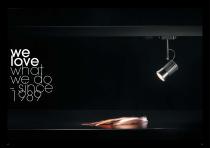
we love what we do - since 1989
Open the catalog to page 3
Asthetische Beleuchtungslosungen fur Kunstwerke zu schaffen - das war der Anspruch, mit dem Hans Buschfeld 1989 LightLight® entwickelte. Ein Schienensystem, das durch konsequent zeitlose, bis ins kleinste Detail klar ausformulierte Ge-staltung, sowie durch eine modulare Produktarchitektur, prazise Technik und den Einsatz hochwertigster Leuchtmittel zum Klassiker avanciert ist. LightLight gilt aktuell als Vorlaufer aller im Markt befindlichen architektu-ralen Niedervolt-Schienensysteme. Bestandig fur neue Potentiale Die Lichtwelt ist heute digital. Sie verandert sich fundamental und rasant. Unsere...
Open the catalog to page 4
Sense System die neuen, digitalen Lichtoptionen Digitales Back-up Gebäude gehören künftig zu den zentralen Einsatzbereichen für IoT (Internet of Things) Anwendungen. Dabei bilden digitale Netzwerke die Grundlage, egal ob für Gebäude Management Systeme oder interne Kommunikation. Die Bandbreite an Kommunikationsprotokollen für den Austausch von Daten zwischen den einzelnen in einem Netzwerk miteinander verbundenen Komponenten ist sehr vielfältig und komplex. Bei der aktuellen, dynamischen Entwicklung neuer Technologien zeigt sich, dass Flexibilität und Zukunftsfähigkeit dieser Netzwerke immer...
Open the catalog to page 5
Firma ein interoperables BLEmesh System. Es bietet eine hohe Skalierbar-keit und ist damit auch fur sehr groBe und komplexe Netzwerke geeignet. Daruber hinaus lassen sich hier - im Gegensatz zu Casambi - auch BLEmesh Protokolle anderer Firmen einbin-den. Bei beiden Herstellern gehort die Integration eines Beacon in die Module zum Standard. Mit diesen Beacons lasst sich ein kleines Funknetzwerk unabhangig vom internen LAN oder WLAN aufbauen. Uber die zugehorigen Komponenten und Sensoren werden unter anderem Funktionen wie die Indoor Ortung von Geraten, die Lokali-sierung von Gegenstanden oder...
Open the catalog to page 6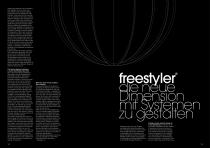
quality with regard to colour rendering and reliability. In 2013, Xicato Controls added smart Bluetooth lighting controls and control software to their portfolio. Xicato was the first manufacturer to combine an LED driver module together with BLE mesh and Beacon in one module. With Xicato Controls the US-based company supports interoperability through the BLE mesh system, which provides high scalability and is therefore also applicable for large-scale and complex networks. Furthermore, in contrast to Casambi, this also enables the integration of BLE mesh protocols from other companies. The integration...
Open the catalog to page 7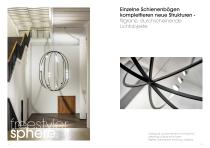
Einzelne Schienenbögen komplettieren neue Strukturen filigrane, durchscheinende Lichtobjekte. Individual curved sections of track for creating unique structures filigree, translucent luminous objects. 15
Open the catalog to page 8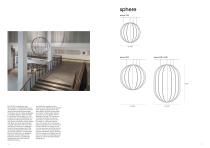
Die 48V DC Lichtschienen des Sense System® bietet Buschfeld auch rund geformt an: Zusammen mit einem neuen, sternförmig Verbindungselement lassen sich so riesige, kugelartige Lichtobjekte kreieren: Sphere. Erhältlich ab einem Durchmesser von 1,60 m eignet sich der minimalistische Kronleuchter für hallenartige Architekturen oder Foyers in Museen, Kirchen, Hotels oder Bars. Alle neuen Sense System Leuchten der Serien Thirty-Five, Fifty und Ninety-Five können in beliebiger Anzahl entlang des gesamten Schienenverlaufs eingeriegelt werden. Sie sind einzeln ansteuer- und regulierbar. Damit ist Sphere...
Open the catalog to page 9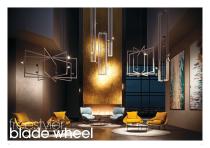
freestyler blade wheel 18
Open the catalog to page 10
blade wheel blade wheel 1200 x 800 Blade Wheel entfaltet große Wirkung in verschiedenen Dimensionen: Seine auf dem Rad basierende, dabei jedoch kantige Grundstruktur kann einen großen Durchmesser haben. So betont Blade Wheel die Horizontale. In kleineren Radien mit extrem langen Schienenelementen fokussiert Blade Wheel die Vertikale. Für hallenartige Architekturen oder auch Bühnen lassen sich Blade Wheels unterschiedlicher Größen in verschiedenen Ebenen gehängt arrangieren. Es entsteht ein spannendes Bild modernster Lichtstrukturen. Bestückt mit den neuen, individuell regulierbaren Sense System®...
Open the catalog to page 11
Beleuchtungskonzepte in neuer Formensprache verspricht auch Starry Sky: Es lassen sich attraktive Stern-konstellationen an der Raumdecke kreieren. Durch die neuen Schienen-verbindungselemente konnen einzelne Sterne mit unterschiedlicher Anzahl von Schienenstrahlen gestaltet werden. Abgestimmt auf die Architektur konnen zusatzlich asymmetrische Sterne mit verschieden langen Strahlen gebildet werden. Starry Sky zeigt sich auch als definierte Struktur mit drei zusammen-hangenden Sternen. In minimalistisch gehaltenen Raumen setzen mehrere Starry Sky Lichtsterne grafische De-signakzente - perfekt...
Open the catalog to page 13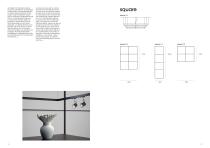
Lichtobjekt mit konstruktivistischer Anmutung: Die filigranen Lichtschienen werden projekt- und kundenspezifisch zu Rastern unterschiedlicher Abmessungen zusammengesetzt. Square wird zur minimalen Lichtskulptur an der Wand, um atmosphärische Akzente zu setzen oder einzelne Objekte zu illuminieren. Square lässt sich auch als Schienenraster von der Decke abpendeln, um flächendeckend zu beleuchten oder einen Fokus zu setzen. Ideal für Interiors, die in der Raummitte hochwertiges und variables Licht benötigen: Produktpräsentationen, Ausstellungen, Arbeitssituationen oder auch Wohnbereiche mit frei...
Open the catalog to page 15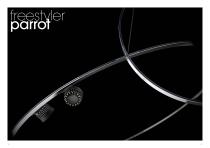
freestyler parrot
Open the catalog to page 16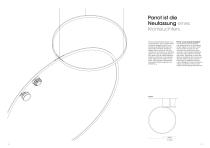
Parrot ist die Neufassung eines Kronleuchters. Mit zwei unterschiedlich großen Lichtschienenkreisen, die im rechten Winkel zueinander angeordnet sind. Durch wenige Leuchtköpfe erhält die Illumination jeder Architektur sphärische Eleganz. Parrot wirkt auch mit mehr Leuchtkraft: Je nachdem, wo die Spots platziert und wie sie ausgerichtet werden, lassen sich die unterschiedlichen Aspekte im Wohnraum oder repräsentativen Objekt immer wieder neu betonen. Damit werden variantenreiche, akzentuierte Beleuchtungswünsche realisierbar. Parrot: a new-look 3D chandelier It comprises two interconnected ring-shaped...
Open the catalog to page 17All Buschfeld Design catalogs and technical brochures
 thirty-five side L
8 Pages
 fifty side L
8 Pages
 spot 5
2 Pages
 poster
2 Pages
 LightLight® complete brochure 2014
222 Pages
- Wall-mounted light
- Contemporary wall-mounted light
- Metal wall light
- LED wall light
- Light fixture
- Industrial LED light
- Metal light fixture
- Fixed wall light
- Commercial light fixture
- 1 bulb wall-mounted light
- White wall light
- Commercial wall light
- Black wall light
- Industrial LED spotlight
- Linear light fixture
- Metal spotlight
- Hanging light fixture
- Round wall light
- Commercial spotlight
- Round spotlight