



Universal Design Guide

1 / 8 PagesView full catalog
Universal Design Guide
Product catalog summary
Overview: The document is a comprehensive guide on accessibility standards for washrooms and showers, focusing on compliance with the Americans with Disabilities Act (ADA) and other relevant standards. It provides detailed specifications for various fixtures and accessories to ensure accessibility for individuals with disabilities.
Accessibility Standards and Guidelines: The guide highlights two primary sources for accessibility information: the ADA Accessibility Guidelines (ADAAG) and the American National Standards Institute (ICC/ANSI A117.1). It emphasizes that while ADA is a federal civil rights statute, compliance is enforced through legal action rather than building code officials. Most state building codes have adopted these standards, making them enforceable.
Federal Organizations and Accessibility: Various federal organizations, such as the Department of Defense and the Department of Transportation, have specific accessibility standards like UFAS and ADA/ABA. The guide advises verifying all guidelines with local codes, as they may be stricter than national codes.
Accessible Stall Design: The document provides detailed dimensions for designing accessible bathroom stalls, ensuring they accommodate individuals with limited mobility. Key points include the placement of grab bars, toilet tissue dispensers, and the operability of latches.
Single Occupant Restroom Design: The guide outlines requirements for single occupant restrooms, ensuring they allow wheelchair users to maneuver freely. It specifies dimensions for clear floor space and the placement of fixtures to ensure accessibility.
Fixture and Accessory Specifications: The document details specifications for various fixtures, including towel dispensers, hand dryers, lavatory systems, mirrors, faucets, shower seats, and grab bars. It emphasizes the importance of these fixtures being detectable by visually impaired individuals and compliant with ADA guidelines.
Recommendations: The guide recommends installing recessed accessories to avoid hazards and suggests using full-length mirrors for better accessibility. It also highlights the importance of selecting fixtures that do not require tight grasping or excessive force to operate.
Conclusion: The document serves as a valuable resource for ensuring compliance with accessibility standards in washrooms and showers. It provides detailed guidance on the design and installation of fixtures to accommodate individuals with disabilities, emphasizing the need to verify compliance with local codes.
See more
All Bradley catalogs and technical brochures
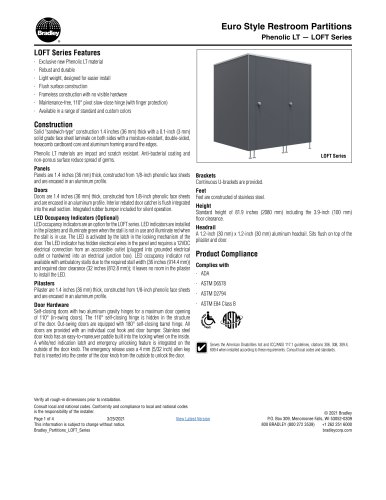 Phenolic LT — LOFT Series
4 Pages
 Verge™ Faucet – Metro Series
4 Pages
 Sustainable Washroom Design
12 Pages
 Restaurant Solutions
24 Pages
 Industrial Solutions
20 Pages
 Interiors Ideabook
16 Pages
 wakeforest_casestudy_sage
2 Pages
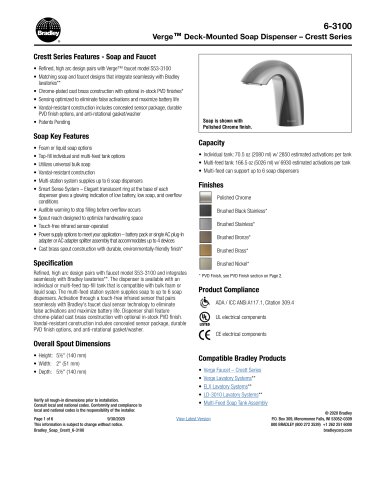

Archived catalogs
 Washfountain Introduction
5 Pages
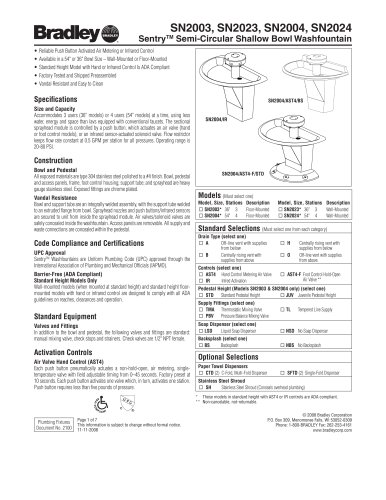 Washfountain Technical Data
7 Pages
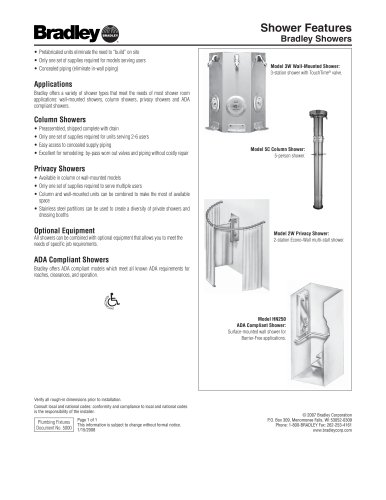 Wall Shower Introduction
1 Page
 Wall Shower Technical Data
2 Pages
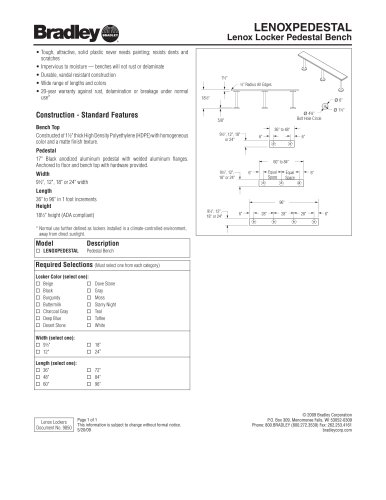
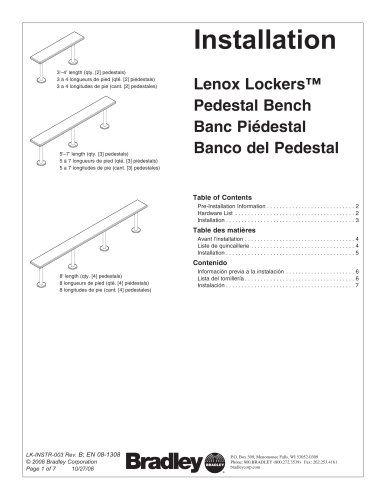 Pedestal Bench
7 Pages
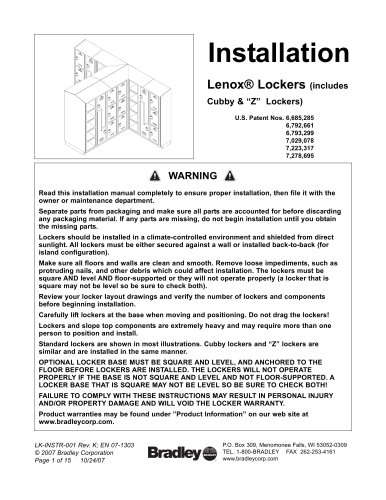 Lenox Lockers
15 Pages
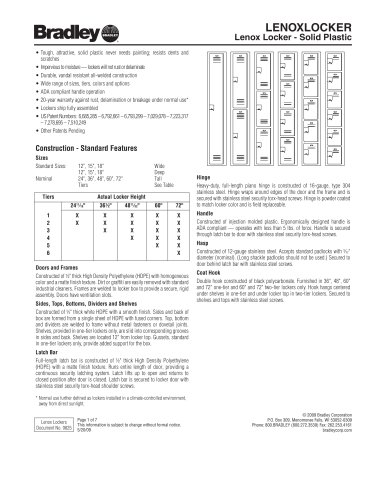 Lenox Lockers Technical Data
7 Pages
Related Searches
- Industrial tap
- Mixer faucet
- Indoor mixer tap
- Wash stand
- Contemporary wash basin
- Metal mixer tap
- Contemporary single-handle mixer tap
- Washbasin tap
- 1-hole single-handle faucet
- Countertop single-handle mixer tap
- Lavatory mixer tap
- Lever mixer tap
- Rectangular sink
- Black mixer tap
- Silver-colored mixer tap
- Wall-hung wash basin
- Industrial soap dispenser
- Shower enclosure
- Commercial soap dispenser
*Prices are pre-tax. They exclude delivery charges and customs duties and do not include additional charges for installation or activation options. Prices are indicative only and may vary by country, with changes to the cost of raw materials and exchange rates.
About ArchiExpo
ArchiExpo is a marketplace that offers B2B players a complete experience, from product sourcing to purchase. ArchiExpo is an entity of VirtualExpo Group.
Are you a buyer?
Are you a supplier?