
sludge separator
1 / 2 PagesView full catalog
sludge separator
Product catalog summary
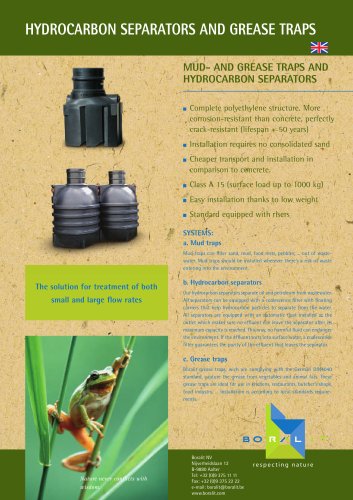
Overview: The document provides technical specifications and installation guidelines for Boralit's polyethylene-based mud traps, grease traps, and hydrocarbon separators. These systems are designed to protect the environment by filtering waste from water.
Specifications:
- Constructed from polyethylene, offering superior corrosion resistance and a lifespan exceeding 50 years.
- Lightweight design facilitates easy installation and reduces transportation costs compared to concrete systems.
- Class A 15 rating, supporting surface loads up to 1000 kg.
System Types:
- Mud Traps: Filter sand, mud, and debris from wastewater, essential in areas prone to waste contamination.
- Hydrocarbon Separators: Separate oil and petroleum from wastewater, equipped with coalescence filters and automatic floats to prevent overflow and environmental harm.
- Grease Traps: Compliant with German DIN4040 standards, these traps capture grease from vegetable and animal fats, suitable for kitchens and food industries.
Installation Guidelines:
- Systems can be installed in consolidated sand or regular sand, with specific dimensions and weights provided for various flow rates.
- Flow rates range from 1.5 l/sec to 45 l/sec, with corresponding volume, length, width, height, and weight specifications detailed in tables.
Key Data from Tables:
- For consolidated sand installations, flow rates and volumes range from 1.5 l/sec (300 L) to 6 l/sec (1700 L).
- For sand installations, flow rates and volumes range from 1.5 l/sec (1100 L) to 45 l/sec (6000 L).
Conclusion: Boralit's systems offer a robust solution for managing wastewater contaminants, ensuring environmental protection through efficient design and compliance with international standards.
See more
All BORALIT catalogs and technical brochures
 storage tanks
4 Pages
 SEPARATORS
6 Pages
 FUEL TANKS / STORAGE TANKS
14 Pages
 WATER TREATMENT
13 Pages
 B. Wastewater treatment EN
12 Pages
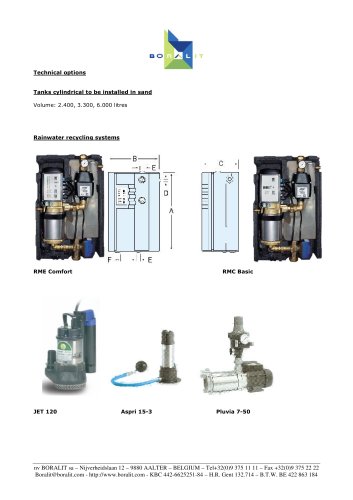 Rainwater recycling
5 Pages
Archived catalogs
 C. Separators
22 Pages
 pump station
11 Pages
 Rainwater tanks and septic tanks
24 Pages
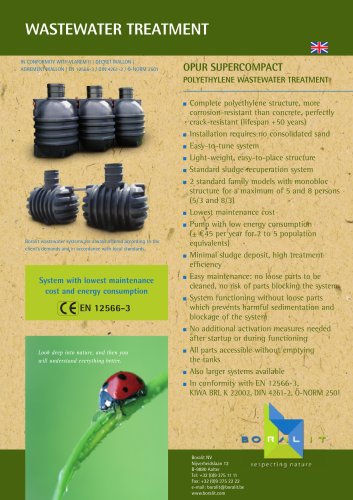
Related Searches
- Reservoir
- Water storage reservoir
- Industrial water filter
- Plastic water reservoir
- Industrial underground tank
- Above-ground tank
- High-density polyethylene tank
- Domestic wastewater treatment plant
- Water treatment plant
- Industrial oil separator
- Industrial septic tank
- Prefab septic tank
- Polyethylene oil separator
- Rainwater water treatment plant
- Polyethylene domestic wastewater treatment plant
- Sludge domestic wastewater treatment plant
*Prices are pre-tax. They exclude delivery charges and customs duties and do not include additional charges for installation or activation options. Prices are indicative only and may vary by country, with changes to the cost of raw materials and exchange rates.
About ArchiExpo
ArchiExpo is a marketplace that offers B2B players a complete experience, from product sourcing to purchase. ArchiExpo is an entity of VirtualExpo Group.
Are you a buyer?
Are you a supplier?