


- Company
- Products
- Catalogs
- News & Trends
- Exhibitions
Alias meets Pio Manzù

Alias meets Pio Manzù
Pio Manzù, born in Milan in 1939, was the son of renowned sculptor Giacomo Manzù. He pursued industrial design at the Hochschule für Gestaltung in Ulm, focusing on human-centric and safety-oriented designs.
Key Achievements and Designs
In 1959, Manzù began his studies in industrial design, culminating in a thesis on a 'safe tractor' that introduced protective bars similar to those in racing cars. In 1962, he won the 'Année Automobile' international competition with Conrad for a car design produced by Carrozzeria Pininfarina. He also received recognition for the Coupé Austin Healey 3000 prototype.
Manzù designed the Autonova GT and Autonova Fam for NSU Werke and won a city bus design competition in Hamburg. In 1967, he became a consultant for Fiat, designing the City Taxi, Autobianchi Coupé, and the Fiat 127.
Design Philosophy
Manzù's designs extended beyond functionality to address traffic and circulation issues, emphasizing the importance of considering these factors in design.
Other Notable Works
He also designed the Ritz Cronotime, Italy's first transistor radio clock, the Flos Parentesi lamp, Kartell's desk Portaoggetti, and the 'physiological armchair' for La Rinascente.
Legacy and Recognition
Despite his untimely death in a car accident at 30, Manzù left a significant impact on international design. The Environmental Structure Research Centre in Verucchio is named in his honor.
Revival of Designs
In 2009, Renato Stauffacher discovered an ergonomic chair prototype by Manzù and decided to revive it as an armchair, presented by Alias at the 2011 Salone del Mobile in Milan.
Technical Details
The armchair's design involved reconstructing the base using digital modeling and correcting the structure's curvature. The footrest was designed for stability and compactness, using a cross-shaped base. Various material combinations were evaluated during product development.
Catalog excerpts
Pio Manzù (1939-1969) Nasce a Milano nel 1939, glio del grande scultore Giacomo Manzù. Born in Milan in 1939, he was the son of the great sculptor Giacomo Manzù. Nel 1959 inizia gli studi di industrial design alla Hochschule für Gestaltung di Ulm laureandosi con una tesi sul “trattore sicuro”: lo studio di un trattore che tenga conto dell’uomo, delle sue esigenze e della sua sicurezza. Nasce così la centina di protezione, come nelle auto da corsa sopra la testa del pilota. Nel 1962 vince con l’amico Conrad il primo premio del Concorso Internazionale “Année Automobile” per il disegno di una vettura...
Open the catalog to page 4
Renato Stauffacher conosce Giacomo Manzoni nel 2009 durante la mostra alla GAMeC “Quando il mondo era moderno”, dedicata alle opere del padre Pio Manzù. Queste affascinano profondamente Renato, che ne apprezza la modernità e la capacità di visione. Durante una visita all’archivio, vede un prototipo mai editato di sedile ergonomico per macchina sportiva, un progetto fermo nel tempo al 1967; da sempre appassionato di car design, ne apprezza la qualità e l’attualità formale e decide di riportarlo alla luce per presentarlo al mondo come poltrona. Oggi Alias presenta la poltrona Manzù di Pio Manzù...
Open the catalog to page 7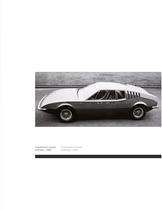
Autobianchi Coupé, prototipo, 1968 Autobianchi Coupé, prototype, 1968
Open the catalog to page 9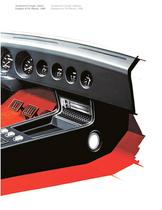
Autobianchi Coupé, interni. Disegno di Pio Manzù, 1968 Autobianchi Coupé, interiors. Designed by Pio Manzù, 1968
Open the catalog to page 11
It is in Pio Manzù’s rigorous approach to design that the purely formal aspect begins to be solved, paving the way to the broader issue of ergonomics: the man-machine relationship and all the psycho-physical components this implies.
Open the catalog to page 12
Nel rigore progettuale di Pio Manzù risiede il superamento della problematica formale e l’apertura verso la problematica ergonomica: il rapporto uomo-macchina e tutte le componenti psico-siche ad esso correlate.
Open the catalog to page 13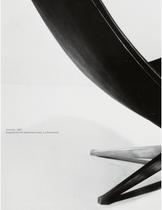
Armchair, 1967. Designed for the department store, La Rinascente.
Open the catalog to page 14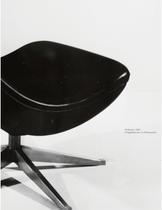
Poltrona, 1967. Progettata per La Rinascente.
Open the catalog to page 15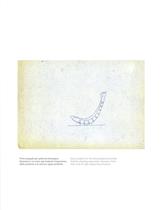
Primi progetti per poltrona siologica. Sezione in cui sono già evidenti l’ergonomia della poltrona e la scocca rigida portante. Early projects for the physiological armchair. Section showing ergonomic features of the chair and its rigid supporting structure.
Open the catalog to page 17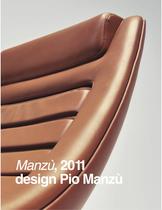
Manzù, 201 1 design Pio Manzù
Open the catalog to page 19
La base viene ricostruita attraverso la creazione di un modello digitale partendo da alcune immagini d’archivio. The chair pedestal was reconstructed by creating a digital model based on some images recovered from the archives.
Open the catalog to page 21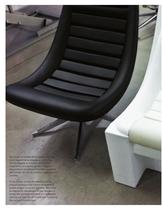
Nel tempo la scocca del prototipo originale si era leggermente piegata su se stessa. Per correggere la seduta e vericarne l’ergonomia si è deciso quindi di fresare nel polistirolo la poltrona modellata partendo dal modello 3D con la curvatura della scocca corretta. In the course of time the structure of the original prototype had curved inwards to a certain extent; to correct the chair and verify its ergonomic soundness, it was decided to shape the modelled armchair in polystyrene starting out from the 3D model and correcting the curve of the structure.
Open the catalog to page 22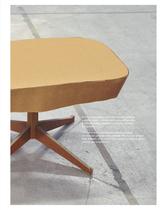
Con la stessa tecnica si è realizzato il poggiapiedi a quattro razze. La croce della razza, schiacciata, è sufciente alla sua stabilità e risolve i problemi di ingombro. The same technique was also used to construct the four-star pedestal of the footrest, whose cross-shaped base element, when supporting a weight, ensures sufcient stability and compactness.
Open the catalog to page 25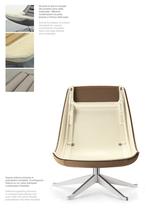
Durante le fasi di sviluppo del prodotto sono state analizzate differenti combinazioni tra pelle, tessuto e nitura della base. During the phases of product development, various combinations of leather, fabric and base nishes were evaluated. Guscio esterno portante in poliuretano compatto. Controguscio interno su cui viene stampato il poliuretano essibile. External supporting structure in compact polyurethane and inner shell onto which exible polyurethane has been moulded.
Open the catalog to page 26
design Lorenzo Butti images Archivio Pio Manzu, Bergamo Marco Benedetti Studio Phototecnica Andrea Rotondella print Evolution Printing
Open the catalog to page 34All ALIAS catalogs and technical brochures
 Alias Journal 2025
43 Pages
 Alias Collection Book
255 Pages
 Alias Journal Update 2025
21 Pages
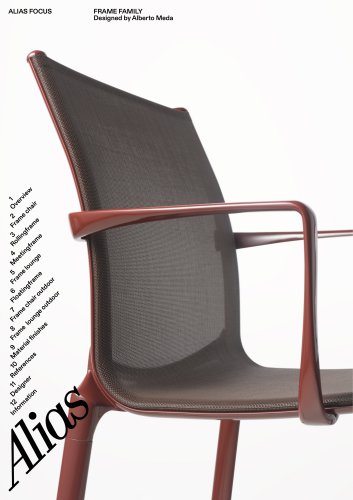 Alias Focus FRAME COLLECTION
42 Pages
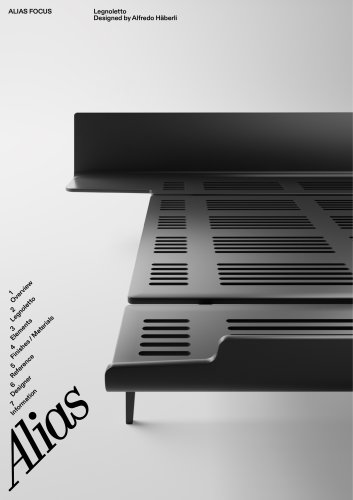 Alias Focus LEGNOLETTO
14 Pages
 Alias Focus BIPLANE
21 Pages
 Alias_journal Salone 2024
49 Pages
 Alias Focus ELEVEN
24 Pages
 Alias thinks sustainable
17 Pages
 Alias Focus ALINE - ALINE WORK
34 Pages
 Alias Focus TEC COLLECTION
17 Pages
 Alias_journal salone 2023
43 Pages
 Alias Jpurnal 2023
43 Pages

Archived catalogs
 Alias AA
25 Pages
 Alias-references
57 Pages
 ALIAS OUTDOOR COLLECTION
65 Pages
 Time chair
2 Pages
 SAVOY 58C
3 Pages
 robot / 619
3 Pages
 ALIAS HOME INSPIRATION
80 Pages
 ALIAS FOCUS Aline
24 Pages
 ATLAS STOOL COLLECTION
8 Pages
 AGO
AGO8 Pages
 Alias NEWS 2019
15 Pages
 ALIAS News 2021
15 Pages
 ALIAS FOCUS Tec
20 Pages
 Kobi
Kobi3 Pages
 Erice studio
3 Pages
 Segesta Trestle
3 Pages
 Rollingframe
3 Pages
 Kayak
Kayak2 Pages
 tindari studio - 519
3 Pages
 Alias HOME COLLECTION
78 Pages
 paludis chair / 150
3 Pages
 aline / J01
2 Pages
 ilvolo / 390
3 Pages
 ALIAS News Outdoor 2021
30 Pages
 News 2016
39 Pages
 Alias work
145 Pages
 Alias Outdoor
31 Pages
 Alias News 2017
45 Pages
 hydrochair
3 Pages
 Elle
Elle3 Pages
 General catalogue Alias 2012
212 Pages
 catalogue pocket
84 Pages
 News Milano 2012
33 Pages
 Contract Catalogue
64 Pages

- VirtualExpo Group
- Our Partners
- Careers
- Testimonials