


- Products
- Catalogs
- News & Trends
- Exhibitions
Compulsor Centrales de Doble Flujo y Terciario

Compulsor Centrales de Doble Flujo y Terciario
- Fluid propulsion equipment should be selected for optimal efficiency under calculated operating conditions, with a focus on maximizing efficiency in variable flow systems under average seasonal conditions.
- Specific power of pumping systems (SFP) must be justified for each circuit, defined as motor power divided by fluid flow rate, with categories for ventilation and air conditioning systems.
- Water circulation pumps should be balanced by design, using balancing valves if necessary.
- Electric motors should be selected based on energy efficiency criteria, with minimum efficiency specified for induction motors depending on power range.
- Efficiency should be measured according to UNE-EN 60034-2, with certain motors excluded from these requirements.
- Ventilation and air conditioning systems should be designed to control indoor air quality, with methods categorized for different occupancy scenarios.
- Minimum control equipment includes temperature control, thermal shock treatment, and safety controls.
- All-air systems with nominal thermal power over 70 kW should have free cooling by outdoor air, with heat recovery required for systems with high exhaust air flow rates.
- Ducts must comply with UNE standards for materials and construction, with specific conditions for plenums and flexible ducts.
- Air duct networks should be cleaned and tested for mechanical resistance and tightness before becoming inaccessible, with specified periodicity for preventive maintenance.
- Definitions of terms related to air handling and quality are provided.
- Commercial: Fire sectors should not exceed 2,500 m², with exceptions up to 10,000 m² under specific conditions.
- Residential Public: Fire sectors should not exceed 2,500 m², with specific wall and door requirements.
- Educational: Multi-story buildings should have fire sectors not exceeding 4,000 m².
- Hospital: Hospitalization areas must be divided into at least two fire sectors, each not exceeding 1,500 m².
- Public Concurrence: Fire sectors should not exceed 2,500 m², with exceptions for certain public spaces.
- Fire resistance varies based on building height and use, with specific requirements for special risk areas.
- Classified based on volume and use, with specific fire resistance and evacuation requirements.
- Fire resistance requirements for special risk areas, with specific compartmentalization and installation passage requirements.
- Emphasizes the importance of indoor air quality, with systems including double flow with heat exchangers and modulated ventilation.
- Guidance on selecting ventilation units, detailing features like static heat exchangers and integrated regulation.
The document outlines the mandatory application of the basic procedure for energy efficiency certification (CEE) starting from October 31, 2007. The energy efficiency label must be included in any offer, promotion, or advertisement related to the sale or rental of a building.
The CEE uses an energy label to indicate the energy consumption of buildings, classifying them on a scale of seven measures.
The foundation aims to raise awareness about the importance of energy efficiency in buildings and its benefits for economic and energy savings, environmental protection, and job creation.
The foundation seeks to promote energy efficiency and reduce energy consumption in residential and tertiary buildings in Spain.
The foundation focuses on informing opinion leaders and the public about energy efficiency and promoting a coherent long-term policy.
ALDER offers over 40 years of experience in designing and manufacturing ventilation systems, providing solutions tailored to each building while ensuring air quality and energy efficiency.
Catalog excerpts

Centrales Doble Flujo y Ventilación Terciario ALDER VENTICONTROL - Pol. Ind. Prado Overa - C/ Puerto Pajares, 29 - 28919 Leganés centrales Doble fluJO VENTILACIÓN TERCIARIO Reglamentación Guía de la Ventilación Terciario Centrales de Doble Flujo Ventilación Terciario Información General
Open the catalog to page 1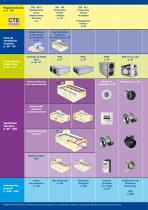
DB - HE 2 Rendimiento de las Instalaciones Térmicas p. 6 DB - HR Protección Frente al Ruido p. 16 Calidad de aire y soluciones de ventilación p. 28 Los diferentes sistemas de ventilación p. 29 Centrales de Doble Flujo p. 35 - 87 CÓDIGO TÉCNICO DE LA EDIFICACIÓN Guía de ventilación terciario p. 26 - 33 Centrales de Doble Flujo p. 35 - 87 DB - SI 1 Protección Contra Incendios Sistema doble flujo con intercambiador Innovar, la misión de un líder p. 234 Certificación de Eficiencia Energética Sistema VMT ventilación modulada terciario Sistema doble flujo separado Sistema simple flujo ALDER VENTICONTROL...
Open the catalog to page 2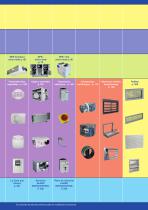
Terminales fijos, regulables - p. 106 Servicios ALDER VENTICONTROL P. 238 Plano de situación ALDER VENTICONTROL P. 239 El contenido de este documento puede ser modificado sin preaviso. Aberturas móviles desenfumage p. 193
Open the catalog to page 3
Catálogo Centrales de Doble Flujo y Ventilación Terciario
Open the catalog to page 4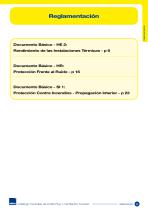
Documento Básico - HE 2: Rendimiento de las Instalaciones Térmicas - p 6 Documento Básico - HR: Protección Frente al Ruido - p 16 Documento Básico - SI 1: Protección Contra Incendios - Propagación Interior - p 23 Catálogo Centrales de Doble Flujo y Ventilación Terciario
Open the catalog to page 5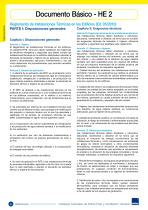
Documento Básico - HE 2 Reglamento de Instalaciones Térmicas en los Edificios (Ed. 05/2010) PARTE I: Disposiciones generales Capítulo I. Disposiciones generales Artículo 1. Objeto. El Reglamento de Instalaciones Térmicas en los Edificios, en adelante RITE, tiene por objeto establecer las exigencias de eficiencia energética y seguridad que deben cumplir las instalaciones térmicas en los edificios destinadas a atender la demanda de bienestar e higiene de las personas, durante su diseño y dimensionado, ejecución, mantenimiento y uso, así como determinar los procedimientos que permitan acreditar...
Open the catalog to page 6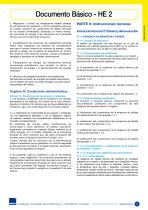
3. Regulación y control: las instalaciones estarán dotadas de los sistemas de regulación y control necesarios para que se puedan mantener las condiciones de diseño previstas en los locales climatizados, ajustando, al mismo tiempo, los consumos de energía a las variaciones de la demanda térmica, así como interrumpir el servicio. 4. Contabilización de consumos: las instalaciones térmicas deben estar equipadas con sistemas de contabilización para que el usuario conozca su consumo de energía, y para permitir el reparto de los gastos de explotación en función del consumo, entre distintos usuarios,...
Open the catalog to page 7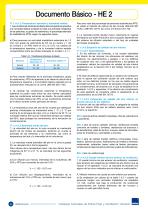
Documento Básico - HE 2 IT 1.1.4.1.2 Temperatura operativa y humedad relativa. 1. Las condiciones interiores de diseño de la temperatura operativa y la humedad relativa se fijarán en base a la actividad metabólica de las personas, su grado de vestimenta y el porcentaje estimado de insatisfechos (PPD), según los siguientes casos: a) Para personas con actividad metabólica sedentaria de 1,2 met, con grado de vestimenta de 0,5 clo en verano y 1 clo en invierno y un PPD entre el 10 y el 15%, los valores de la temperatura operativa y de la humedad relativa estarán comprendidos entre los límites indicados...
Open the catalog to page 8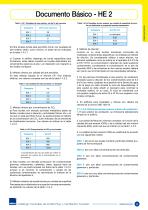
Tabla 1.4.2.1 Caudales de aire exterior, en dm³/s por persona Tabla 1.4.2.4 Caudales de aire exterior por unidad de superficie de locales no dedicados a ocupación humana permanente b) Para locales donde esté permitido fumar, los caudales de aire exterior serán, como mínimo, el doble de los indicados en la tabla 1.4.2.1. c) Cuando el edificio disponga de zonas específicas para fumadores, estas deben consistir en locales delimitados por cerramientos estancos al aire, y en depresión con respecto a los locales contiguos. B. Método directo por calidad del aire percibido En este método basado en el...
Open the catalog to page 9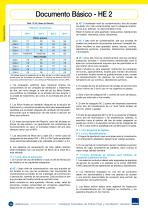
Documento Básico - HE 2 Reglamentación Tabla 1.4.2.5 Clases de filtración b) AE 2 (moderado nivel de contaminación): aire de locales ocupado con más contaminantes que la categoría anterior, en los que, además, no está prohibido fumar. Están incluidos en este apartado: restaurantes, habitaciones de hoteles, vestuarios, bares, almacenes. Filtros finales * Se deberá prever la instalación de un filtro de gas o un filtro químico (GF) situado entre las dos etapas de filtración. El conjunto de filtración F6/FG/F9 se pondrá, preferentemente, en una Unidad de Pretratamiento de Aire (UPA).» 4. Se emplearán...
Open the catalog to page 10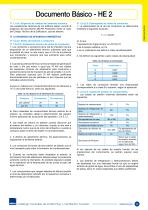
IT 1.1.4.4. Exigencia de calidad del ambiente acústico. Las instalaciones térmicas de los edificios deben cumplir la exigencia del documento DB-HR Protección frente al ruido del Código Técnico de la Edificación, que les afecten. IT 1.2.4.2.3. Estanquidad de redes de conductos. 1. La estanquidad de la red de conductos se determinará mediante la siguiente ecuación: f = c • p0,65 IT 1.2 EXIGENCIA DE EFICIENCIA ENERGÉTICA IT 1.2.4.2. Redes de tuberías y conductos. IT 1.2.4.2.2. Aislamiento térmico de redes de conductos. 1. Los conductos y accesorios de la red de impulsión de aire dispondrán de un...
Open the catalog to page 11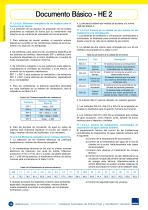
Documento Básico - HE 2 IT 1.2.4.2.5. Eficiencia energética de los equipos para el transporte de fluidos. 1. La selección de los equipos de propulsión de los fluidos portadores se realizará de forma que su rendimiento sea máximo en las condiciones calculadas de funcionamiento. 2. Para sistemas de caudal variable, el requisito anterior deberá ser cumplido en las condiciones medias de funcionamiento a lo largo de una temporada. 3. Se justificará, para cada circuito, la potencia específica de los sistemas de bombeo, denominado SFP y definida como la potencia absorbida por el motor dividida por el...
Open the catalog to page 12All ALDES catalogs and technical brochures
 TWISTED
5 Pages
 MR MAX
6 Pages
 LINED COMBINED SERIES
7 Pages
 Bahia Curve
8 Pages
 ColorLINE®
1 Page
 AIR INLET RANGE
16 Pages
 EasyHOME®
60 Pages
 PLAFONE
4 Pages
 LINED
LINED16 Pages
 DESIGN, DECO, IN LINE Axial fans
12 Pages
 In Line
20 Pages
 VELONE
15 Pages
 Bap Color
4 Pages
 General-Catalogue
664 Pages
 Dee Fly Cube 550
12 Pages
 COMPULSOR Casings and HRV units
131 Pages
 Air Distribution compulsor
229 Pages
 Air Diffusion Compulsor
270 Pages
 COMPULSOR
184 Pages
 Compulsor Habitat Ed.II
431 Pages


Archived catalogs
 RESIDENTIAL CATALOGUE
220 Pages
 InspirAir
20 Pages
 OPTIFLEX
40 Pages
 Nano Air 50
8 Pages
 International Catalogue 2012/2013
580 Pages
 COMPULSOR Fire Protection
176 Pages
 Bahia Optima
4 Pages
 Dee Fly Cube
20 Pages
- Aldes ventilation grill
- Aldes metal fan
- Metal ventilation grill
- Aldes indoor fan
- Rectangular ventilation grill
- Aldes commercial fan
- Aldes mechanical ventilation unit
- Aldes extractor fan
- Aldes air diffuser
- Exterior ventilation grill
- Aluminum ventilation grill
- Duct fan
- Facade ventilation grill
- Aldes commercial ventilation grill
- Square ventilation grill
- Aldes plastic fan
- Aldes ceiling air diffuser
- Industrial fan
- Aldes residential fan