
- Catalogs
- adielle srl
- Connecting Spaces /003

Connecting Spaces /003

Connecting Spaces /003
Boffi|DePadova, a leader in integrated interior design solutions, emphasizes sophistication and modern elegance. ADL, a brand under Boffi|DePadova, focuses on creating harmonious living spaces by designing systems that connect different parts of a home.
ADL aims to create connections rather than divisions within living spaces, promoting harmony between architecture and inhabitants. This philosophy is driven by Massimo Luca, ADL's founder, who leverages his expertise in interior design and material technology.
ADL specializes in designing and producing sliding systems, hinged doors, and innovative openings like large pivot hinges and glass partitions. Their products are custom-made, combining materials such as aluminum, glass, wood, and stone to enhance architectural and interior design connections.
ADL's research focuses on creating high-performance objects that ensure functionality, reliability, silence, and aesthetic harmony. Their doors provide sound isolation, air blocking, and light control, contributing to a high-quality user experience.
ADL offers a wide range of products across 18 collections, primarily utilizing aluminum and glass while exploring new materials. Their systems are technologically advanced, ensuring long-term reliability and seamless integration into any living space.
The document details various door collections, such as Quadra and Mitica, highlighting their technical and aesthetic features. The Quadra collection is noted for its technical rigor and minimal aesthetics, with a square section profile designed for large panels and moving walls. The Mitica collection is characterized by its meticulous aesthetics and is available in all types of opening systems.
The document outlines different types of opening systems, including sliding doors, pivot doors, and folding doors. Each system is designed to integrate seamlessly into various architectural settings, with options for concealed hinges and automatic stops.
ADL utilizes anodized or lacquered aluminum frames and offers a variety of glass finishes. The document also mentions the use of innovative materials like burnished copper and titanium for specific models, enhancing both functionality and design.
The document highlights advanced technological features such as integrated pivot hinges and swing control systems. These features enhance the functionality and ease of installation of the doors, ensuring they remain stable and reliable over time.
The doors are suitable for both indoor and outdoor use, with options for ceiling or wall mounting. The document provides detailed specifications for different models, including dimensions and materials used.
The installation of sliding doors involves concealing the carriage slot with a plastic cover matching the frame finish. For swing doors, concealed hinges with 3-axis adjustment are used for corridor installations. Pivot hinges are integrated into the door frame profile for doors without jambs.
Doors can be customized with minimal casings or plasterboard for a sleek appearance. The internal pivot hinge limits door opening to 120°, while the external pivot hinge allows up to 180° and is adjustable. The jambs are designed to accommodate aluminum or glass casings, or a plasterboard sheet.
- Lock support doubles as a handle.
- Sliding doors can be flush with the wall or have minimal jambs.
- Swing doors can have external, internal, or center wall jambs.
- Pivot doors can open bidirectionally and are available without jambs.
- The document emphasizes the aesthetic and functional benefits of concealed hinges and minimal casings.
- Customization options are available for different architectural needs, including the use of plasterboard or aluminum casings.
- The document provides detailed specifications for each door type, including frame finish, handle type, and panel material.
The document describes various hinge systems used in door frames, including upper and lower pivot hinges that are adjustable due to the telescopic structure of the jamb. These hinges are applicable to corridor jambs and are available in multiple languages, indicating a wide application.
This section details the specifications of the Mitica door models, including folding openings, frame materials (black or light bronze), and door panel materials (glass with different finishes). The dimensions for these models are consistently 3200x2700 mm. The ceiling-mounted rail includes a pivot hinge for the first leaf, and the X5 handle is integrated into the leaf profile.
The Japo collection features sliding doors with a focus on Japanese-inspired design. It offers three different styles based on the arrangement of vertical and horizontal elements. The doors are available with anodized aluminum or wood-covered frames and customizable glass finishes. The X14 handle is seamlessly integrated between the crosspieces, and the sliding door guide pin is designed for easy assembly.
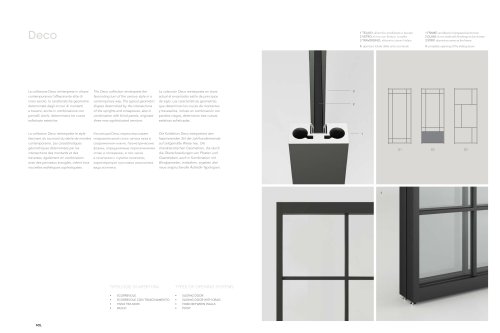
The Deco collection reinterprets early 20th-century styles with contemporary aesthetics. It features geometric designs with intersections of uprights and crosspieces, available in anodized or lacquered aluminum frames. The collection offers sliding doors with various opening systems, including sliding with drag, fixed between walls, and pivot options.
The document also mentions optional features like the swing control system, which uses a polyurethane wheel to prevent door swinging, and a concealed slot for the sliding door carriage. The pivot opening system allows doors to open in both directions with automatic stopping and a 90-degree doorstop.
1. Various door systems are described, including sliding, pivot, folding, and swing doors. The frames are typically black, with door panels made of different types of glass such as white glass, neuter low-iron glass, and fumè glass. Handles like the X14 and X5 are integrated into the design.
- The guide pin of sliding doors is designed to fit inside the panel frame for easier assembly.
- The pivot opening system allows doors to open in both directions with automatic stopping features.
- The Swing Control System uses a polyurethane wheel to prevent doors from swinging, available as an optional feature.
- The slot for the sliding door carriage is concealed by a plastic cover matching the frame finish.
- The Officina collection features an industrial style with customizable aluminium crosspieces on glass panes.
- The Line collection offers doors with aluminium frames and central glass panes, customizable for different aesthetic configurations.
- Compartment sizes vary, with examples including 5500x2700 mm, 5000x2800 mm, and 8700x2800 mm.
- Types of opening systems include sliding, pocket, swing, pivot, and folding doors.
- The X14 handle is integrated between crosspieces, while the X5 handle is painted to match the leaf frame.
- The ceiling-mounted rail includes the pivot hinge of the first leaf, and the floor recessed guide is used for bifolding leaves.
- The opening of bifolding leaves is designed to minimize space usage, with a total space of 17 cm when open.
1. Frame: Options include natural oak, dark brown, black, and bronzed aluminum.
2. Door Panel: Neuter low-iron glass.
3. Handle: X14, Elle, and full-height handles available.
4. Compartment Sizes: Various sizes including 4000x2700 mm, 8000x2900 mm, 1600x2400 mm, and more.
1. The X14 handle is integrated between crosspieces for seamless design.
2. The guide pin of sliding doors is integrated into the panel frame for easier assembly.
3. The slot for the sliding door carriage is concealed by a plastic cover matching the frame finish.
1. Swing Control System: Optional polyurethane wheel to prevent door swinging.
2. Pivot Opening System: Allows door opening in both directions with automatic stop and 90-degree doorstop.
3. Integrated hinge in pivot doors for clean design and no preliminary preparation.
1. Golden Gate: Features single glass panels with oblique strips and fabric panels in various colors for a distinctive style.
2. Ipe: Minimalist sliding system with double glass panels and full-height handle merging with the aluminum frame.
1. Sliding Door
2. Sliding Door with Drag
3. Fixed Between Walls
4. Pivot
1. Anodized or lacquered aluminum frames.
2. Glass options include 6 mm wide with various finishings.
3. Vertical handle profiles match the frame finish.
The guide pin of the sliding door retracts into the panel frame, simplifying assembly. This feature is consistent across multiple languages, indicating its importance in the design.
An optional polyurethane wheel can be applied to the frame to create friction with the floor, preventing the door from swinging. This system is available upon request and is highlighted in various languages, emphasizing its optional nature.
The Piana collection features a door with an aluminum frame enclosed between two glass panels, providing a flat, box-like appearance suitable for refined environments. The collection offers various opening systems, including pocket doors, swing doors, and pivot doors.
The frame is available in anodized or lacquered aluminum, with glass panels of 4 mm thickness. Handles and lock supports are designed for both sliding and hinged doors.
The document details different types of opening systems, such as pocket doors, swing doors, and pivot doors, each with specific frame and handle configurations.
The flush-to-wall jamb is available in anodized aluminum or RAL lacquered versions, suitable for masonry or plasterboard applications.
External pivot hinges allow doors to open up to 180°, while internal pivot hinges, hidden within the door profile, limit opening to 120° for aesthetic cleanliness.
The Mimetica project features sliding doors that blend with wood paneling, using a full-height groove as a handle. The system allows for various materials, including precious stones and ceramic slats, to be used for a dynamic and harmonious design.
Various models and materials are available, such as titanium frames with MDI Devon panels and dark brown frames with COR-TEN panels, offering a range of aesthetic options.
The document describes various components and systems related to door frames and panels. The vertical profile-handle and crosspieces are made of aluminum with a finish matching the frame. The slot for the sliding door carriage is concealed by a plastic cover with the same finish as the frame. The guide pin of the sliding door is integrated into the panel frame for easier assembly.
An optional polyurethane wheel can be applied to the frame to create friction with the floor, preventing the door from swinging.
The Materica collection allows for the creation of doors using aluminum frames that accommodate various materials such as stone, metallic foil, porcelain stoneware, and ceramic. The FILOMURO_04 and FILOMURO_09 models describe different construction techniques, including the use of sandwich panels and aluminum edging profiles.
The document outlines different types of opening systems, including FILOMURO and sliding doors. The Style collection features a deep aluminum frame and double glass plate assembled with a 45° joint for a monolithic look. The Light collection offers an "invisible" design with a glass sheet that slides within the architectural space, emphasizing transparency and aesthetics.
Various dimensions and finishes are provided for different models, including options for frame colors and panel materials.
The Light collection is described as an 'invisible' door system featuring a glass panel that slides within the architectural space. The design minimizes the visual impact of the frame, focusing only on the upper cross profile, ensuring maximum transparency, aesthetic purity, and brightness. Key specifications include sliding openings, extra-clear low-iron glass panels, and white tracks with handle model X61. Dimensions vary, with examples like 2400x2700 mm and 1000x2400 mm.
The Ala collection features doors with thick wooden leaves (60 mm), creating large movable panels integrated into the walls. This design allows for large openings, effectively making the doors a part of a movable wall. Opening types include pivot and filomuro, with specifications such as wood paneling, built-in handles, and dimensions like 900x2700 mm.
The Tesa collection is characterized by a visual lightness due to its 38 mm thick wooden panels, evoking a minimal aesthetic. Some models include an aluminum door jamb. The collection offers various opening systems, including sliding, internal wall sliding, swing, folding, and filomuro. Specifications include wood or RAL painted wood panels, handles like X22-L, and compartment sizes such as 4760x2700 mm and 850x2400 mm.
The Levante door acts as a filter to adjust light and visual connections both inside and outside living spaces. It features a square section frame with inclined triangle-section horizontal elements, allowing sunlight while limiting visibility. Made entirely of aluminum, Levante can be used indoors and outdoors as a windbreaker and sunscreen. The sliding system includes a thin floor guide for free movement, with door sizes like 1500x3000 mm.
1. Aluminium Profiles: All profiles are made from extruded aluminium alloy EN AW 6060, T6 temper. Anodic oxidation is compliant with current regulations.
2. Glass Panes: Safety glass is used, including tempered, laminated, and tempered laminated glass, all compliant with shatterproof standards.
1. Door Jamb Installation: Available for pull and push doors, treated for wall painting application. Options for brick or plasterboard walls.
2. Telescopic Door Jamb: Allows for a 10 mm adjustment to ensure perfect verticality and correct assembly.
1. UNI EN 120 Compliance: Honeycomb sandwich-panel doors are classified as E1, meeting UNI EN 120 standards.
1. Use of Rubber Seals: Recommended for hiding attachment systems and ensuring a secure fit.
2. Double Cell Foam Seal: Suggested for both door jamb and door leaf to enhance sealing.
1. Minimalist Design: Aluminium and glass casings for a sleek appearance.
2. Concealed Hinges: For a seamless look in pull/push doors.
3. Bidirectional Swing Doors: No door stop to allow for bidirectional opening.
Catalog excerpts
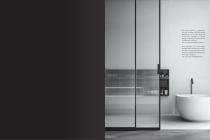
Una sola filosofia, il medesimo concept di design. Boffi|DePadova rappresenta le più alte proposte di soluzioni integrate di interior design, enfatizzando sofisticatezza ed eleganza moderna. ADL è un brand di Boffi|De Padova. One philosophy, the same design concept. Boffi | DePadova is a leading provider of integrated interior design solutions, emphasising sophistication and modern elegance. ADL is a brand of Boffi|DePadova.
Open the catalog to page 2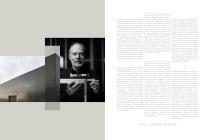
All’interno del proprio spazio abitativo l’uomo è in costante ricerca di armonia, benessere ed equilibrio, un posto sicuro dove trascorrere la propria vita. Per favorire la vivibilità degli spazi è necessario suddividerli, ma al tempo stesso mantenerne una percezione unitaria, come unica è l’idea emotiva che l’uomo ha di casa. In questo senso lo spazio abitativo è un luogo fisico e un luogo mentalizzato nel quale ADL si propone di mettere in sinergia l’architettura e l’uomo progettando sistemi che favoriscono la connessione armonica tra le diverse parti della casa. “Non creiamo divisioni ma connessioni,...
Open the catalog to page 3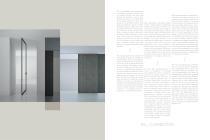
ADL è specializzata nella progettazione e produzione di sistemi scorrevoli, porte a battente, filomuro ma anche delle aperture più innovative, come le bilico di grandi dimensioni e il progetto Mies, vere e proprie ripartizioni in vetro. L’ampia gamma di tipologie di apertura della quale ogni sistema si compone e l’elevata flessibilità produttiva di ADL, che consente di abbinare l’alluminio a diverse tipologie di materiali, dal vetro al legno, dalla pietra ai metalli più ricercati, permottono di realizzare delle perfette porte “custom made“ che favoriscono le connessioni tra le diverse parti della...
Open the catalog to page 4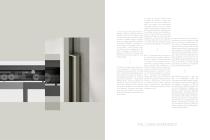
Our home is a space in which we find tranquillity and comfort; a shelter that enables us to leave all our troubles outside. For this reason, ADL's technological and stylistic research is aimed at creating objects that guarantee the best possible performance:functionality, reliability, silence, aesthetic harmony and incredible attention to detail. Perfect boundaries that isolate sounds, block air and control light, transparency, refractions and reflections. In this way, ADL doors create a high sense of comfort within the individual, creating an extremely high quality user experience. La casa è...
Open the catalog to page 5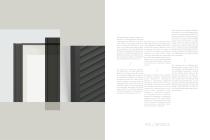
ADL risponde alle molteplici esigenze di mercato con un’ampia gamma di prodotti e tipologie di apertura divisi in ben 18 diverse collezioni. Una gamma che sfrutta in primis le potenzialità dell’alluminio e del vetro, ma al tempo stesso esplora tipologie di materiali rari nel mondo delle porte. Le aperture ADL grazie all’elevata tecnologia che le contraddistingue garantiscono affidabilità nel tempo e si integrano al meglio in ogni spazio abitativo contribuendo alla connessione armonica dei volumi. ADL répond aux nombreuses exigences du marché avec une vaste gamme de produits et de types d'ouverture...
Open the catalog to page 6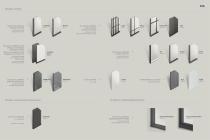
PANNELLI PORTA TELAIO ALLUMINIO SINGOLO VETRO ALUMINIUM FRAME SINGLE-PANE GLASS TELAIO ALLUMINIO CON LISTELLI DIAGONALI SINGOLO VETRO TELAIO ALLUMINIO CON PANNELLO IN TESSUTO ALUMINIUM FRAME WITH DIAGONAL STRIP SINGLE GLASS TELAIO ALLUMINIO CON LISTELLI SINGOLO VETRO ALUMINIUM FRAME WITH STRIPS SINGLE-PANE GLASS TELAIO ALLUMINIO DOPPIO VETRO ALUMINIUM FRAME DOUBLE-PANE GLASS ALUMINIUM FRAME WITH TEXTILE PANEL TELAIO ALLUMINIO DOPPIO MATERIALE ALUMINIUM FRAME DOUBLE-PANE MATERIAL PANNELLI FRANGIVISTA/FRANGISOLE TUTTO ALLUMINIO ALL ALUMINIUM INDOOR - OURDOOR TUTTO VETRO ALL GLASS HONEYCOMB WOOD...
Open the catalog to page 7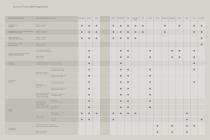
SCORREVOLE SLIDING soffitto o parete ceiling or wall SCORREVOLE CON TRASCINAMENTO SLIDING WITH DRIVE soffitto o parete ceiling or wall FISSO TRA MURI FIXED BETWEEN WALLS soffitto o parete ceiling or wall SCORREVOLE LIBERO FREE SLIDING soffitto o parete ceiling or wall con stipite per coprifili with jamb for architraves SCORREVOLE INTERNO MURO INTERNAL SLIDING WALL LIBRO FOLDING senza stipite without jamb a soffitto con/senza binario a pavimento ceiling mounted with / without floor track cerniera pivot a vista on-sight pivot hinge stipite per coprifili jamb for architraves BATTENTE SWING stipite...
Open the catalog to page 8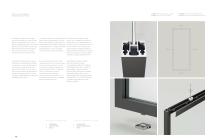
1 TELAIO: alluminio anodizzato o laccato 2 VETRO: 6 mm con finitura a scelta 1 FRAME: anodized or lacquered aluminium 2 GLASS: 6 mm wide with finishings to be chosen La collezione Quadra associa il rigore tecnico ad un’estetica minimale. Il telaio dell’anta, caratterizzato da un profilo a sezione quadrata (largo 36mm e profondo 38mm) con vetro centrale, è pensato per ottenere pannelli di grandi dimensioni (fino a 7 mq per le ante scorrevoli) e realizzare vere e proprie pareti mobili. The Quadra collection combines technical rigour with minimal aesthetics. The door frame, characterised by a square...
Open the catalog to page 9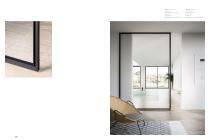
apertura: scorrevole telaio: nero specchiatura: vetro neutro extrachiaro maniglia: X2 dimensioni vano: 2000x3000 mm opening: sliding frame: black door panel: neuter low-iron glass handle: X2 compartment size: 2000x3000 mm
Open the catalog to page 10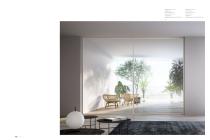
apertura: scorrevole telaio: bianco specchiatura: vetro neutro extrachiaro maniglia: X2 dimensioni vano: 4000x3000 mm opening: sliding frame: white door panel: neuter low-iron glass handle: X2 compartment size: 4000x3000 mm
Open the catalog to page 11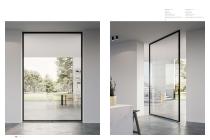
apertura: bilico centrale telaio: nero specchiatura: vetro neutro extrachiaro dimensioni vano: 2000x3000 mm opening: central pivot hinge frame: black door panel: neuter low-iron glass compartment size: 2000x3000 mm
Open the catalog to page 12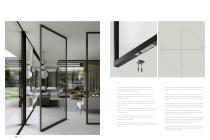
La cerniera dell’apertura a bilico è integrata nel profilo del telaio enfatizzandone la pulizia delle forme e permettendo l’eliminazione di qualsiasi predisposizione preliminare. Il sistema integrato nel telaio permette l’apertura dell’anta in entrambe le direzioni, con l’arresto automatico in chiusura e con il fermo dell'anta a 90°. The hinge of the pivot opening is integrated into the frame profile, emphasizing its neat shape and allowing the elimination of any preliminary preparation. Pivot opening system (with the pivot point axis centred or offset). The integrated system in the frame allows...
Open the catalog to page 13All Adielle srl catalogs and technical brochures
 Golden Gate
1 Page
 Deco
Deco8 Pages
 Japo
Japo7 Pages
 ADL PORTA AL FUTURO
84 Pages