

Rainwater tanks and septic tanks
1 /24Pages
Rainwater tanks and septic tanks
1 /24Pages
Catalog excerpts
respecting nature A.2.10 SEPTIC TANKS (DESCRIPTION) A.2.10.1 CHARACTERISTICS No rainwater should be allowed to enter the septic tank because this would render it useless. There are 3 types of septic tanks, i.e. the classic septic tank or feces tank, the tank for all domestic wastewater and the septic tank with integrated filter. The classic feces tank only receives wastewater from the toilet (the so-called black water). Օ The tank for all domestic wastewater receives all wastewater from the house, i.e. the black (toilet) water as well as the grey water. The tank with integrated filter is in...
Open the catalog to page 10
respecting nature A.2.11 RAINWATER TANKS DESCRIPTION A.2.11.1 CHARACTERISTICS A rainwater tank collects the water coming from the roof gutters and stores it for future use. This water can be used as follows: To water plants Օ To wash cars To flush toilets And, subject to the installation of appropriate filters, it can be used for the washing machine, the dishwasher, bath, shower, and drinking water, ... Please contact our technical service to calculate the ideal tank volume. A.2.11.2 HOW DOES A RAINWATER TANK WORK A rainwater tank collects the water coming from the gutter. The tank will gradually...
Open the catalog to page 11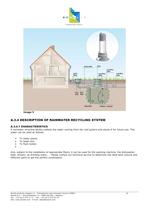
Image 5 A.3.4 DESCRIPTION OF RAINWATER RECYCLING SYSTEM A.3.4.1 CHARACTERISTICS A rainwater recycling facility collects the water coming from the roof gutters and stores it for future use. This water can be used as follows: To water plants Օ To wash cars To flush toilets And, subject to the installation of appropriate filters, it can be used for the washing machine, the dishwasher, bath, shower, as drinking water, ... Please contact ourtechnical service to determine the ideal tank volume and different parts to get the perfect combination. Boralit products category A - Pretreatment and rainwater...
Open the catalog to page 16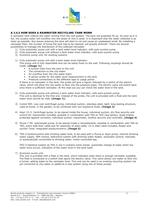
respecting nature A 3.4.2 HOW DOES A RAINWATER RECYCLING TANK WORK A rainwater tank collects the water coming from the roof gutters. The tank will gradually fill up. As soon as it is full, the surplus water will overflow into the sewer or into a canal. It is important that the water collected is as clean as possible. Any leaves entering the tank will start to rot and cause an unpleasant smell. By installing a rainwater filter, the number oftimes the tank has to be cleaned, will greatly diminish. There are several possibilities to manage the distribution ofthe collected rainwater. 1) Fully-automatic...
Open the catalog to page 17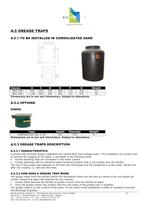
respecting nature A.5 GREASE TRAPS A.5.1 TO BE INSTALLED IN CONSOLIDATED SAND Volume ^^^^1 C E ^^^^ G Weight BAG 300 I 930 900 500 580 110 550 23 BAG 500 I 1.260 900 500 905 110 875 35 Dimensions are in mm and informatory. Subject to altrations. A.5.2 OPTIONS RISERS Type Height Diameter Weight VHSP600/420 riser in PE 420 570 8 Dimensions are in mm and informatory. Subject to alterations. A.5.3 GREASE TRAPS DESCRIPTION A.5.3.1 CHARACTERISTICS A grease trap removes grease (vegetable and animal fats) from sewage water. The installation of a grease trap to prevent the clogging ofthe pipes, is advisable...
Open the catalog to page 22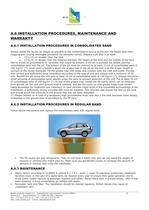
respecting nature A.6 INSTALLATION PROCEDURES, MAINTENANCE AND WARRANTY A.6.1 INSTALLATION PROCEDURES IN CONSOLIDATED SAND Always install the facility as closely as possible to the contamination source to prevent the feeder pipe from clogging and causing blockages (excepted for rainwater tanks). Prepare a pit that is at least: 15 to 20 cm broader than the tank Օ 15 to 20 cm deeper than the distance between the height of the inlet and the bottom of the tank See to it that all groundwater or rainwater that might be present in the pit is pumped out before pouring consolidated sand into the pit....
Open the catalog to page 23All BORALIT catalogs and technical brochures
 storage tanks
4 Pages
 SEPARATORS
6 Pages
 FUEL TANKS / STORAGE TANKS
14 Pages
 WATER TREATMENT
13 Pages
 B. Wastewater treatment EN
12 Pages
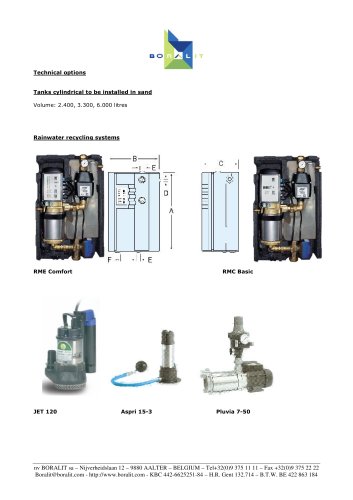 Rainwater recycling
5 Pages
Archived catalogs
 C. Separators
22 Pages
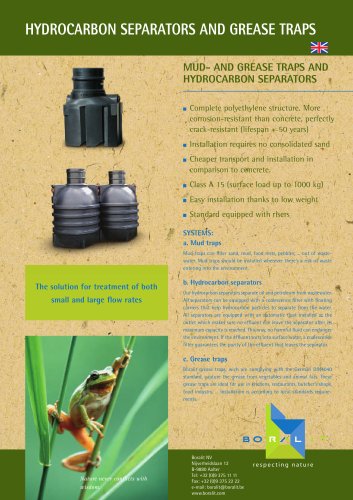 sludge separator
2 Pages
 pump station
11 Pages
- Water storage reservoir
- Industrial water filter
- Plastic water reservoir
- Above-ground tank
- Industrial underground tank
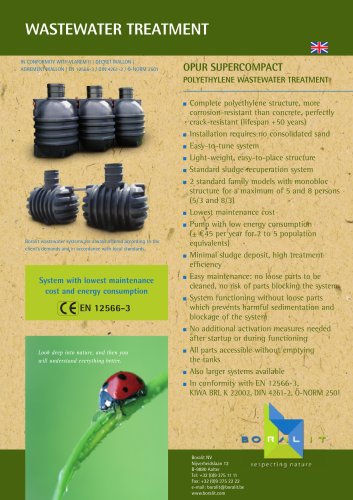
- Domestic wastewater treatment plant
- PE tank
- Water treatment plant
- Industrial oil separator
- Prefab septic tank
- Polyethylene oil separator
- Rainwater water treatment plant
- Polyethylene domestic wastewater treatment plant
- Sludge domestic wastewater treatment plant